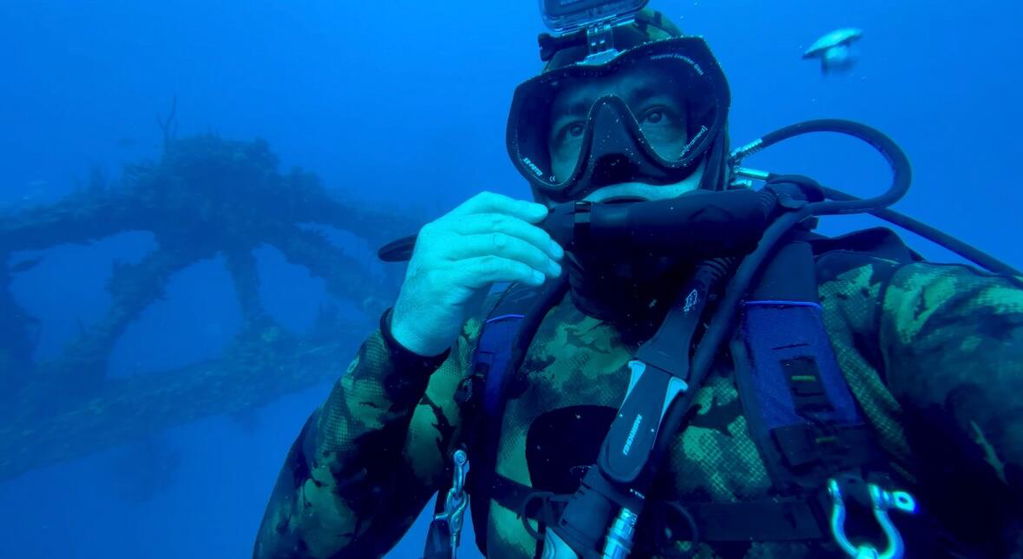
The first cleanup dive I helped organize was a mess — and not the good kind. We had eleven divers, two mesh bags between us, no plan for what to do with a hundred pounds of wet rope once it hit the dock, and a harbor master who found out about the whole thing from a diver's Instagram story. We still pulled trash out of the water, and people still had a good day. But it could have been a much better day with about four hours of planning.
Cleanup dives are the single best recruiting tool a dive club has. They give newer divers a reason to show up, they give experienced divers a reason to dive a site they'd otherwise skip, and they produce a photo at the end of the day that everyone wants to share. This guide covers how to run one properly: choosing a site, getting permission, assigning roles, kitting people out, and making the data count.
Pick your date first, and consider borrowing a bigger one
You can run a cleanup dive any weekend you like. But attaching it to an established cleanup event gives you free promotion, an existing volunteer pipeline, and often a local coordinator who already has the permits and the dumpster sorted.
The big one is the International Coastal Cleanup, coordinated by Ocean Conservancy and held on the third Saturday of September — September 19, 2026. It's the largest single-day volunteer cleanup effort in the world, and it has been running since 1986. In California, California Coastal Cleanup Day falls on the same date and is organized county by county, which means there is usually a local coordinator within driving distance of wherever you dive.
Two practical reasons to piggyback: most coastal cleanup events are shore-based, so an underwater component is genuinely useful to the organizers rather than a scheduling conflict; and a county coordinator can often fold your divers into an existing permit, waiver, and waste-disposal arrangement instead of you building all three from scratch.
If September doesn't work, pick a date in your local off-season when the site is quiet. Fewer boats and fewer swimmers make for a safer dive, and a site that has been sitting untouched all winter usually has more to give.
Choose a site that's worth cleaning and safe to clean
New organizers tend to pick the prettiest site. Resist that. The reefs and walls your club loves are usually the cleanest places you dive, because everyone who goes there cares about them. The debris is somewhere less photogenic.
Where the trash actually is
Look at harbors and marina basins, public fishing piers and jetties, boat ramps, popular shore-entry beaches, and anywhere a storm drain or creek mouth empties into the water. These sites collect fishing line, lead weights, lures, bottles, cans, cell phones, sunglasses, shopping carts, and rope. They also tend to be shallow, sheltered, and close to parking — which makes them practical for a group dive.
What makes a site unsuitable
Skip anywhere with active boat traffic you can't control, current that will move divers off the site, or an entry that requires scrambling. Be honest about visibility: harbor cleanups are frequently done in one to three metres of visibility, in silt that goes to zero the moment someone fins hard. That's manageable for experienced local divers and genuinely unpleasant for a newly certified diver on their fifth dive. Match the site to the people you expect to show up, not to the divers you wish would show up.
Depth is the other filter. Keep a club cleanup shallow — most of what you're after is in the top ten metres anyway, and shallow means long bottom times, easy surface communication, and a wide margin if something goes wrong.
Low visibility is the norm on cleanup dives, and a light does more than help you see — it makes you visible to your buddy in silt. A compact primary from our dive lights collection is worth adding to the kit list you send participants.
Get permission before you announce anything
This is the step clubs skip, and it's the one that gets events cancelled the morning of. Who you need to talk to depends on the site, but work through this list:
- The landowner or facility operator. Harbor master, marina office, city parks department, port authority, or state park. If people will be parking, staging gear, and carrying wet trash across their property, they need to know.
- The protected-area manager, if there is one. Marine protected areas, sanctuaries, and reserves often restrict what can be removed or disturbed, and some require a permit even for a cleanup. Ask specifically about removing objects from the seabed.
- Waste disposal. A dumpster, a truck, or a municipal pickup arranged in advance. A pile of dripping debris left on a dock is not a cleanup, it's relocating the problem.
- Your insurance situation. If your club carries event insurance, check that a dive event at that site is covered. If it doesn't, be clear with participants that they are diving under their own certification and responsibility, and use a written waiver.
Approach these conversations as a partner, not a petitioner. Harbor offices are usually delighted — you're removing hazards from their basin for free. Tell them the date, the number of divers, where you'll park, where you'll pile debris, and who to call on the day.
Build the team before you build the dive plan
The mistake most clubs make is putting every volunteer in the water. A cleanup dive with twelve divers and nobody on the surface is chaotic and slower than one with eight divers and four people topside. Assign these roles by name, in advance:
Event coordinator
One person who owns the timeline, holds the permissions, and makes the call on conditions. They should not be diving. They're on the phone, greeting arrivals, and counting heads.
Dive marshal
Runs the in-water side: pairs buddies, briefs teams, records who is in the water and when, and confirms everyone is out. A simple whiteboard with names, entry times, and a check-out column is enough.
Surface support
Two to four people who receive bags at the water's edge, haul them clear, and keep the entry point free of clutter. This job is far more important than it sounds — it's what stops divers standing in the surf zone wrestling with a full bag.
Sorting and data crew
Sorts debris by category, weighs the total, and records the count. They also decide what is recyclable, what is trash, and what needs special handling. Give them gloves, a tarp, and a hanging scale.
Safety and first aid
One person with a first aid kit, oxygen if your club has it, a charged phone, and the local emergency numbers and nearest chamber written on paper. Cuts from glass and metal are the most common injury on cleanup dives by a wide margin.
The gear checklist to send participants
Cleanup diving asks for a few items most recreational divers don't carry. Send this list a week ahead so people can borrow or buy what they're missing.
Cutting tools — the one non-negotiable
Every diver in the water needs a cutting tool, and ideally two, mounted where they can reach them with either hand. Monofilament, braided line, and old rope are the primary entanglement hazard on cleanup dives, and they're the reason you're there. A compact BCD-mounted knife or line cutter beats a large leg knife for this work.
The Scubapro Mako 304 Stainless Tanto Tip Dive Knife ($99.00) is a sensible pick — small enough to mount on a BCD or hose, with a line-cutting notch and serrated edge in addition to the blade. Browse the full dive knives collection for alternatives, including titanium options if your kit lives near salt water year-round.

Scubapro Mako 304 Stainless Tanto Tip Dive Knife
Compact enough to mount on a BCD or hose, with a line-cutting notch and serrated edge for monofilament and rope.
$99.00 · View product →
Gloves
Gloves are standard on cleanup dives even in warm water, because the debris includes broken glass, corroded metal, and rusted hooks. Check first whether gloves are permitted at your site — some marine parks restrict them to discourage contact with reef — but in a harbor or under a fishing pier they're simply sensible.
A reinforced-palm tropical glove such as the Bare 2 mm Tropic Pro Diving Glove ($57.95) gives abrasion protection without the bulk of a cold-water glove. See the dive gloves collection for thicker options if your water is cold.
Debris bags and lift bags
Give each buddy team a mesh bag they can clip off and drop if they need their hands. Don't let anyone dive with a bag tied to their body. As the bag fills, it becomes heavy, snaggy, and awkward — and it needs to be releasable in a second.
For anything genuinely heavy — an anchor, a length of chain, a submerged tire — use a lift bag rather than muscle and BCD air. Adding debris weight to your own buoyancy is how divers end up on uncontrolled ascents. The Hollis 60 lb Lift Bag ($82.95) handles most club-scale recoveries, and the 125 lb version ($104.95) covers the heavy stuff. Both are high-visibility orange, which matters when it surfaces near boat traffic.

Hollis 125 lb High Visibility Lift Bag
Bright orange nylon lift bag for anchors, chain, tires, and other heavy debris. Keeps the load off your own buoyancy.
$104.95 · View product →
A word of caution worth repeating in the briefing: never ride a lift bag up, never put your hand or arm through the lift line, and send the bag only when the surface directly above is clear. Practise the procedure before the event if your members haven't used one.
Surface marker and signaling
In a harbor or anywhere near boat traffic, a deployed surface marker buoy is not optional. It marks divers for boat operators and marks debris drop points for surface support. Add a whistle or audible signal for calling in support at the surface. Our safety and signaling collection covers SMBs, reels, and audible signals.
Bags for the drive home
Cleanup gear comes out of the water dirtier than usual. A mesh duffel or backpack that drains and dries beats a sealed bag that will still smell like harbor in a week — see gear bags if members are still using a bin liner.
Brief the underwater rules — including what to leave alone
A cleanup dive is a working dive, and working divers get task-fixated. Keep the briefing short and cover these points every time:
- Buoyancy before bags. Anyone struggling with trim should collect light items only. Divers dragging on the bottom in silt destroy visibility for everyone else and damage the habitat you came to protect.
- Leave anything that has become habitat. If it's colonized by growth, occupied by an octopus, or clearly serving as structure, leave it. PADI AWARE's own guidance covers knowing what to leave behind, and removal is not automatically an improvement.
- Do not disturb hazardous items. Sealed drums, containers with contents, batteries, and anything resembling ordnance or a flare stay where they are. Note the location, photograph it, and report it to the authority that owns the site.
- Cut, don't pull. Line wrapped around structure should be cut free in pieces. Yanking a monofilament tangle off a piling can break the piling, the coral, or the diver's regulator hose.
- Watch your gas while task loaded. Set a turn pressure and stick to it. Sorting through debris is absorbing enough that people forget to check.
- Two-diver teams, always in contact. In poor visibility, agree a contact protocol before you descend — touch contact or a fixed line if it's genuinely dark.
Make the data count
The difference between a cleanup and a citizen science dive is a spreadsheet, and it takes about twenty extra minutes. Recorded debris data feeds the research and policy work that stops the trash arriving in the first place.
Dive Against Debris
PADI AWARE's Dive Against Debris program is the established framework for underwater debris surveys. Divers record what they remove by item type, weigh and photograph the haul, and submit the results through the PADI AWARE Conservation Action Portal so it joins a global dataset. There's a Dive Against Debris specialty course if you want members formally trained to run surveys, and a free survey toolkit with the data sheets you'll need.
Clean Swell
For the shore-based side of your event — and for volunteers who aren't diving — Ocean Conservancy's free Clean Swell app lets anyone log what they collect, item by item, straight into the organization's global ocean trash database. It's the simplest possible on-ramp for a non-diving partner, spouse, or club member who wants to help.
Your own numbers
Keep a simple record for the club too: date, site, number of divers, total bottom time, total weight, and the three most common items. After three or four events you'll have a picture of your site that's genuinely interesting — and it makes the case to the harbor office when you ask to come back.
The part after the dive matters more than you'd think
Get the debris sorted and weighed while people are still standing around. It's the moment the event becomes real — a pile on a tarp with a number attached to it beats any amount of description. Separate recyclables, bag the rest, and load the truck before anyone drifts off.
Then do three things. Take a group photo with the haul. Feed people, or at least send them to a café together — the social half hour after a cleanup dive is what converts a volunteer into a member. And send a short follow-up within two days with the total weight, the photo, and the date of the next one.
That last item is the whole trick. Clubs that announce the next event while the current one is still fresh keep their volunteers. Clubs that wait until they've "recovered" start from zero every time.
Frequently asked questions
Do I need a permit to run a cleanup dive?
It depends entirely on the site. Public beaches and harbors often require nothing more than notifying the operator, while marine protected areas, sanctuaries, and some state parks require written permission before anything is removed from the seabed. Always ask the managing authority directly, and ask specifically about removing objects rather than just about diving.
What certification do volunteers need?
Open Water certification is sufficient for a shallow, sheltered cleanup site, provided the briefing is thorough and the buddy pairing is sensible. Pair less experienced divers with confident locals, and keep anyone uncomfortable in low visibility on shore duty — surface support is a genuinely valuable job, not a consolation prize.
How many divers is the right number?
For a first event, aim for six to ten divers plus four surface volunteers. That's enough to make a visible difference and few enough that one coordinator can track everyone. Scale up once you've run the format twice and know how long the sorting takes.
Should we remove fishing line and tackle from active fishing spots?
Yes, and it's some of the highest-value work you can do — lost line and tackle entangle wildlife for years. Coordinate with the pier operator, dive outside peak fishing hours or ask for a temporary pause, and make sure every diver has an accessible cutting tool.
What do we do with the debris we collect?
Arrange disposal before the event, not after. Ask the site operator whether you can use their waste facilities, or coordinate with the local cleanup organizer who often has a dumpster on site. Recyclables should be separated at the sorting stage, and anything hazardous should be reported rather than transported.
Can non-divers take part?
They should. Every cleanup dive needs surface support, sorters, weighers, data recorders, and photographers, and a shore cleanup running alongside the dive doubles your impact and your headcount. It's also the easiest way to bring family members into club life.
Start with one site and one date
You don't need a committee, a sponsor, or a nonprofit structure to run a cleanup dive. You need a shallow site with trash in it, a phone call to whoever owns the water, eight divers who trust each other, and somewhere to put the bags at the end. Everything else is refinement.
If your club is building a kit list for its first cleanup — cutting tools, lift bags, SMBs, and gloves for a dozen members — the team at DiveCatalog can help you work out what to buy as shared club gear versus what each diver should own. And if you're still assembling the club itself, our guides to starting a dive club and becoming a citizen science diver are the natural next reads.