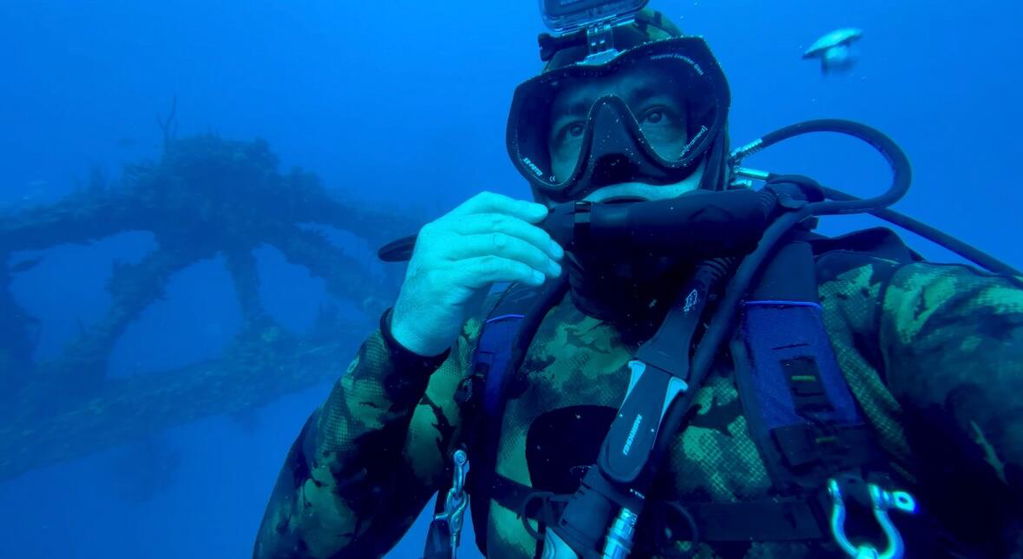
Every club I've helped run has the same quiet membership category: people who got certified, dived enthusiastically for a season or two, and then life happened. A move, a baby, a job, a pandemic. Their card is in a drawer somewhere. They still think of themselves as divers, but the last log entry is four years old and the thought of getting back in the water has started to feel bigger than it should.
If that's you, here's the short version: you are still a diver, your certification is still valid, and getting back in is a lot less complicated than the story you've been telling yourself. What you need is a refresher, a gear check, and one easy dive with people who are glad to see you. This guide covers all three.
Your certification hasn't expired — your skills might have
Recreational open water certifications from PADI, SSI, NAUI, and SDI do not expire. There is no renewal date, no lapse, no reinstatement fee. If you passed your Open Water course in 2009, you are still an Open Water diver today, and any dive operator in the world will accept that card.
What does change is your competence. Buoyancy control, mask clearing, regulator recovery, and the calm that comes from repetition all fade with time out of the water. That's not a character flaw, it's normal skill decay, and it's exactly why refresher programs exist. The gap between "I hold a certification" and "I'm comfortable at 18 metres tomorrow" is real, and it's worth closing deliberately rather than discovering it on a boat in front of strangers.
Worth saying plainly: most dive operators will ask when you last dived. Some will require proof of a recent dive or a refresher before letting you join a trip. Turning up with a fresh refresher record makes that conversation short.
How long is too long?
There's no universal rule, and honest instructors will tell you it depends more on your total experience than on the calendar. A rough framework that most dive educators would recognise:
Under six months
Usually fine, particularly if you have a solid number of logged dives. Plan an easy first dive back — shallow, familiar site, good conditions — and run through your own skills in the shallows before descending.
Six to twelve months
This is the grey zone. Many shops suggest a refresher at the six-month mark, especially for divers with fewer than about 20 lifetime dives. If your logbook is thin, take the refresher. If you have several hundred dives and dive regularly when you do dive, a careful shallow warm-up may be enough.
One to two years or more
Take a refresher. Most instructors consider one to two years of inactivity sufficient to warrant formal refresher training regardless of experience level, and beyond two years it's close to universal advice. This is also the point where gear maintenance becomes a genuine issue rather than a formality.
Refresher options, by agency
Every major agency runs a version of the same thing: a knowledge review to knock the rust off the theory, then a confined-water or shallow session to rehearse core skills with an instructor watching.
PADI ReActivate
PADI's refresher program combines an online or eLearning knowledge review with an in-water skills session. The knowledge portion takes roughly two hours, and the full program typically runs up to about six hours including pool time. Divers who complete it receive a ReActivate card showing the date, which is a useful thing to hand an operator who asks about currency.
SSI Scuba Skills Update
SSI's equivalent is the Scuba Skills Update, delivered through an SSI dive centre with digital training materials and a pool or confined-water session. Same structure, same purpose.
NAUI, SDI, and other agencies
NAUI centres run refresher and scuba review programs, and SDI offers an Inactive Diver / refresher option. Certifications are cross-recognised in practice, so you can take a refresher with any agency's instructor regardless of who certified you originally. Pick the shop you like, not the logo.
Your local club's pool night
This is the underrated option. Plenty of dive clubs rent pool time monthly, and a pool session is the cheapest, lowest-pressure way to remember what neutral buoyancy feels like. It won't produce a card, but it will produce confidence — and it puts you back in a room full of divers, which is usually what actually gets someone diving again. If your club doesn't run one, our guide to starting a dive club covers how to organise pool nights and get them attended.
Check your gear before you check your skills
Gear that has sat in a garage for three years is the single most common source of problems for returning divers. Salt residue, dried-out o-rings, perished neoprene, and dead batteries are all normal after long storage. Work through it before you book anything.
Regulators
Get them serviced. Most manufacturers specify annual service or service every 100 dives, though some modern regulators extend that interval — check your manual, and check what your warranty requires, because lapsed service intervals void some warranties. A regulator that has been dry and unused for years still needs attention: seat materials take a set, lubricants migrate, and o-rings harden. Book service well before your trip, since turnaround at a busy shop can run a couple of weeks. If yours turns out to be beyond economical repair, our regulators collection is a reasonable place to start comparing replacements.
BCD
Inflate it fully and leave it overnight. If it's soft in the morning, you have a leak in the bladder or a valve. Cycle the power inflator and both dump valves, check that the inflator hose connects and releases cleanly, and inspect the webbing and buckles for UV damage. Rinse the bladder interior if it was ever stored wet. Browse BCDs if the bladder has failed — a leaking bladder is rarely worth repairing on an older unit.
Dive computer
Batteries die in storage. Replace the battery or charge the unit, confirm it powers on and holds a charge, and check the manufacturer's site for firmware updates. Then — and people skip this — reset the date, time, and altitude settings, and confirm the algorithm and conservatism settings are where you want them. A computer showing 2021's date will still calculate correctly, but it makes your log useless.
If your old computer has become unreliable or you never owned one, the Oceanic Veo 4.0 Wrist Dive Computer ($379.95) is a straightforward, long-running recreational computer with a user-replaceable battery — a sensible choice for someone rebuilding a kit rather than chasing features. Compare the full range in our dive computers collection.

Oceanic Veo 4.0 Wrist Dive Computer
Straightforward recreational wrist computer with a user-replaceable battery. A sensible pick when you're rebuilding a kit after time away.
$379.95 · View product →
Mask, fins, and snorkel
Check the mask skirt for stiffness and cracking at the edges, and flex the strap — old silicone tears at the buckle. Fin straps are the other classic failure point; heel straps that have gone brittle will snap on the first hard kick. Both are cheap to replace and expensive to discover at a dive site.
If the skirt has yellowed and hardened, replace the mask rather than fighting it. The Oceanic Shadow Frameless Dive Mask ($89.95) is one of the most consistently popular masks we sell — low volume, single lens, easy to clear, which matters when you're rehearsing mask skills you haven't done in years. Our dive masks and dive fins collections cover the rest.

Oceanic Shadow Frameless Dive Mask
Low-volume single-lens frameless mask that's easy to clear. One of our most consistently popular masks.
$89.95 · View product →
New masks need their factory coating scrubbed off before they'll stay clear. Do that at home, then carry a mask defogger ($9.99) in your kit.
Wetsuit and exposure protection
Neoprene compresses permanently with age and loses buoyancy and warmth. Try it on — if the seams are separating, the zip is seized, or it's simply gone stiff, it's done. Sizing may also have changed, and a suit that doesn't seal at the neck and wrists won't keep you warm regardless of thickness. See our wetsuits collection for current options.
Cylinders
If you own tanks, they'll need attention. In the US, scuba cylinders require a hydrostatic test every five years under DOT rules, and an annual visual inspection is the industry standard almost every shop requires before filling. A cylinder stored for years — particularly one stored empty, which invites moisture and internal corrosion — should go straight to a shop for inspection rather than to a fill station.
A small tool and spares kit
Returning divers rediscover fast how many small things go wrong. A basic kit with hex keys, o-rings, and a few spare parts turns a ruined day into a five-minute fix. The DiveCatalog Scuba Multi Tool Stainless Steel Kit ($44.95) covers routine adjustments and minor field repairs, and lives permanently in a gear bag pocket. More in diving essentials.

DiveCatalog.com Scuba Multi Tool Stainless Steel Kit
Stainless multi-tool for routine adjustments and minor field repairs. Small enough to live in a gear bag pocket permanently.
$44.95 · View product →
Skills worth rehearsing before you go deep
Whether you do this in a pool session, a refresher course, or standing in chest-deep water at a shore site, these are the ones that fade first:
- Assembling and checking your kit. Do it slowly and out loud the first time. Most returning divers have forgotten the order, not the steps.
- Mask clearing and mask removal. The single biggest source of anxiety for returning divers, and the fastest to come back with two or three repetitions.
- Regulator recovery and clearing. Both the sweep method and the reach method. Ten seconds of practice buys a lot of calm.
- Buoyancy and hovering. Expect to be over-weighted at first, because most people add weight when they feel uncertain. Do a proper weight check in the shallows instead of guessing.
- Air sharing and buddy checks. Rehearse with whoever you'll actually be diving with, using the gear you'll actually be wearing.
- Controlled ascents. PADI's stated maximum is 18 metres (60 feet) per minute, and slower is better — many divers and agencies work to 9 metres (30 feet) per minute. Add a three-minute safety stop at 5 metres (15 feet) on every dive.
Plan an easy first dive back
The goal of dive number one is not to see anything spectacular. It's to remember that this is enjoyable. Pick a shallow, sheltered, familiar site with good visibility and an easy entry. Go with a patient buddy who knows you're coming back after a break — say so explicitly, because people are almost always accommodating when they know. Keep it well within your limits, plan a short dive, and be entirely willing to call it early.
Two practical notes. First, don't make your first dive back the first day of an expensive trip. Do it locally, weeks in advance, so any gear or confidence problems surface where they're cheap to fix. Second, don't dive alone with your rustiness — pair up with someone experienced. Our guide to finding a dive buddy covers where to look if your old dive partners have drifted away too.
Come back through the community, not alone
The divers who successfully return are almost always the ones who came back into a group rather than a solo project. A club or a shop gives you a calendar you didn't have to build, buddies who are already going, and a low-stakes reason to show up. A few things that work:
- Say you've been away. Every club has returning divers. Naming it removes all the awkwardness and usually produces three offers to buddy up.
- Go to a non-diving event first. A club meeting, a talk, a shop night. Showing up socially is easier than showing up with gear, and it makes the first dive feel like a continuation rather than a leap.
- Book the pool session, not the trip. Low cost, low stakes, no travel. It's the smallest possible commitment that gets you wet.
- Put a date on the calendar. Vague intentions to "get back into it" have a poor completion rate. A booked refresher next month has a very good one.
- Consider a specialty course. Some returning divers find that a course gives them more structure and momentum than a refresher alone. Peak Performance Buoyancy in particular tends to fix the exact things that decayed.
Frequently asked questions
Does my scuba certification expire?
No. Recreational certifications from PADI, SSI, NAUI, and SDI are lifetime credentials with no renewal requirement. Professional ratings such as Divemaster and Instructor do require annual renewal, but that doesn't apply to recreational divers.
How much does a scuba refresher course cost?
It varies by region and shop, but a refresher is typically one of the least expensive things on a dive centre's course list — usually a fraction of an Open Water course. Pool rental and instructor time are the main costs. Ask your local shop directly; many bundle it with gear rental.
Can I just do a shallow dive instead of a refresher course?
Sometimes. If you have substantial experience and have been out under a year, a careful shallow warm-up with a competent buddy is often enough. If your logbook is short, or you've been out more than a year, or you feel any real apprehension, take the course — it's structured for exactly this and an instructor will spot the things you can't self-assess.
Do I need to replace all my old gear?
Rarely. Regulators and BCDs usually need service rather than replacement. The items that genuinely wear out in storage are neoprene, mask and fin straps, mask skirts, and batteries. Have a shop look at the expensive items before you assume the worst.
Will a dive operator let me dive if I haven't dived in years?
Usually yes, but expect questions. Many operators ask for your most recent logged dive and will require a refresher or a supervised check-out dive if it's been a long gap. Some liveaboards and technical operators are stricter. Handle it in advance rather than at the dock.
How do I find a dive club near me?
Start with your nearest dive shop — shops almost always know which clubs are active locally, and many host one. Beyond that, look at regional dive forums, local Facebook groups, and university or municipal dive programs.
Book one thing this week
Coming back to diving stalls out for the same reason most good intentions do: it stays a plan. Pick the smallest concrete action available — a pool session, a refresher booking, a regulator service — and do that one. The rest tends to follow, because once your gear works and your skills are back, the only thing standing between you and a dive is a weekend.
If you're rebuilding a kit after time away and want a second opinion on what actually needs replacing versus what just needs service, the team at DiveCatalog is happy to talk it through. Browse diving essentials to see what's worth restocking first.