


Get up to 10% cashback
with our rewards program


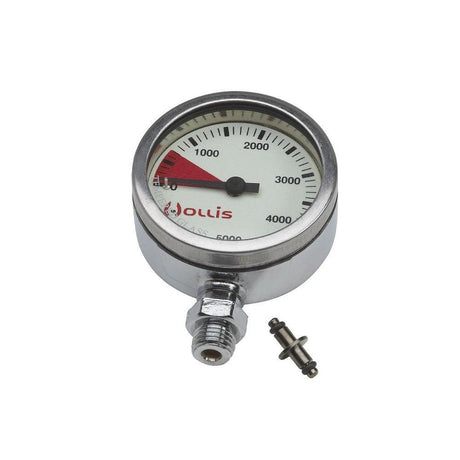


Technical Pressure Gauges — SPGs Built for Mixed Gas and Overhead
A submersible pressure gauge does one job, and the entire design question is how reliably it does that job when conditions are hostile. Technical diving is where that question gets real: high-percentage oxygen mixes that demand cleaned components, overhead environments where a protruding gauge is a snag hazard, sidemount and stage configurations that need specific hose lengths, and dives long enough that a mechanism drifting out of calibration is a genuine problem rather than an inconvenience.
The gauges here are built to that standard — brass and copper Bourdon tube mechanisms, oxygen-clean construction, luminescent dials readable in zero ambient light, and housings designed to survive contact with rock and wreck steel. At DiveCatalog.com, we carry these as an authorized dealer for every brand represented.
The Technical Pressure Gauge Range
Mares SPG52 — Boot-Free Technical Standard
Double welding is the defining feature: it allows the SPG52 to be used without a protective cover, eliminating the bulk and silt-trapping gap a rubber boot introduces. The copper Bourdon tube mechanism holds calibration even after significant shocks — the kind a gauge takes being clipped, dragged, and knocked against a wreck over hundreds of dives. Oxygen-clean compatible for high-percentage mixes.
Two hose lengths, and the distinction matters: the 15cm version is built for sidemount configurations and stage bottles, keeping the gauge tight against the cylinder where it can't trail into a hazard. The 56cm version serves as the main instrument in a standard backmount technical configuration.
Hollis Pressure Gauge Modules
The Low Profile Module is the streamlining option — a super-hard PVD-coated brass housing over a Bourdon tube mechanism, with a scratch-resistant lens, high-contrast dial, and luminescent needle for fast reads in variable light. Ships without a boot and includes standard Air Spool and Viton O-rings. Oxygen clean for mixed gas use. Reads 0–5000 PSI (0–400 BAR) on a 1.5″ (38.1mm) dial.
The standard Pressure Gauge Module uses a larger 2-inch brass SPG core with a luminescent face plate and chrome-plated brass housing built for marine exposure, also rated 0–5000 PSI — the choice when dial size and readability matter more than absolute minimum profile.
Zeagle Single Gauge
A rugged one-piece brass body rated to 5000 psi, using a copper beryllium spiral-wound ring and Bourdon tube design for measurement accuracy. The custom Zeagle dial is large and luminescent, readable in genuinely dim conditions, in a low ergonomic housing. Two integrated attachment points at the top allow multiple rigging configurations. Supplied with an 11″ black rubber hose. Rated for operating temperatures from 40°C to −5°C (104°F to 23°F), available in imperial and metric scales.
Sherwood 2″ Brass Pressure Gauge
A dual-scale 5000psi/350BAR gauge with a 2″ diameter dial, supplied complete with gauge, boot, and hose — a straightforward, dependable pressure solution for divers who want a full assembly rather than sourcing components.
Hollis Large Pony Compact Bottle Gauge
Purpose-sized for redundant and stage cylinders. Connects directly to the 7/16″ high-pressure port of a pony bottle regulator or alternate tank regulator, showing pressure on a compact, easy-to-read display without adding a full-size instrument and hose to a bottle that only needs occasional monitoring.
Scubapro Pressure Gauge Capsules
The gauge mechanisms themselves, for building or rebuilding console assemblies. The Dual Metric/Imperial capsule reads both scales for compatibility across measurement systems. The Imperial capsule uses a 0° orientation with a scale to 6000 psi, housed in a plastic case and mounted in a standard shock-proof boot.
Key Features to Consider
- Oxygen clean certification: Non-negotiable for decompression mixes and any gas above standard nitrox percentages. Hydrocarbon residue in an oxygen-rich pressurized environment is an ignition risk.
- Bourdon tube material: Copper and brass mechanisms hold calibration through impact and temperature swings better than alternatives — the reason they remain the technical standard.
- Hose length: Match to configuration. 11–15cm for sidemount and stages; ~56cm for backmount primary routing under the left arm.
- Boot or boot-free: Boots add impact protection but also bulk and a silt-trapping gap. Double-welded gauges are designed to run without one.
- Dial size vs. profile: A 2″ dial reads faster; a 1.5″ low-profile module snags less in overhead environments. Pick based on where you dive.
- Luminescence: A luminescent dial or floating needle charges under torch light and stays readable when your primary light is pointed elsewhere.
- Pressure rating: 5000 psi covers most cylinders; verify against your fill pressure, particularly with high-pressure steel tanks.
Choosing Your Pressure Gauge
| Configuration | Recommended Gauge | Key Reason |
|---|---|---|
| Sidemount and stage bottles | Mares SPG52 15cm | Short hose keeps the gauge clipped tight; oxygen clean; boot-free |
| Backmount technical primary | Mares SPG52 56cm | Correct routing length; copper Bourdon holds calibration after impact |
| Cave, wreck, and overhead diving | Hollis Low Profile Module | Minimal snag profile; PVD-coated brass; O2 clean; 1.5″ dial |
| Maximum dial readability | Hollis 2″ Module or Zeagle Single Gauge | Larger luminescent dials for faster reads in low visibility |
| Pony and redundant cylinders | Hollis Large Pony Gauge | Direct 7/16″ HP port connection; minimal added bulk |
| Complete ready-to-use assembly | Sherwood 2″ Brass Gauge | Ships with gauge, boot, and hose; dual scale |
| Console builds and rebuilds | Scubapro Gauge Capsules | Dual, metric, or imperial scale mechanisms for custom assemblies |
Maintenance & Care
- Depressurize the system fully before disconnecting a gauge from any hose — never crack a fitting under pressure.
- Rinse in fresh water after every saltwater dive, working water into the swivel and spool connection.
- Verify the needle returns fully to zero when depressurized; an off-zero rest position means the mechanism needs service.
- Inspect the lens for cracks and the hose for bulges, cuts, or corrosion at the crimp before every dive.
- Replace spool O-rings at service intervals; a weeping HP spool is a slow leak that gets worse.
- Keep oxygen-clean gauges segregated from standard lubricants and greases to preserve their certification.
- Avoid tight hose coiling in storage, which stresses the crimp over time.
Why Buy Technical Pressure Gauges from DiveCatalog.com?
- Authorized dealer for Mares, Hollis, Scubapro, Sherwood, and Zeagle — genuine products, full manufacturer warranty
- Oxygen-clean options in stock — for decompression and high-percentage mixed gas diving
- Expert advice — our team can help you match gauge and hose length to sidemount, stage, or doubles configurations
- Fast shipping — in-stock items ship within one business day
- Rewards program — earn points on every purchase
Frequently Asked Questions
What makes a pressure gauge “technical” rather than recreational?
Three things in practice: oxygen-clean construction for high-percentage mixes, a mechanism robust enough to hold calibration through hard use, and configuration options — particularly short hoses and low-profile housings — suited to sidemount, stage bottles, and overhead environments. A recreational SPG on a long hose works fine on a single backmount cylinder in open water and becomes a liability in a cave.
Why would I run a boot-free gauge?
Boots add impact protection, but they also add bulk and create a gap that traps silt, sand, and salt against the housing. Gauges built with double welding, like the Mares SPG52, are engineered to survive without one — giving a cleaner, lower-profile instrument with one less component to maintain.
Do I need a separate gauge for each cylinder in sidemount?
Yes. Each cylinder in a sidemount configuration has its own regulator and needs its own pressure gauge, since you're managing and switching between two independent gas supplies. Short 11–15cm hoses are standard so each gauge sits tight against its own bottle.
What pressure rating do I need?
5000 psi covers the large majority of cylinders in service, including standard high-pressure steel tanks. Check your gauge's rating against the working pressure of the cylinders you actually fill — a gauge rated below your fill pressure is both inaccurate at the top of its range and a safety concern.
Can I add a pressure gauge to my pony bottle?
Yes — the Hollis Large Pony Compact Bottle Gauge connects directly to the 7/16″ high-pressure port on a pony bottle or alternate tank regulator. It's sized specifically so you're not adding a full-length hose and full-size instrument to a cylinder that only needs periodic checking.
How do I know if my gauge needs servicing?
The clearest indicator is a needle that doesn't return fully to zero when the system is depressurized. Also watch for a sticking or jumping needle, moisture or fogging behind the lens, and any weeping at the spool connection. Have gauges serviced alongside your regulators at manufacturer-recommended intervals.
Browse the full technical pressure gauge collection above, or see all Technical Gauges including depth instruments. Reach out if you'd like help speccing gauges and hose lengths for your configuration.