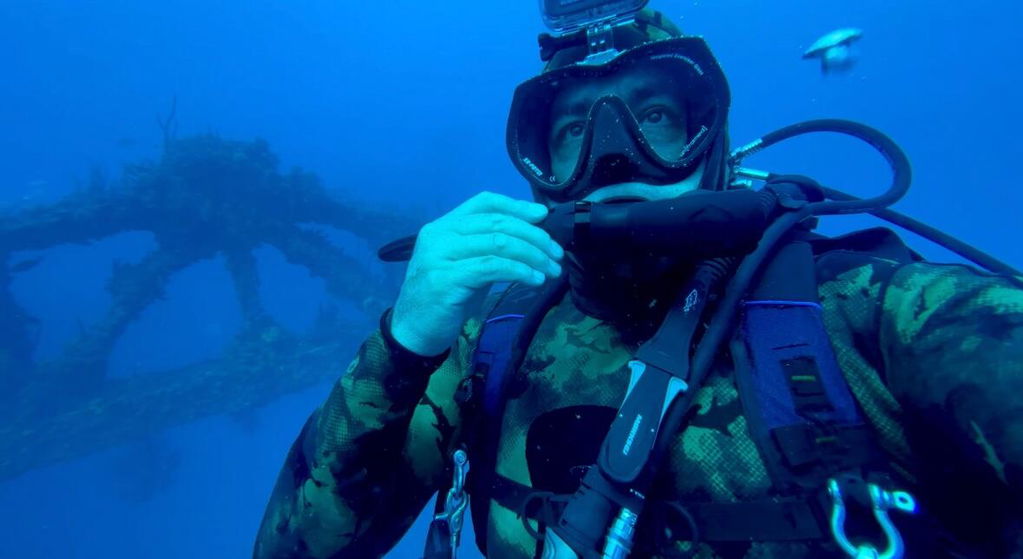
Belize packs an unusual amount of diving into a small country. Most of its coastline is fronted by the Belize Barrier Reef, the largest barrier reef system in the Northern Hemisphere, and beyond it sit three of the four true coral atolls in the Caribbean: Turneffe, Lighthouse Reef, and Glover's Reef. One trip can mix shallow, fishy reef dives off Ambergris Caye, steep walls on the atolls, a deep descent into the Great Blue Hole, and, in spring, a chance at whale sharks off Placencia.
This guide covers where to base yourself, what the Blue Hole dive is actually like and who it suits, when to go, the marine reserve rules you'll run into, and what to pack for warm-water diving in Belize.
Why Divers Choose Belize
The Belize Barrier Reef Reserve System has been a UNESCO World Heritage Site since 1996. It spent nearly a decade on UNESCO's "in danger" list before being removed in 2018, after Belize halted offshore oil exploration and tightened coastal protections. For divers, that translates into a network of marine reserves, regulated sites, and a dive industry used to working within rules.
Practical advantages help too. English is the official language, U.S. dollars are widely accepted (the Belize dollar is pegged at 2 to 1), and the main international airport in Belize City is a short flight from several U.S. hubs. The water is warm year-round, and much of the inner reef is shallow and calm, which makes Belize a good destination for newer divers while the atolls and the Blue Hole give experienced divers plenty to work with.
Where to Base Yourself
Where you stay decides which sites are easy day trips and which mean a long boat ride. Most visitors pick one of these bases.
Ambergris Caye (San Pedro)
Belize's largest island and its busiest dive hub. The barrier reef runs just offshore, so local two-tank trips are short rides. Ambergris is the base for Hol Chan Marine Reserve and Shark Ray Alley, and most operators run full-day Blue Hole trips from here several times a week. Expect the widest choice of dive shops, hotels, and restaurants.
Caye Caulker
Smaller, quieter, and generally cheaper than Ambergris, with a "go slow" island pace. It has access to many of the same reef sites and runs its own Blue Hole and Turneffe day trips.
The Atolls (Turneffe, Lighthouse Reef, Glover's Reef)
A handful of island resorts and liveaboards put you on the atolls themselves, which means more dives on the walls and far less time in transit. Turneffe is the largest atoll and is known for sites like The Elbow, where currents bring in larger fish. Lighthouse Reef holds the Blue Hole and Half Moon Caye. Glover's Reef in the south is the most remote of the three.
Placencia and the South
A mainland peninsula with a laid-back beach-town feel. It's the jumping-off point for the Silk Cayes and for Gladden Spit, the whale shark site, along with dives on the southern barrier reef.
The Great Blue Hole: What the Dive Is Really Like
The Great Blue Hole is a near-circular marine sinkhole on Lighthouse Reef, roughly 300 meters (about 1,000 feet) across and about 124 meters (around 407 feet) deep. Jacques Cousteau brought it to international attention in the early 1970s, and it remains the dive most people ask about before they book a Belize trip.
It helps to know what you're signing up for. The standard dive is a deep, short profile: a descent along the wall to about 40 meters (130 feet), where you swim among massive stalactites under the ledge, followed by a slow ascent. Time at depth is only a few minutes. The dive is atmospheric rather than fish-heavy, though Caribbean reef sharks and other sharks are often seen. Many divers rate the two wall dives that follow on the same trip as better reef diving.
Who Should Do It
A 130-foot dive is outside the limits of an Open Water certification (60 feet) and beyond the 100-foot guideline for Advanced Open Water divers. Training agencies treat 130 feet as the recreational maximum, normally with deep diver training. Requirements vary by operator, so check before you pay. Some operators ask for Advanced Open Water and a logged dive in the past six months, and at least one Ambergris operator asks for a recent logged dive to 80 feet or deeper. If you're rusty, do a few local dives first. You should be comfortable with buoyancy control, air consumption, and nitrogen narcosis at depth before you go.
How the Day Works
Blue Hole trips are long. Boats from Ambergris Caye or Caye Caulker typically leave around 6 a.m., and the crossing to Lighthouse Reef takes about two to two and a half hours each way, depending on the boat and the sea. The usual plan is three dives: the Blue Hole first, then wall dives such as Half Moon Caye Wall and the Aquarium on Long Caye, which are both shallower and full of reef life. Lunch is often on Half Moon Caye, home to a nesting colony of red-footed boobies. The open-water crossing can be rough, so take seasickness medication before you board if you're prone to it.
Park fees are paid on top of most tour prices. At the time of writing, one Ambergris operator lists US$30 for the Blue Hole and US$10 for Half Moon Caye (US$40 total), paid in cash. Confirm the current amount with your operator.
At 130 feet the dive computer on your wrist matters. You want a screen you can read at a glance in dim blue water, clear ascent-rate warnings, and a no-decompression display that doesn't make you hunt for numbers. Our guide on how to choose a dive computer covers what matters, and you can compare options in our dive computer collection. The Shearwater Peregrine is a good match for a trip like this: a large, bright color screen and simple two-button controls.

Shearwater Peregrine Dive Computer
A 2.2-inch full-color screen, Bühlmann ZHL-16C with gradient factors, Air and Nitrox modes, and a rechargeable battery with wireless charging. A good fit for recreational divers who want an easy-to-read computer that travels well.
$580.00 · View product →
Other Dives Worth Planning Around
Hol Chan Marine Reserve and Shark Ray Alley
Hol Chan, a short boat ride south of San Pedro, was set up in 1987 as Belize's first marine reserve. Its core is a channel through the reef, about 30 feet deep, where fishing is banned and fish life is dense: snapper, grunts, groupers, eagle rays, and green turtles. Nearby Shark Ray Alley is a shallow, sandy area where nurse sharks and southern stingrays gather, a habit that started when fishermen cleaned their catch there. It's mostly a snorkel stop, but it's an easy add-on to a reef dive. Reserve fees are usually built into the tour price.
Turneffe Atoll
Turneffe's walls and channels offer some of Belize's best all-around diving. The Elbow, at the atoll's southern tip, is a current-swept point where you may see large schools of jacks and snapper, eagle rays, and reef sharks. It's normally a drift dive, so expect your guide to ask about experience. Inside the atoll, calmer sites with healthy coral suit newer divers.
Gladden Spit Whale Sharks
Each spring, whale sharks come to Gladden Spit and Silk Cayes Marine Reserve, off Placencia, to feed on the spawn released by large groups of snapper. The season runs roughly March through June, and the best window is the days around each full moon, from a couple of days before it to about ten days after. These are blue-water dives with no reef in sight, and access is controlled: you must go with a licensed operator, and the number of boats and divers at the site is limited. Sightings aren't guaranteed, so book more than one day if whale sharks are the main reason for your trip.
Walls and current points like The Elbow and the Lighthouse Reef walls reward efficient finning. A responsive open-heel fin makes it easier to hold position against light current without kicking up sand or touching the reef. The Scubapro Seawing Nova is one we recommend often: it's powerful enough for drift dives and comfortable on long dive days. Browse more options in our open-heel fin collection.

Scubapro Seawing Nova Open Heel Scuba Diving Fins
An articulated Monprene blade with a self-adjusting bungee heel strap that delivers strong thrust and works well for flutter and frog kicks. Suited to divers who want one fin for both reef and drift diving.
$249.00 · View product →
When to Go
You can dive Belize all year, but the seasons affect conditions and prices:
- Dry season (roughly late November to May): The most reliable weather, generally the calmest seas for the long Blue Hole crossing, and peak tourist season. Spring tends to bring the best visibility. Book boats and rooms early for December through April.
- Whale shark season (March to June): Plan around the full moons if Gladden Spit is on your list.
- Wet and hurricane season (June 1 to November 30): The Atlantic hurricane season peaks from roughly August to October. You'll find lower prices and fewer divers, but there's a real chance of rough-weather cancellations. If you travel then, buy travel insurance that covers weather disruption and leave flexible days in your plan.
Water temperature usually runs from about 79°F (26°C) in winter to about 84°F (29°C) in late summer.
Marine Reserve Rules and Reef Etiquette
A lot of Belize's best diving is inside protected areas, and the rules are straightforward:
- Dive with a licensed operator. Reserve fees are usually collected through tour operators or paid on site, so ask what's included when you book.
- Don't touch, stand on, or take anything. That includes coral, shells, and animals. At Shark Ray Alley, let the guides handle any interaction with the sharks and rays.
- No spearfishing on scuba. Belize prohibits spearfishing with scuba gear, and fishing of any kind is banned in the no-take zones of its reserves.
- Keep your distance from whale sharks and turtles. Follow your guide's briefing on approach distances, and never chase or block an animal's path.
- Get your buoyancy dialed in early. Many reef tops are shallow. Fine trim and streamlined gear protect the coral and make for easier dives.
You may also see lionfish being culled. They're an invasive species in the Caribbean, and Belize encourages removing them and eating them. Some restaurants serve them, and they're good.
What to Pack for a Belize Dive Trip
Most shops rent full kits, but divers who bring their own core gear tend to get more out of a multi-day trip, especially on long boat days. (If you're unsure, our guide to bringing your own dive gear vs. renting walks through the trade-offs.) A practical list:
- Exposure protection: A 3mm full suit or a 2–3mm shorty covers most divers. If you run cold or plan three dives a day, the full suit is worth it. See our wetsuit collection.
- Mask, fins, and a dive computer you already know how to use. Don't learn a new computer on the Blue Hole dive.
- A surface marker buoy (SMB): Useful for drift dives at Turneffe and for open-water safety stops at Gladden Spit. Find one in our safety and signaling collection.
- Sun protection: A rash guard, a hat, and mineral sunscreen for the long surface intervals and boat rides.
- Seasickness medication for the open-water crossings.
- Cash in small U.S. bills for park fees and tips.
If you're bringing your own BCD, travel weight and comfort over long dive days are what matter. The Scubapro Hydros Pro 2 is one of our best-selling BCDs because it handles both: the soft Monprene harness packs down flatter than a traditional padded jacket, and the back-inflate design gives you good trim on the walls. Browse more travel-friendly gear in our dive and snorkel travel collection.

ScubaPro Hydros Pro 2 BCD with Monorail Weight Pocket Set
A back-inflate BCD with a molded Monprene harness and the Monorail integrated weight pocket system. A good choice for traveling divers who want a stable, comfortable BCD that packs well.
$1,198.00 · View product →
Getting There and Planning Tips
- Flights: International flights land at Philip S. W. Goldson International Airport (BZE) near Belize City. From there, short domestic flights and water taxis connect to Ambergris Caye and Caye Caulker. Placencia has its own domestic airstrip.
- Book the Blue Hole early in your trip. Trips are weather-dependent and may only run a few days a week. Scheduling it early leaves room for a rain date.
- Save your last day for land. Belize has excellent topside trips, including Maya sites, cave tubing, and jungle lodges. Use them to cover your no-fly time; see our guide to flying after diving for the current recommendations.
- Get dive insurance. The Blue Hole and the outer atolls are a long way from medical care, so dive accident coverage that includes evacuation is worth having.
Final Thoughts
Belize suits a wide range of divers. Newer divers get calm, shallow reefs and a well-organized dive scene, while experienced divers get atoll walls, drift dives, seasonal whale sharks, and one of the most famous deep dives in the world. Plan the Blue Hole honestly around your training and recent experience, time your trip for the season you want, and bring gear you trust. If you're putting your kit together before you go, start with our travel-friendly dive gear.