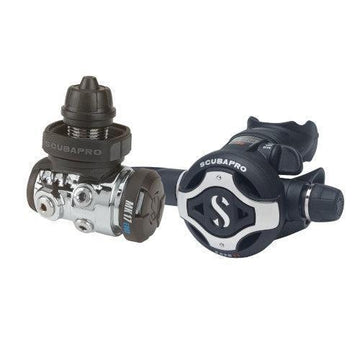
ScubaPro MK17 EVO2 DIN 300 S620Ti Dive Regulator + ScubaPro Sport Bag 125 Roller
ScubaPro MK17 EVO2 DIN 300 S620Ti Dive Regulator + ScubaPro Sport Bag 125 Roller is backordered and will ship as soon as it is back in stock.
What's in this bundle


ScubaPro MK17 EVO2 DIN 300 S620Ti Dive Regulator + ScubaPro Sport Bag 125 Roller is backordered and will ship as soon as it is back in stock.
-
DiveCatalog.com Silicone Frameless Dive Mask
$59.95$6.00
1 -
DiveCatalog.com Retro Oval Dive Mask Without Nose Pocket Compensator
$44.95$4.50
1 -
DiveCatalog.com Classic Oval Dive Mask Silicone
$44.95$4.50
1 -
DiveCatalog.com Metal Coil Lanyard with Snap Clips
$39.95$4.00
1 -
DiveCatalog.com Junior Rubber Oval Dive Mask (15% smaller)
$34.95$3.50
1


-
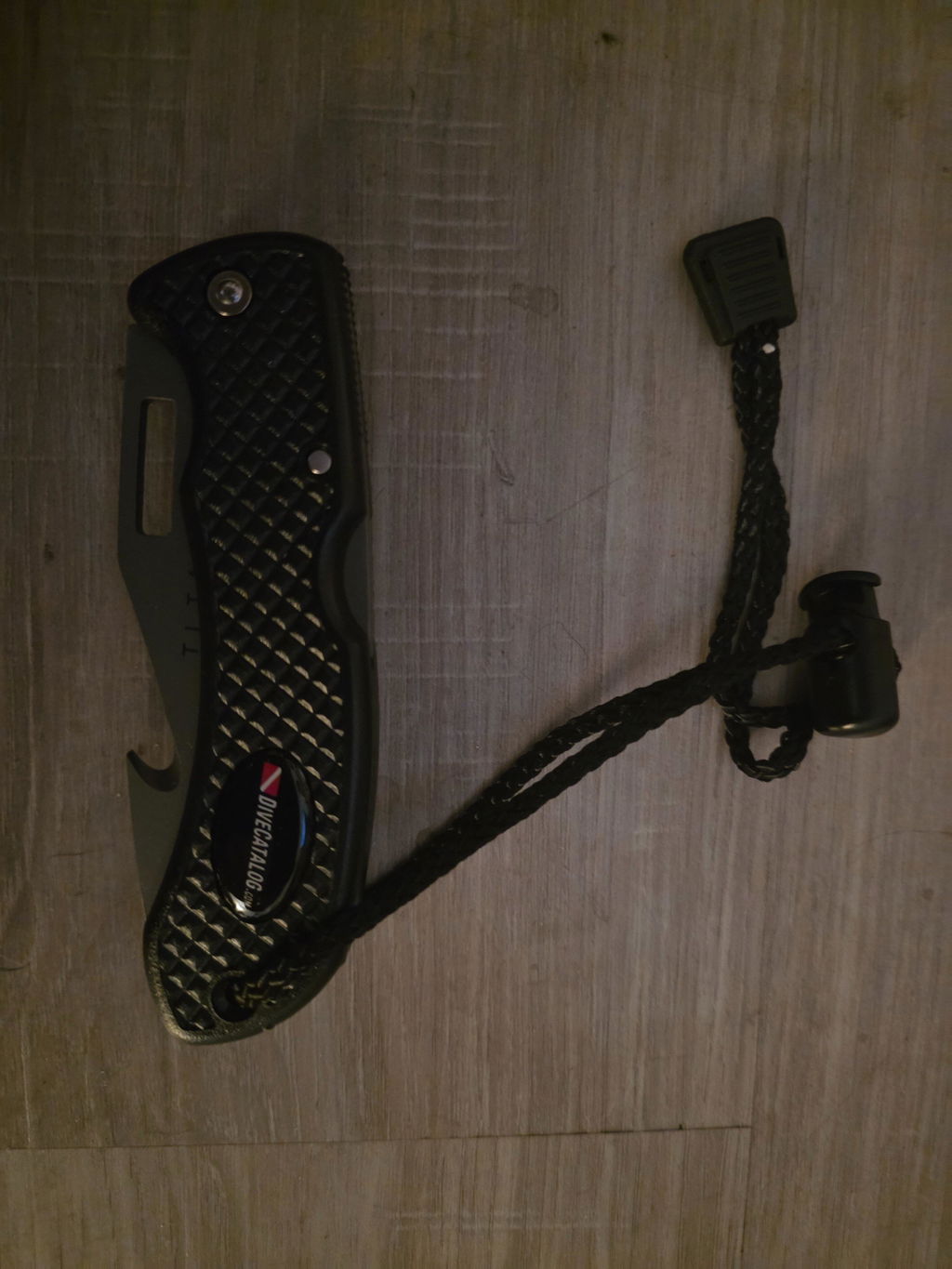
DiveCatalog.com Compact Dive Knife
$34.95$3.50
1 -
DiveCatalog.com Auto Lock Retractor 90cm - Black
$34.95$3.50
1 -
DiveCatalog.com Dive Retractor
$34.95$3.50
1 -
DiveCatalog Dive Essentials - Auto-Rebound Style Retractor
$39.95$4.00
1 -
DiveCatalog Quick Release Coil Lanyard with Buckle Scuba Essentials
$29.95$3.00
1 -
DiveCatalog.com Air Gun - Blue
$27.95$2.80
1 -
DiveCatalog.com Folding Dive Knife
$32.95$3.30
1 -
DiveCatalog.com Diving Double Layer Slate Palm Size (5x7.25") with Pencil
$26.95$2.70
1 -
DiveCatalog.com Line Cutter
$24.95$2.50
1 -
DiveCatalog.com Semi-Dry Snorkel
$23.95$2.40
1 -
DiveCatalog.com Nylon Weight Belt
$22.95$2.30
1 -
DiveCatalog.com Finger Reel with Bolt Snap
$26.95$2.70
1 -
Nocturnal Lights Adjustable Goodman Handle with 1 / 4 Mounting Points HM.GM
$47.99$4.80
1 -
Nocturnal Lights Triple Ball Joint Clamp standard 1 balls BJCLAMP.TRIPLE
$27.99$2.80
1 -
Nocturnal Lights Ball Joint Clamp fits all standard 1 balls BJCLAMP.DOUBLE
$23.99$2.40
1 -
Nocturnal Lights T-base Connector for Ikelite quick release handles TBASE.IKEQR
$23.99$2.40
1 -
Nocturnal Lights YS Arm Adapter for M700 Lights ADP.M7YS
$19.99$2.00
1 -
Nocturnal Lights Ball Joint Adapter for Underwater Ball Joint Arm Strobe and Lighting Systems
$19.99$2.00
1 -
Nocturnal Lights 45 Degree Ball Joint Adapter with T-base Slot BJADAPTER.TBASE45
$18.99$1.90
1 -
Nocturnal Lights 90 Degree Ball Joint Adapter with T-base Slot BJADAPTER.TBASE90
$15.99$1.60
1


Payment & Security
Payment methods
Your payment information is processed securely. We do not store credit card details nor have access to your credit card information.
Product Information
The ScubaPro MK17 EVO2 DIN 300 S620Ti Dive Regulator System pairs a sealed-diaphragm MK17 EVO2 first stage with an air-balanced, titanium-bodied S620Ti second stage, built for cold-water and sediment-rich diving. It uses a DIN connector for direct cylinder compatibility, supports nitrox mixes up to 40%, and is CE certified to EN250A.
Who it is for
This system is suited to divers who want a first stage protected from cold and contaminated water: the MK17 EVO2 uses a dry-chamber, dual-diaphragm design with anti-freeze protection so its internals stay isolated from the surrounding water. Divers who use DIN cylinders and want a titanium-barreled second stage will find the S620Ti matches that use case.
Key details
- MK17 EVO2 first stage: chrome-plated brass body, sealed diaphragm with dry chamber, anti-freeze protection, 2 HP ports at a 15-degree angle and 4 LP ports.
- S620Ti second stage: full titanium barrel, air-balanced valve, adjustable inhalation effort knob, Venturi-Initiated Vacuum Assist (VIVA) lever, compact Hi-Flow mouthpiece, and a reinforced technopolymer casing with metal components.
- System dimensions: 9.06 inches long, 7.09 inches wide, 3.15 inches high, and a total weight of 2.38 pounds.
- Included 75 cm (29.5 inch) low-pressure hose; rated for nitrox mixes up to 40%; CE certified to EN250A European Standards.
Compatibility and sizing
This listing is the DIN connector variant of the MK17 EVO2/S620Ti system, which screws directly into DIN cylinder valves. An INT (Yoke) connector version is also offered by the manufacturer for divers using A-clamp cylinders.
What's in the box
- MK17 EVO2 DIN first stage
- S620Ti second stage
- 75 cm (29.5 inch) low-pressure hose
- 4mm Allen key
- ScubaPro Sport Bag 125 roller duffel
DiveCatalog.com is an authorized ScubaPro dealer and has operated as a dive shop in Irvine, California since 2003. Call or chat with us at 888-701-4017 if you have questions about DIN fit, hose configuration, or compatibility with your current gear.
- Sealed-diaphragm first stage: The MK17 EVO2 uses a dry-chamber, dual-diaphragm design that keeps its internals isolated from contaminated or cold water.
- Anti-freeze protection: The MK17 EVO2 is built with anti-freeze protection intended for cold-water environments.
- Chrome-plated brass body: The first stage body is chrome-plated brass with 2 HP ports at a 15-degree angle and 4 LP ports.
- Air-balanced second stage: The S620Ti uses an air-balanced valve for consistent airflow delivery.
- Titanium barrel: The S620Ti barrel is full titanium, housed in a reinforced technopolymer casing with metal components.
- Adjustable breathing controls: The S620Ti includes an adjustable inhalation effort knob and a Venturi-Initiated Vacuum Assist (VIVA) lever.
- Hi-Flow mouthpiece: The second stage has a compact Hi-Flow mouthpiece.
- DIN connector: This variant uses a DIN first-stage connector for direct cylinder compatibility.
- Nitrox compatible: Rated for nitrox mixes up to 40%.
- CE certified: Certified to EN250A European Standards.
- Included hose: Comes with a 75 cm (29.5 inch) low-pressure hose.
- Includes Sport Bag 125: The system ships with a ScubaPro Sport Bag 125 roller duffel, made of 600 Denier Polyester with PU coating, featuring saltwater-resistant wheels, a backpack strap system, and two interior zippered pockets.
| First stage | MK17 EVO2 |
| First stage material | Chrome-plated brass |
| First stage HP ports | 2 (15-degree angle) |
| First stage LP ports | 4 |
| Second stage | S620Ti |
| Second stage valve housing | Titanium |
| Second stage casing | Reinforced technopolymer with metal components |
| Connector type | DIN |
| Nitrox compatibility | Up to 40% |
| Certification | CE certified to EN250A |
| Hose length (included) | 75 cm (29.5 inches) |
| Length | 9.06 inches |
| Width | 7.09 inches |
| Height | 3.15 inches |
| Weight (regulator system) | 2.38 pounds |
| Sport Bag 125 material | 600 Denier Polyester with PU coating |
| Sport Bag 125 dimensions | 17.7 x 13 x 31.5 inches (45 x 33 x 80 cm) |
| Sport Bag 125 volume | 33 gallons (125 liters), main compartment |
| Sport Bag 125 weight | 5.5 lbs (2.48 kg) |
| Sport Bag 125 weight capacity | 61.73 lbs |
- MK17 EVO2 DIN first stage
- S620Ti second stage
- 75 cm (29.5 inch) low-pressure hose
- 4mm Allen key
- ScubaPro Sport Bag 125 roller duffel
Frequently Asked Questions
ScubaPro MK25 EVO vs MK17 EVO2: which first stage should I choose?
The MK25 EVO is a balanced piston first stage — it delivers the highest airflow and instant response, and it is the choice of many performance-focused and warm-to-cold water divers. The MK17 EVO2 is a sealed diaphragm first stage — its internals are isolated from water, which makes it the traditional pick for very cold water and silty or salty conditions with less maintenance sensitivity. Both are excellent; choose the MK25 EVO for maximum performance and adjustability, the MK17 EVO2 for a fully sealed set-and-forget workhorse.
Should I order my ScubaPro regulator in DIN or yoke?
Yoke (INT) is the most common fitting on rental tanks in North America and the Caribbean, so it is the simplest choice if you mostly dive at resorts. DIN screws directly into the tank valve, is rated for higher pressures, and is standard in Europe and technical diving — and a DIN regulator can use a simple adapter on yoke tanks, which makes DIN the more flexible long-term choice for traveling divers. ScubaPro sells both versions, and a yoke regulator can later be converted to DIN by an authorized dealer using a genuine ScubaPro conversion kit (DIN owners going the other way simply use a DIN-to-yoke adapter — no conversion needed).
What is the difference between the MK25 EVO and the original MK25?
The EVO generation added ScubaPro's XTIS (Extended Thermal Insulating System), which improves freezing resistance in cold water, along with updated materials and finishes. The core balanced-piston design that made the MK25 famous is unchanged — the EVO is the same performance with better cold-water protection.
Is the S620Ti second stage good for cold water, and what does the Ti mean?
Ti refers to the S620Ti's titanium components — the inlet tube and barrel are full titanium, making the second stage ultralight and highly corrosion-resistant, housed in a rugged fiber-reinforced technopolymer casing. It is the successor to ScubaPro's legendary S600: smaller and lighter, but with the same-size diaphragm for effortless airflow in all conditions. Paired with the MK25 EVO first stage, the system is cold-water rated.
How often does a ScubaPro regulator need service?
ScubaPro's official recommendation is a full service by an authorized ScubaPro technician every 2 years or 100 dives, whichever comes first. If you dive heavily (100+ dives a year), ScubaPro recommends an inspection every 6 months and an overhaul annually. Staying on schedule also keeps you eligible for ScubaPro's Parts For Life program — free service parts for the original owner when the regulator is registered and purchased as part of a qualifying package from an authorized dealer. As an authorized ScubaPro dealer, we can help with registration and service when it is due.
How often does a scuba regulator need servicing?
Follow the interval in your regulator's manual, since manufacturers commonly specify an annual inspection or a set number of dives and many warranties depend on it. A regulator is life-support equipment, so service belongs with a factory-trained technician rather than being attempted at home. Have it looked at sooner than scheduled if you notice increased breathing effort, free-flow, bubbles, or water in the second stage.
How do I rinse and care for a regulator after diving?
Make sure the dust cap is dry and firmly seated over the first-stage inlet before the regulator goes anywhere near water, because water inside the first stage is the leading cause of internal corrosion. Rinse in fresh water without pressing the purge button, since purging while depressurized can draw water back into the second stage. Shake out the water and hang it to dry with the hoses in wide, gentle loops rather than tight bends.
Can I fly with a scuba regulator?
Regulators travel well and are usually best carried in hand luggage where they will not be crushed or lost. A regulator holds no gas of its own, so there is nothing inherently problematic about it on an aircraft, though the airline and security screeners always have the final say. Pack it dry with the dust cap in place, in a padded regulator bag or wrapped in soft gear.
Can I use my regulator with nitrox?
Many modern regulators are supplied as suitable for nitrox mixes up to 40 percent oxygen, which is the widely used recreational industry standard, while anything above that requires dedicated oxygen-clean equipment and procedures. Confirm what your specific regulator's manual states, and follow your nitrox training and your fill station's requirements. Never assume a regulator is oxygen-service clean simply because it looks clean or is new.
What is the difference between DIN and yoke regulators?
A yoke (A-clamp) fitting clamps over the tank valve and is the most common connection across much of the recreational world, while a DIN fitting screws into the valve and is standard in much of Europe and in technical diving. DIN captures the o-ring inside the threads, which many divers consider more secure, but yoke is often what rental cylinders provide. Adapters exist in both directions, so check what is used where you dive before deciding.
What is the octopus regulator for?
The octopus is your backup second stage, carried so you can share air with a buddy who is out of gas, or breathe from it yourself if your primary fails or free-flows. It is normally on a longer, brightly colored hose so it is easy to find and hand over under stress. Secure it in the triangle between your chin and the bottom of your rib cage so it is instantly accessible and not dragging through sand or coral.
How should I store a regulator between dive trips?
Store it fully dry, out of sunlight, with the dust cap in place and the hoses in wide loops rather than tightly coiled. Avoid hanging it by the second stages for long periods, which stresses the hose fittings; laying it flat in a padded bag or hanging it by the first stage is kinder. If it has sat unused for a long stretch, have it checked before your next trip rather than assuming it is ready to dive.
What is included with the ScubaPro MK17 EVO2 DIN 300 S620Ti regulator system?
This system includes the MK17 EVO2 DIN first stage, the S620Ti second stage, a 75 cm (29.5 inch) low-pressure hose, and a 4mm Allen key. This listing also ships with a ScubaPro Sport Bag 125 roller duffel for transporting your gear between dives or trips.
Does this listing include the ScubaPro Sport Bag 125 roller bag?
Yes, this listing includes a ScubaPro Sport Bag 125 roller duffel along with the MK17 EVO2/S620Ti regulator set. The bag is made of 600 Denier Polyester with PU coating, holds 125 liters (33 gallons) in its main compartment, and has a weight capacity of 61.73 pounds.
What are the weight and dimensions of the MK17 EVO2/S620Ti regulator?
The complete MK17 EVO2/S620Ti regulator system measures 9.06 inches long, 7.09 inches wide, and 3.15 inches high, with a total weight of 2.38 pounds.
Is the ScubaPro MK17 EVO2/S620Ti regulator certified for diving?
Yes, the MK17 EVO2/S620Ti regulator system is CE certified to EN250A European Standards. It is also rated for use with nitrox mixes up to 40%.