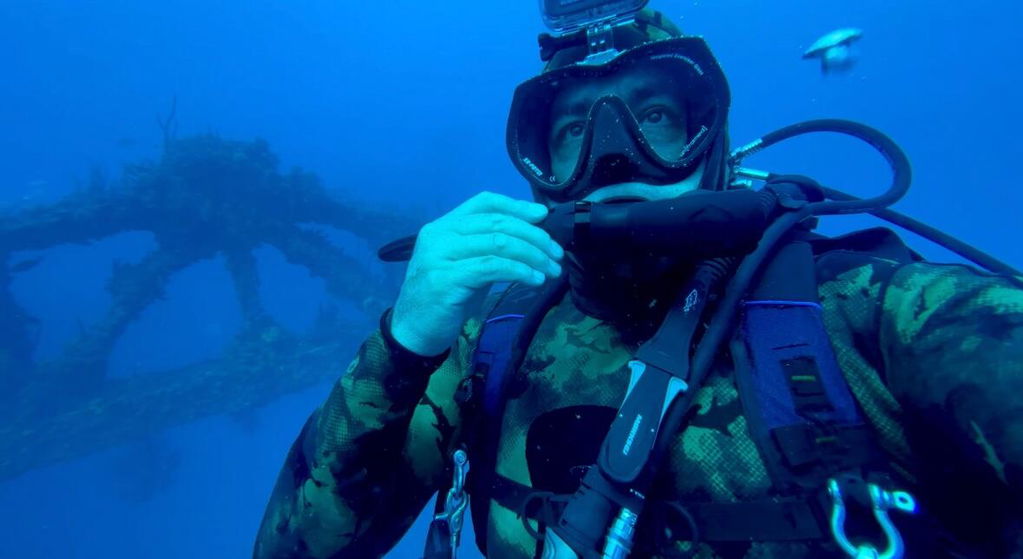
Every season our club fills a dive boat with people who have never been on one together, and every season the first trip goes the same way. The veterans have their gear stowed and their coffee poured before the lines come off the dock. The newer divers are still figuring out where the camera table is, whose fins are under the bench, and what the captain meant by "pool's open." By the second dive everyone has settled in, and by the ride home the boat feels like a floating clubhouse.
If your first boat dive with a club or charter is coming up, this guide covers what actually happens on a typical recreational dive boat, the unwritten rules that make a crowded deck work, what to pack, and how to handle seasickness. None of it is hard. It just helps to know it before you step aboard.
What to expect on a club boat dive day
Every operator runs things a little differently, but most recreational boat days follow a similar rhythm:
- Check-in at the dock. Expect to show your certification card, sign a liability release, and confirm any rentals or nitrox fills. Arrive at the time the boat asks for, not the departure time. Late arrivals hold up everyone.
- Load and set up. The crew will usually point you to a spot on the bench where your tank is secured. Set up your BCD and regulator on that tank, then stow your bag where the crew asks.
- Boat and safety briefing. Before or just after leaving the dock, the captain or divemaster covers the boat layout, where the oxygen kit and first aid are, how entries and exits work, and the rules for the day.
- Dive briefing at the site. You'll hear about depth, current, maximum dive time, the planned profile, and what to do if you surface away from the boat. Listen to the whole thing even if you've dived the site before. Conditions change.
- Roll call before and after every dive. The crew counts every diver in and every diver back out. Answer clearly when your name is called and never get back in the water without telling the crew.
- Surface interval. Swap tanks if needed, eat, hydrate, and log your dive while the boat moves to the next site.
Many clubs charter the whole boat, which makes the day more relaxed, but the crew still runs the deck. On a club trip, the captain's rules come first and the club's plan fits inside them.

Dive boat etiquette: the unwritten rules
A dive deck is a small, wet, moving space shared with a dozen or more people and a lot of heavy equipment. These are the habits that make experienced crews and boatmates happy to dive with you again.
Keep your gear in your own space
Your space is the stretch of bench in front of your tank and the area under it. Keep your fins, mask, and weights there, not in the walkway. Pack your bag so the things you'll need first are on top, then get it out of the way. A compact mesh bag that you can unpack quickly and slide under the bench is far easier to live with than a hard suitcase.
The Hollis Nylon Mesh Duffel is the kind of bag we see on most club boats. It drains on deck, airs out wet gear on the ride home, and squashes down when it's empty.

Hollis Nylon Mesh Duffel Scuba Diving Gear Bag
A laminated nylon mesh duffel that drains and airs out wet equipment while keeping it contained. A practical choice for boat days where gear lives under a bench.
$114.95 · View product →
Never leave a tank standing
An upright tank on a rocking boat is a falling tank. Keep cylinders in the racks or bungees, and if you have to set one down, lay it flat where it can't roll. The same goes for weight belts and loose weights. Put them where they can't slide or be tripped over.
Respect the rinse buckets and camera table
Most boats have a dedicated rinse bucket or table for cameras, and it's for cameras only. Masks, computers, and lights go in their own bucket if the boat provides one. Dropping a mask into the camera tank is one of the fastest ways to make a photographer nervous, because a stray fin or mask can scratch a dome port. Ask the crew which bucket is which on your first trip.
Gear up when the crew says, not before
Suiting up too early leaves you overheating on deck, and suiting up too late holds up the line at the entry point. Watch for the crew's cue, help your buddy, and be ready in your turn. When you're at the entry, check that the water below is clear, then go. After you surface, move away from the entry area so the next diver has room.
Follow the ladder routine
When you come back to the boat, stay clear of the ladder while someone else is on it. A diver who slips can fall straight back down, tank first. Most crews will ask you to hand up your fins, or keep them on for certain ladder styles, and take any camera from you first. Climb when it's your turn, then clear the top of the ladder right away.
Keep the dry areas dry
Cabins, galleys, and sometimes the upper deck are dry zones. Don't walk in dripping or sit on cushions in a wet suit. Bring a towel and a change layer so you can dry off and warm up between dives.
Be kind to the crew
Boat crews handle heavy tanks, tie in at the site, manage entries, and keep an eye on everyone in the water. A thank-you goes a long way. On many U.S. charter boats, crews also rely on tips, so ask your club organizer or the operator what's customary before the trip.

Safety habits that matter on a boat
Boat diving adds a few risks you don't have from shore: current that can carry you away from the boat, boat traffic overhead, and the fact that the boat can't always come right to you. A few habits cover most of it.
Do a buddy check every time
A busy deck is exactly where small mistakes happen, like an air valve left closed or a weight belt clipped wrong. Do a full pre-dive check with your buddy before every entry. If you're diving with someone new, our guide to the BWRAF pre-dive buddy check walks through it step by step.
Carry a surface marker buoy
If you come up away from the boat, a tall, bright marker is how the crew finds you. Some operators and dive regions require every diver or buddy team to carry one. Even where it isn't required, it's one of the most useful pieces of safety gear you can own for boat diving, along with a whistle on your BCD.
The Hollis Compact Orange Closed Cell Signal Marker Buoy is a compact, high-visibility option that fits easily in a BCD pocket. You can see more options in our safety sausage and SMB collection.

Hollis Compact Orange Closed Cell Signal Marker Buoy
A bright orange marker buoy with closed-cell foam that helps it hold its shape at the surface. Sized to stow in a BCD pocket for divers who want a simple signal on every boat dive.
$78.95 · View product →
Dive your own computer and the boat's plan
On a boat, the crew sets limits such as a maximum dive time or a time to be back on board. Within those limits, each diver follows their own computer, since no two people's dive histories are exactly the same. If you've been renting a computer or sharing one with your buddy, a boat trip is a good reason to get your own.
The Shearwater Peregrine is one we recommend often to club members stepping up from rentals. The full-color screen is easy to read, the two-button menus are simple to learn, and it logs every dive to the Shearwater app.

Shearwater Peregrine Dive Computer
A wrist computer with a 2.2-inch color screen, Air, Nitrox, 3 Gas Nitrox, and Gauge modes, wireless charging, and Bluetooth log downloads. A good fit for recreational divers moving from rental computers to their own.
$580.00 · View product →
Not sure which features you need? Our guide to choosing a dive computer breaks it down, or browse the full dive computers collection.
Speak up early
If you feel unwell, your gear isn't working, or the conditions look beyond your comfort level, tell the divemaster or your club organizer before the dive. Sitting out a dive is always an acceptable choice, and nobody on a good club trip will think less of you for it.
How to handle seasickness on a dive boat
Seasickness is common, even among experienced divers, and it's worth planning for. A few steps help:
- Sleep well and skip alcohol the night before. Being tired or dehydrated makes motion sickness worse.
- Eat something light. A plain breakfast usually sits better than an empty stomach or a heavy, greasy meal.
- Stay in fresh air and watch the horizon. Avoid the cabin and diesel fumes, and don't read or look at your phone on the ride out.
- Gear up efficiently. Time spent bent over your gear on a rocking deck is when many people start to feel sick, so have everything ready to go.
- Talk to your doctor about medication. Some motion sickness medications cause drowsiness, which is a concern when diving. Divers Alert Network suggests trying any medication on a non-diving day first to see how it affects you, and taking it before you board rather than after symptoms start.
If you do get sick, tell the crew and use the downwind side of the boat. Many divers feel better once they're in the water, but don't dive if you're vomiting, dizzy, or not thinking clearly.
What to pack for a club boat dive
Bring your scuba gear plus a few things that make the day on deck easier:
- Certification card (or digital card), dive log, and any paperwork the operator asked for
- Mask, fins, BCD, regulator, computer, and exposure protection, checked and serviced before the trip
- Surface marker buoy and whistle
- Mask defog and a spare mask strap or fin strap from our mask accessories
- Towel, warm layer, windbreaker, and a hat for the ride home
- Water and snacks, especially if the boat doesn't serve lunch
- A small dry bag for your phone, keys, and wallet
- Seasickness plan, if you need one
Thermal comfort matters more on a boat than most new divers expect. Wind on a wet suit cools you fast between dives. If you're often cold by the second dive, it may be time for a thicker suit or a hood from our wetsuits collection.
Quick answers to common questions
Do I need my own gear for a boat dive?
Not always. Many operators rent full sets of equipment, but you'll need to reserve them in advance. Owning your own mask, computer, and exposure protection makes a big difference in comfort and confidence, and those are the pieces most club members buy first.
What is a giant stride entry?
It's the most common way to enter from a boat with a flat platform or open side. With your BCD inflated and your regulator in your mouth, you hold your mask and regulator with one hand and step out with a long stride, keeping your legs apart. Smaller boats often use a backward roll instead, where you sit on the edge and roll backward into the water. The crew will tell you which entry to use.
What if I surface away from the boat?
Stay calm, inflate your BCD, and deploy your surface marker buoy so the crew can see you. Use your whistle if needed. Follow whatever lost-diver procedure was covered in the briefing, and stay with your buddy.
Should I tip the dive boat crew?
Tipping customs vary by region and operator. Ask your club organizer or the operator before the trip so you know what's typical.
Your first boat dive with the club
The first boat dive with a new group can feel like a lot to keep track of, but the routine becomes second nature after a trip or two. Show up early, keep your gear tidy, listen to the briefing, and look out for your buddy. That's what turns a boat full of strangers into a dive club.
If you're still looking for a group to dive with, our guide to finding and joining a local dive club is a good place to start. When you're ready to fill gaps in your kit before the trip, browse our gear bags, surface marker buoys, and dive computers. We'll see you at the dock.