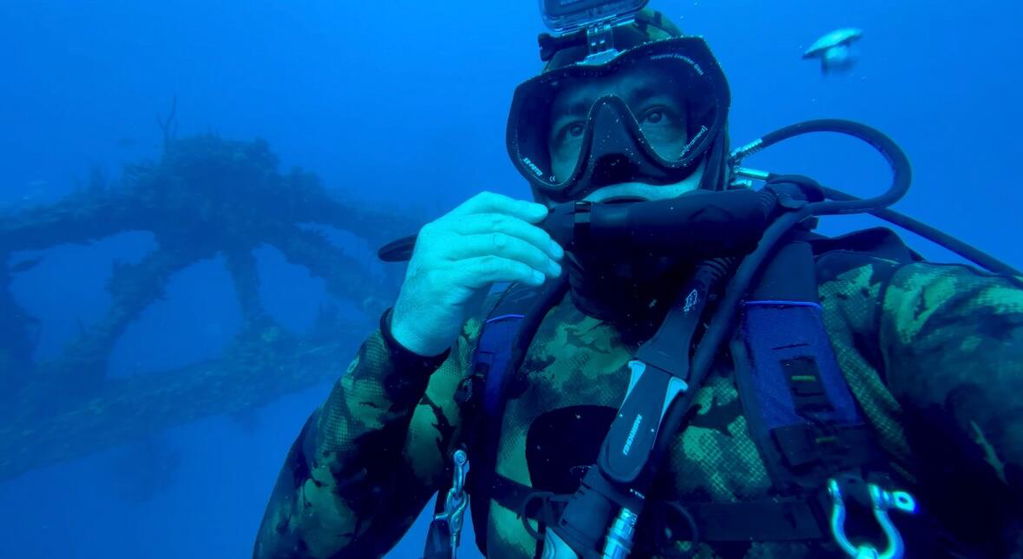
Coral reefs cover less than one percent of the ocean floor, yet roughly 25 percent of all marine species spend part of their lives in, on, or around them, according to NOAA. When you drop onto a reef, you are swimming through one of the most crowded neighborhoods on Earth. The way you move, where you put your hands, and how you manage your gear all decide whether you pass through as a quiet guest or leave a scar behind. The good news is that low-impact diving is a set of learnable skills, not a matter of luck.
Why the reef reacts to every diver
Reef-building corals are living animals with a limestone skeleton, and most of them grow slowly. Many massive corals add well under an inch of height per year, so a colony the size of a basketball can be older than the diver looking at it. A single careless fin kick can snap off growth that took a decade to build, and a broken branch is also an open wound where disease and algae can take hold.
This is not a hypothetical concern. In a widely cited study of diver behavior on coral reefs, researchers found that fins were responsible for about 45 percent of all diver contacts with the reef, and that roughly a quarter of recorded contacts caused visible damage to the reef or its residents (Roche et al., published in Environmental Management). The encouraging flip side is that these contacts are almost entirely preventable, and the single most effective prevention is buoyancy.
Master neutral buoyancy before anything else
Neutral buoyancy is the skill of hovering in the water column without rising or sinking, and it is the foundation of every reef-safe dive. A diver who is properly weighted and balanced can hang a body length above the coral, adjust position with breath alone, and never need to touch the bottom to stabilize. A diver who is over-weighted or poorly trimmed tends to sink toward the reef, kick harder to compensate, and reach out for a handhold when the surge picks up.
Your buoyancy compensator does the heavy lifting here, so it is worth diving one that fits well and vents easily. A back-inflate design keeps air behind you rather than around your chest, which encourages a flat, horizontal trim that carries your fins up and away from the reef. Models like the Scubapro Hydros Pro 2 are popular for exactly this reason, and you can compare other options in our BCDs collection.

Dial in your weighting
Carrying too much lead is one of the most common reasons divers struggle near the reef. Do a proper weight check at the surface: with an empty BCD and a normal breath held, you should float at eye level and sink slowly as you exhale. Add only the small amount needed to hold a safety stop with a near-empty tank. Less lead means less air in your BCD, smaller buoyancy swings, and far less flailing when you need to hold position.
Streamline everything that dangles
A dragging octopus, a swinging gauge console, or an unclipped light is a reef-wrecking pendulum you may not even feel. Clip your alternate air source and instruments close to your body, tuck away hoses, and make sure nothing hangs below your torso when you are horizontal. A few well-placed clips and retractors turn loose gear into a tidy profile; you can find them in our clips and retractors collection.
Keep your hands, knees, and camera off the reef
The simplest rule in marine conservation is also the oldest: take only photos, leave only bubbles. Do not touch, hold, ride, chase, or feed marine life, and resist the urge to steady yourself on coral even for a moment. Beyond the physical breakage, many corals and invertebrates are coated in a protective mucus layer that a single touch can strip away, and the oils on human skin can stress the animal further.
Feeding wildlife carries its own hidden cost. It alters natural behavior, concentrates animals in unnatural numbers, and can make them dependent or aggressive. Watching a reef behave as it would without you is the whole point of being there.
Watch your fins, and watch the sand
Even without touching the coral, your fins can do damage by stirring up sediment. A cloud of kicked-up sand drifts across the reef and settles on coral polyps, smothering the tissue and blocking the light their symbiotic algae need. Over a busy dive site, repeated silt-outs add up.
The fix is technique. In tight spots or over silty bottoms, switch to a frog kick or a modified flutter that pushes water backward rather than downward, and keep your knees bent so your fin tips stay high. When you photograph a subject low on the reef, establish neutral buoyancy first and hover; never plant yourself on the bottom to get the shot.
Dive within your limits and stay aware
Task loading is the enemy of good buoyancy. A diver who is cold, low on air, narced, or scrambling to track depth and time has little attention left for the reef. Building a calm, well-monitored dive frees up the focus that reef-safe diving requires. A clear, easy-to-read dive computer lets you track depth, no-decompression time, and ascent rate at a glance instead of guessing, so you can spend your attention on your trim and your surroundings. Entry-friendly wrist units like the Tusa TC1 handle this well, and you can browse more in our wrist dive computers collection.

Protect the reef before you even get wet
Some of the most meaningful choices happen on the boat. Chemical sunscreens containing oxybenzone and octinoxate can harm coral even in tiny concentrations, so cover up with a rash guard and choose mineral, reef-safe formulas instead. We covered this in depth in our guide to reef-safe sunscreen for divers. Secure your trash and gear so nothing blows overboard, rinse gear away from storm drains that feed the sea, and follow local guidance on anchoring and mooring buoys.
Follow a recognized code of conduct
You do not have to invent good practice on your own. Green Fins, the coral-reef conservation initiative coordinated by the Reef-World Foundation in partnership with the UN Environment Programme, publishes a 15-point Code of Conduct for divers and snorkelers covering contact, wildlife interaction, waste, and more. Dive operators that adopt these standards have measurably reduced the environmental pressure they place on reefs. Choosing a Green Fins member operator when you travel is one of the easiest ways to make your diving dollars work for the ocean rather than against it.
The reef remembers
Every skill on this list, from a careful weight check to a well-clipped octopus to a hover instead of a hand on the coral, adds up to the same thing: a dive the reef will not remember you by. Coral reefs are already contending with warming water, acidification, and disease. The direct, physical damage from divers is the one threat we control completely, one buoyant, hands-off dive at a time. Get these habits right, and you become part of the reason a reef is still worth diving for the next generation.