Tusa Paragon Professional Diving Mask
In stock — ships from Irvine, CA
This item is currently on backorder. Order now to reserve yours, and we will ship it as soon as it is back in stock.
Tusa Paragon Professional Diving Mask - Black Skirt is backordered and will ship as soon as it is back in stock.
Pickup currently unavailable at 23D


-
DiveCatalog.com Quick Dry Multi Accessory Dive Gear Hanger for Boots, Gloves, Hood
$22.95$2.30
-
DiveCatalog Comfo-Bite Silicone Mouthpiece for Scuba Diving Regulators Black
$19.95$2.00
-
DiveCatalog Essentials - BCD and Regulator Hanger for Scuba Diving
$19.95$2.00
-
DiveCatalog Scuba Essentials - Wetsuit Hanger for Scuba Diving, Snorkeling, and Surfing
$19.95$2.00
-
DiveCatalog.com Underwater Pointer Tool
$18.95$1.90


-
DiveCatalog Hose Clamp for Scuba Diving - Scuba Essentials
$17.95$1.80
-
DiveCatalog Neoprene Mask Strap Cover
$17.00$1.70
-
DiveCatalog.com Basic Black Silicone Snorkel
$14.95$1.50
-
DiveCatalog Silicone Scuba Octopus Mouthpiece with Color Tab & Regulator Tie – Comfortable, Leak-Free Dual Color
$14.95$1.50
-
DiveCatalog Silicone Mouthpiece Replacement w/ installation - Scuba Essentials
$14.95$1.50
-
DiveCatalog.com Regulator Necklace
$11.95$1.20
-
DiveCatalog.com Water Activated LED Signal Light - Green
$11.95$1.20
-
DiveCatalog x Stream2Sea Mask Defog, Flip Cap Bottle, 2 oz
$9.95$1.00
-
DiveCatalog Fin Strap and Scuba Dive Accessory Holder Scuba Accessory Essentials
$9.95$1.00
-
DiveCatalog.com Dry Box with Lanyard
$9.95$1.00
-
DiveCatalog x Stream2Sea Mask Defog Spray, 2 oz
$9.95$1.00
-
DiveCatalog Female Quick Release Clip with Bungee cord for Scuba Accessory Essentials
$8.99$0.90
-
DiveCatalog.com Fin Holder
$7.95$0.80
-
DiveCatalog.com Scuba Mouthpiece Cover
$7.95$0.80
-
Multi-Purpose Clip with Male and Female Quick Release Clip and Bungee Cord Scuba Accessory Essentials by DiveCatalog
$5.95$0.60
-
DiveCatalog Scuba Essentials - PVC Tank Valve Protector for Scuba Diving Tanks
$5.95$0.60
-
Whistle with Lanyard in Orange by DiveCatalog
$5.00$0.50
-
DiveCatalog.com Stainless Steel 2 Inch Webbing Keeper with Serrated Teeth Weights
$1.95$0.20
-
DiveCatalog.com Weight Keeper Stopper - Black
$1.45$0.15


Payment & Security
Payment methods
Your payment information is processed securely. We do not store credit card details nor have access to your credit card information.
Save with a package
Ready-made packages that include this item

Product Information
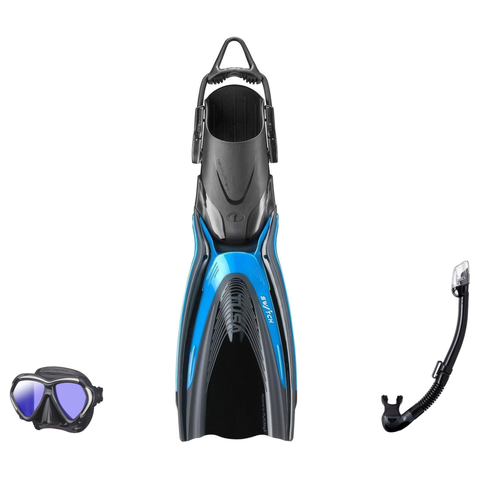
The TUSA Paragon Professional Diving Mask is built around a reinforced TRI-MIX frame that combines multiple materials to balance rigidity and comfort, holding the lens securely while allowing the skirt to conform to the face. Freedom Technology with Fit II shapes the silicone skirt so it seals with less strap tension, reducing pressure points on longer dives.
The lens uses CrystalView optical glass with a UV 420 treatment that blocks harmful ultraviolet and high-energy visible light, paired with an anti-reflective coating that cuts glare and improves clarity underwater. An angled strap adjustor with side hold allows precise strap positioning, and the offset buckle design makes adjustment easier with gloved hands. The mask is available in several skirt and frame color combinations, including fabric strap versions.
- Reinforced TRI-MIX frame balances rigidity and comfort
- Freedom Technology with Fit II seals with less strap tension
- CrystalView optical glass for sharp, distortion-free vision
- UV 420 lens treatment blocks ultraviolet and high-energy visible light
- Anti-reflective lens coating reduces glare and improves clarity
- Angled strap adjustor with side hold for precise positioning
- Offset buckle design eases adjustment with gloved hands
- Available in multiple color options, including fabric strap versions
| Brand | TUSA |
| Model | Paragon (M-2001S) |
| Frame | Reinforced TRI-MIX |
| Lens | CrystalView optical glass |
| Lens Treatments | UV 420 and anti-reflective coating |
| Skirt | Silicone with Freedom Technology and Fit II |
| Buckle | Offset design with angled strap adjustor and side hold |
| Strap Options | Silicone or fabric |
| Use | Scuba diving and snorkeling |
⚠️ WARNING: This product contains chemicals known to the State of California to cause cancer, birth defects, or other reproductive harm. For more information, visit www.P65Warnings.ca.gov.
Frequently Asked Questions
How do I know if a dive mask fits?
Hold the mask against your face without using the strap, look slightly down, and inhale gently through your nose; a well-fitting mask holds itself in place for a few seconds. Check that the skirt seals all the way around without digging into the nose bridge, and that there are no gaps at the temples or above the upper lip. A mustache can break the seal even on an otherwise well-fitting mask.
Why does my brand new mask fog no matter what I do?
New masks carry a residue on the inside of the lens left over from manufacturing, and defog cannot stick to it, so the mask fogs until that film is removed. The standard pre-treatment is to scrub the inside of the lens with a mild abrasive cleaner or a dedicated mask prep and rinse thoroughly, repeating if it still fogs. Follow the mask manufacturer's instructions, particularly on coated or mirrored lenses.
How do I stop my dive mask from fogging?
Apply defog to a dry lens before the dive, spread it over the whole inner surface, then rinse briefly with water just before you put the mask on. Fogging happens when warm moist air meets a cooler lens, so a clean lens with a thin surfactant film is the fix. Keep sunscreen off your fingers before handling the inside of the lens, because that film fogs badly and is hard to remove.
Why do dive masks need tempered glass?
Dive mask lenses should be tempered safety glass because it resists scratching and, if it ever does break, fractures into blunt granules rather than sharp shards next to your eyes. Untempered or plastic lenses scratch easily and can craze, which is why tempered glass is standard on scuba masks. Look for the tempered marking etched on the lens.
Can I get a dive mask with my prescription?
Yes, prescription options are widely available, usually as masks fitted with stock corrective lenses in set diopter steps, custom-ground lenses installed in compatible frames, or bonded lenses added to an existing lens. Not every mask frame accepts replacement lenses, so check compatibility before you buy the frame. An optician or a dive shop can help translate your glasses prescription into a mask lens choice.
How should I care for and store a dive mask?
Rinse it in fresh water after each dive day and let it dry away from direct sunlight, avoiding anything abrasive on the treated inner lens. Store it in a rigid mask box so the skirt is never compressed or creased, since a set crease in the skirt is a permanent leak. Keep silicone skirts away from petroleum products and prolonged UV, both of which yellow and harden them.
How tight should a dive mask strap be?
Not tight at all in the usual sense, because over-tightening is the most common cause of both leaks and headaches; a hard-pulled strap distorts the skirt and lifts the seal off your face. The strap should sit high on the back of your head and be just firm enough to keep the mask from shifting. If you need it cranked down to stop a leak, the mask does not fit your face.