


Suunto Ocean Dive Computer and Sport Watch
In stock — ships from Irvine, CA
This item is currently on backorder. Order now to reserve yours, and we will ship it as soon as it is back in stock.
Suunto Ocean Dive Computer and Sport Watch - Sand is backordered and will ship as soon as it is back in stock.
Pickup currently unavailable at 23D


-
DiveCatalog.com Quick Dry Multi Accessory Dive Gear Hanger for Boots, Gloves, Hood
$22.95$2.30
-
DiveCatalog Comfo-Bite Silicone Mouthpiece for Scuba Diving Regulators Black
$19.95$2.00
-
DiveCatalog Essentials - BCD and Regulator Hanger for Scuba Diving
$19.95$2.00
-
DiveCatalog Scuba Essentials - Wetsuit Hanger for Scuba Diving, Snorkeling, and Surfing
$19.95$2.00
-
DiveCatalog.com Underwater Pointer Tool
$18.95$1.90


-
DiveCatalog Hose Clamp for Scuba Diving - Scuba Essentials
$17.95$1.80
-
DiveCatalog Neoprene Mask Strap Cover
$17.00$1.70
-
DiveCatalog.com Basic Black Silicone Snorkel
$14.95$1.50
-
DiveCatalog Silicone Scuba Octopus Mouthpiece with Color Tab & Regulator Tie – Comfortable, Leak-Free Dual Color
$14.95$1.50
-
DiveCatalog Silicone Mouthpiece Replacement w/ installation - Scuba Essentials
$14.95$1.50
-
DiveCatalog.com Regulator Necklace
$11.95$1.20
-
DiveCatalog.com Water Activated LED Signal Light - Green
$11.95$1.20
-
DiveCatalog x Stream2Sea Mask Defog, Flip Cap Bottle, 2 oz
$9.95$1.00
-
DiveCatalog Fin Strap and Scuba Dive Accessory Holder Scuba Accessory Essentials
$9.95$1.00
-
DiveCatalog.com Dry Box with Lanyard
$9.95$1.00
-
DiveCatalog x Stream2Sea Mask Defog Spray, 2 oz
$9.95$1.00
-
DiveCatalog Female Quick Release Clip with Bungee cord for Scuba Accessory Essentials
$8.99$0.90
-
DiveCatalog.com Fin Holder
$7.95$0.80
-
DiveCatalog.com Scuba Mouthpiece Cover
$7.95$0.80
-
Multi-Purpose Clip with Male and Female Quick Release Clip and Bungee Cord Scuba Accessory Essentials by DiveCatalog
$5.95$0.60
-
DiveCatalog Scuba Essentials - PVC Tank Valve Protector for Scuba Diving Tanks
$5.95$0.60
-
Whistle with Lanyard in Orange by DiveCatalog
$5.00$0.50
-
DiveCatalog.com Stainless Steel 2 Inch Webbing Keeper with Serrated Teeth Weights
$1.95$0.20
-
DiveCatalog.com Weight Keeper Stopper - Black
$1.45$0.15


Payment & Security
Payment methods
Your payment information is processed securely. We do not store credit card details nor have access to your credit card information.
Save with a package
Ready-made packages that include this item
Product Information
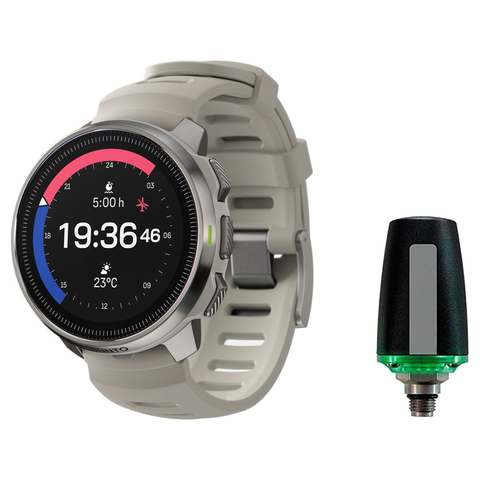
Suunto Ocean is a dive computer and sport watch designed for scuba diving and adventures above the surface. With a modern Finnish design and rugged durability, it serves as dependable gear for diving and everyday wear, blending precision timing with reliable performance for divers and outdoor enthusiasts alike.
This all-in-one device supports multiple dive modes, a wide range of sport profiles, and offline maps, delivering practical benefits for scuba, diving, and athletic activities. It combines a premium sensor suite with long battery life and smart features to help you plan, track, and recover between sessions.
- Multiple dive modes: Simple single gas for recreational diving with nitrox support; multigas support for technical diving.
- Alarms and safety: Audible and vibration alerts with customizable depth, dive time, and tank pressure alarms.
- Suunto Bühlmann 16 GF algorithm: Gradient Factors and configurable ascent profiles for decompression planning.
- Freedive mode: Separate underwater and surface views with multiple alarms for depth, dive time, and ascent/descent speed.
- Sport and activity tracking: 95+ sport modes including yoga, mountaineering, gym, cycling; create custom modes for your active life.
- Offline maps and navigation: Free offline maps with contour lines and landmarks; waypoint navigation and route planning.
- Outdoor sensors: Built-in altimeter, barometer, compass; dual-band GPS/GNSS for accurate location tracking; storm alerts and weather forecasts.
- Sleep and recovery: Tracks sleep stages, steps, calories, and recovery with heart rate variability insights.
- Smart features: Smart notifications, music controls, and phone-finder alerts to stay connected on the go.
- Durable build: Stainless steel bezel, sapphire crystal, glass fibre reinforced polyamide case, silicone strap; water resistant to 100 m.
- Specifications at a glance: 49.9 x 49.9 x 13.2 mm; weight 99 g; 32 GB memory; battery life up to 26 days in time mode; training mode with GPS up to 40–120 h depending on settings.
- Measurements: 49.9 x 49.9 x 13.2 mm / 1.96 x 1.96 x 0.52 "
- Weight: 99 g / 3.49 oz
- Bezel material: Stainless steel
- Glass material: Sapphire crystal
- Case material: Glass fibre reinforced polyamide
- Strap material: Silicone
- Country of manufacture: FI
- What's in the box? Suunto Ocean, USB charging cable, printed user documentation
Technical Specifications
General
General
| Bezel material: | Stainless steel |
| Glass material: | Sapphire crystal |
| Case material: | Glass fibre reinforced polyamide |
| Strap material: | Silicone |
| Weight: | 99 g / 3.49 oz |
| Wrist sizes: | 130-215 mm |
| Strap width: | 22 mm |
| Water resistance: | 100 m |
| Battery type: | Rechargeable lithium-ion |
| Battery life in time mode: | 26 days |
| Battery life with 24/7 tracking and mobile notifications: | 12 days |
| Battery life in training mode with GPS: | 40h / 50h / 70h / 120h |
| Operating temperature: | -20°C to +55°C / -5°F to +130°F |
| Storage temperature: | -20°C to +55°C / -5°F to +130°F |
| Recommended charging temperature: | 0°C to +35°C / +32°F to +95°F |
| Operating temperature in dive mode: | 0°C to +40°C / +32°F to +104°F |
| Display size: | 1.43'' |
| Display type: | Matrix |
| Display resolution: | 466 x 466 |
| Compass accuracy: | 5° |
| Compass resolution: | 1° |
| Memory: | 32GB |
Connectivity
Connectivity
| Smartphone compatibility: | Most common models supported |
| Connectivity (between devices): | Bluetooth |
| Phone notifications on the watch: | Yes |
| Media controls on watch: | Yes |
| Compatible with online sports communities: | Strava, TrainingPeaks, and more |
| Watch software updates from cloud: | Automatic over the air software updates |
| Compatible with Suunto app: | Yes |
| Send predefined replies to incoming messages from watch: | Android only |
Compass
Compass
| Digital compass: | Yes |
| Tilt compensation: | Yes |
| Declination correction: | Yes |
| Direction scale: | degrees / mils |
| Needle: | north indicator |
| Compass accuracy: | 5° |
| Compass resolution: | 1° |
Physical Specs
Physical Specs
| Operating temperature: | -20°C to +55°C / -5°F to +130°F |
| Storage temperature: | -20°C to +55°C / -5°F to +130°F |
| Recommended charging temperature: | 0°C to +35°C / +32°F to +95°F |
| Operating temperature in dive mode: | 0°C to +40°C / +32°F to +104°F |
Battery Life
Battery Life
| Intelligent charge reminders: | Yes |
| In time mode: | Up to 26 days |
| With 24/7 tracking and mobile notifications: | Up to 12 days |
| Training mode with GPS: | Up to 40h / 50h / 70h / 120h |
24/7
Activity Tracking
Activity Tracking
| Calories burned: | Yes |
| Step counter: | Yes |
| Activity targets: | Steps, calories |
| Activity history: | Yes |
| Calorie burn rate and heart rate during daily activities: | Yes |
| Daily minimum heart rate tracking: | Yes |
Sleep Tracking
Sleep Tracking
| Sleep duration: | Duration, average HR during sleep |
| Bed times: | Yes |
| Time awake: | Yes |
| Deep sleep: | Yes |
| Light sleep: | Yes |
| REM: | Yes |
| HRV from sleep: | Yes |
| Average and minimum heart rate during sleep: | Yes |
Stress and Recovery
Stress and Recovery
| Daily resource level: | Yes |
| Stress and recovery status: | Yes |
| HRV measurement: | Yes |
Outdoor Functions
GPS Tracking & Navigation
GPS Tracking & Navigation
| Offline maps on watch: | Yes |
| Satellite systems: | GPS, GLONASS, GALILEO, QZSS, BEIDOU |
| GNSS frequency support: | L1 + L5 |
| Simultaneous satellite systems: | 4 |
| Max connected satellites: | 32 |
| Intelligent battery modes: | Performance, Endurance, Ultra, Tour |
| GPS recording rate: | Best, Good, OK, Low |
| Waypoint and visual route navigation: | Yes |
| Zoom levels in navigation: | Yes |
| Auto zoom based on route shape: | Yes |
| Breadcrumb trail in real time: | Yes |
| Route planning with altitude profile: | Yes |
| Outdoor terrain and satellite maps: | Yes |
| Global heatmaps for 20 sports: | Yes |
| Route planning with heatmaps: | Yes |
| Personal route library synced to watch: | Yes |
| Snap to route: | Yes |
| Point of Interest (POI) navigation: | Yes |
| ETA (estimated time of arrival): | Yes |
| GPS track analysis: | Yes |
| Track logging, viewing and sharing: | Yes |
Altimeter
Altimeter
| Offline maps on watch: | Yes |
| Satellite systems: | GPS, GLONASS, GALILEO, QZSS, BEIDOU |
| GNSS frequency support: | L1 + L5 |
| Simultaneous satellite systems: | 4 |
| Max connected satellites: | 32 |
| Intelligent battery modes: | Performance, Endurance, Ultra, Tour |
| GPS recording rate: | Best, Good, OK, Low |
| Waypoint and visual route navigation: | Yes |
| Zoom levels in navigation: | Yes |
| Auto zoom based on route shape: | Yes |
| Breadcrumb trail in real time: | Yes |
| Route planning with altitude profile: | Yes |
| Outdoor terrain and satellite maps: | Yes |
| Global heatmaps for 20 sports: | Yes |
| Route planning with heatmaps: | Yes |
| Personal route library synced to watch: | Yes |
| Snap to route: | Yes |
| Point of Interest (POI) navigation: | Yes |
| ETA (estimated time of arrival): | Yes |
| GPS track analysis: | Yes |
| Track logging, viewing and sharing: | Yes |
| Barometric altitude: | Yes |
| GPS altitude: | Yes |
| Combined GPS and barometric altitude (FusedAlti™): | Yes |
| Altitude in daily mode: | Yes |
| Altitude acclimation with blood oxygen: | Yes |
| Total ascent/descent: | Yes |
| Vertical speed: | Yes |
| Automatic alti/baro profile: | Yes |
| Log recording rate: | 1 s |
| Resolution: | 1 m |
| Range: | -500 - 9999 m |
Weather
Weather
| Offline maps on watch: | Yes |
| Satellite systems: | GPS, GLONASS, GALILEO, QZSS, BEIDOU |
| GNSS frequency support: | L1 + L5 |
| Simultaneous satellite systems: | 4 |
| Max connected satellites: | 32 |
| Intelligent battery modes: | Performance, Endurance, Ultra, Tour |
| GPS recording rate: | Best, Good, OK, Low |
| Waypoint and visual route navigation: | Yes |
| Zoom levels in navigation: | Yes |
| Auto zoom based on route shape: | Yes |
| Breadcrumb trail in real time: | Yes |
| Route planning with altitude profile: | Yes |
| Outdoor terrain and satellite maps: | Yes |
| Global heatmaps for 20 sports: | Yes |
| Route planning with heatmaps: | Yes |
| Personal route library synced to watch: | Yes |
| Snap to route: | Yes |
| Point of Interest (POI) navigation: | Yes |
| ETA (estimated time of arrival): | Yes |
| GPS track analysis: | Yes |
| Track logging, viewing and sharing: | Yes |
| Barometric altitude: | Yes |
| GPS altitude: | Yes |
| Combined GPS and barometric altitude (FusedAlti™): | Yes |
| Altitude in daily mode: | Yes |
| Altitude acclimation with blood oxygen: | Yes |
| Total ascent/descent: | Yes |
| Vertical speed: | Yes |
| Automatic alti/baro profile: | Yes |
| Log recording rate: | 1 s |
| Resolution: | 1 m |
| Range: | -500 - 9999 m |
| Sunrise/sunset times: | Yes |
| Storm alarm: | Yes |
| Sea level pressure: | Yes |
| Automatic alti/baro profile: | Yes |
| Temperature: | Yes |
| Temperature display range: | -20° C to +55° C / -5° F to +130° F |
| Temperature resolution: | 1° C / 1.5° F |
| Pressure resolution: | 1 hPa |
| Altitude graph shown in exercise summary: | Yes |
⚠️ WARNING: This product contains chemicals known to the State of California to cause cancer, birth defects, or other reproductive harm. For more information, visit www.P65Warnings.ca.gov.
Frequently Asked Questions
Why do I need my own dive computer?
A dive computer tracks the actual depth and time profile you have dived and the tissue loading that follows from it, which is personal to you. A rented computer has no record of your recent diving, and swapping models each trip means relearning the display and menus when you should be focused on the dive. Owning one you know well is a genuine safety and comfort improvement.
Can two divers share one dive computer?
No. A computer only tracks the profile of the diver actually wearing it, and even buddies who stay together do not follow identical depth and time profiles. Every diver needs their own computer, and passing one between divers or between dives is unsafe.
What does conservatism mean on a dive computer?
Conservatism settings make the computer's calculations more cautious, shortening allowed bottom times and adding margin beyond the base algorithm. Divers commonly add conservatism for factors such as cold, hard work, fatigue, or repetitive multi-day diving. How and when to adjust it is covered by your training and your computer's manual, so set it before you get in the water and follow what your computer tells you during the dive.
What kind of battery does a dive computer use?
Broadly there are two types: user-replaceable batteries, often a coin cell that you or a shop swap along with resealing an o-ring, and sealed rechargeable batteries that charge from a cable or dock. Neither is universally better, as replaceable cells are convenient on remote trips while rechargeables avoid ever opening the case. Follow the manual exactly for any battery change, because an improperly seated o-ring or case is the usual cause of a flooded computer.
Do I need to do anything special for altitude diving or flying after diving?
Yes, both change the picture, and both are governed by your training agency's guidance and your computer's instructions rather than any casual rule of thumb. Many computers have an altitude setting that must be configured before diving at elevation, and most display a no-fly or surface-interval countdown after a dive. Follow your computer and your training, and ask a dive professional or a dive-medicine specialist if you are unsure.
How do I care for a dive computer?
Rinse it in fresh water after every dive day, paying attention to the buttons and around any sensor openings where salt crystals form, and let it dry fully before storing. Keep it out of prolonged direct sun and extreme heat, and avoid pressing buttons while sand is on the case. Inspect the strap or bungee often, because a failed strap loses far more computers than a failed computer does.
What is the difference between wrist, console, and air-integrated dive computers?
A wrist computer is worn like a watch and read by raising your arm, while a console computer sits at the end of a hose with your other gauges. Air integration means the computer also displays cylinder pressure, either through a hose or from a wireless transmitter on the first stage, and often estimates remaining gas time. All of them run a decompression algorithm, so the real difference is where you read the information and how much of it you get.
