-
DiveCatalog.com Quick Dry Multi Accessory Dive Gear Hanger for Boots, Gloves, Hood
$22.95$2.30
-
DiveCatalog Comfo-Bite Silicone Mouthpiece for Scuba Diving Regulators Black
$19.95$2.00
-
DiveCatalog Essentials - BCD and Regulator Hanger for Scuba Diving
$19.95$2.00
-
DiveCatalog Scuba Essentials - Wetsuit Hanger for Scuba Diving, Snorkeling, and Surfing
$19.95$2.00
-
DiveCatalog Hose Clamp for Scuba Diving - Scuba Essentials
$17.95$1.80


-
DiveCatalog Neoprene Mask Strap Cover
$17.00$1.70
-
DiveCatalog.com Basic Black Silicone Snorkel
$14.95$1.50
-
DiveCatalog Silicone Mouthpiece Replacement w/ installation - Scuba Essentials
$14.95$1.50
-
DiveCatalog.com Diving Slate Palm Size (5"x6") with Pencil
$13.95$1.40
-
DiveCatalog.com Regulator Necklace
$11.95$1.20
-
DiveCatalog.com Water Activated LED Signal Light - Green
$11.95$1.20
-
DiveCatalog x Stream2Sea Mask Defog, Flip Cap Bottle, 2 oz
$9.95$1.00
-
DiveCatalog Fin Strap and Scuba Dive Accessory Holder Scuba Accessory Essentials
$9.95$1.00
-
DiveCatalog x Stream2Sea Mask Defog Spray, 2 oz
$9.95$1.00
-
DiveCatalog.com Dry Box with Lanyard
$9.95$1.00
-
DiveCatalog Female Quick Release Clip with Bungee cord for Scuba Accessory Essentials
$8.99$0.90
-
DiveCatalog.com Fin Holder
$7.95$0.80
-
DiveCatalog.com Scuba Mouthpiece Cover
$7.95$0.80
-
Multi-Purpose Clip with Male and Female Quick Release Clip and Bungee Cord Scuba Accessory Essentials by DiveCatalog
$5.95$0.60
-
DiveCatalog Scuba Essentials - PVC Tank Valve Protector for Scuba Diving Tanks
$5.95$0.60
-
Whistle with Lanyard in Orange by DiveCatalog
$5.00$0.50
-
DiveCatalog.com Stainless Steel 2 Inch Webbing Keeper with Serrated Teeth Weights
$1.95$0.20
-
DiveCatalog.com Weight Keeper Stopper - Black
$1.45$0.15


Payment & Security
Payment methods
Your payment information is processed securely. We do not store credit card details nor have access to your credit card information.
Product Information
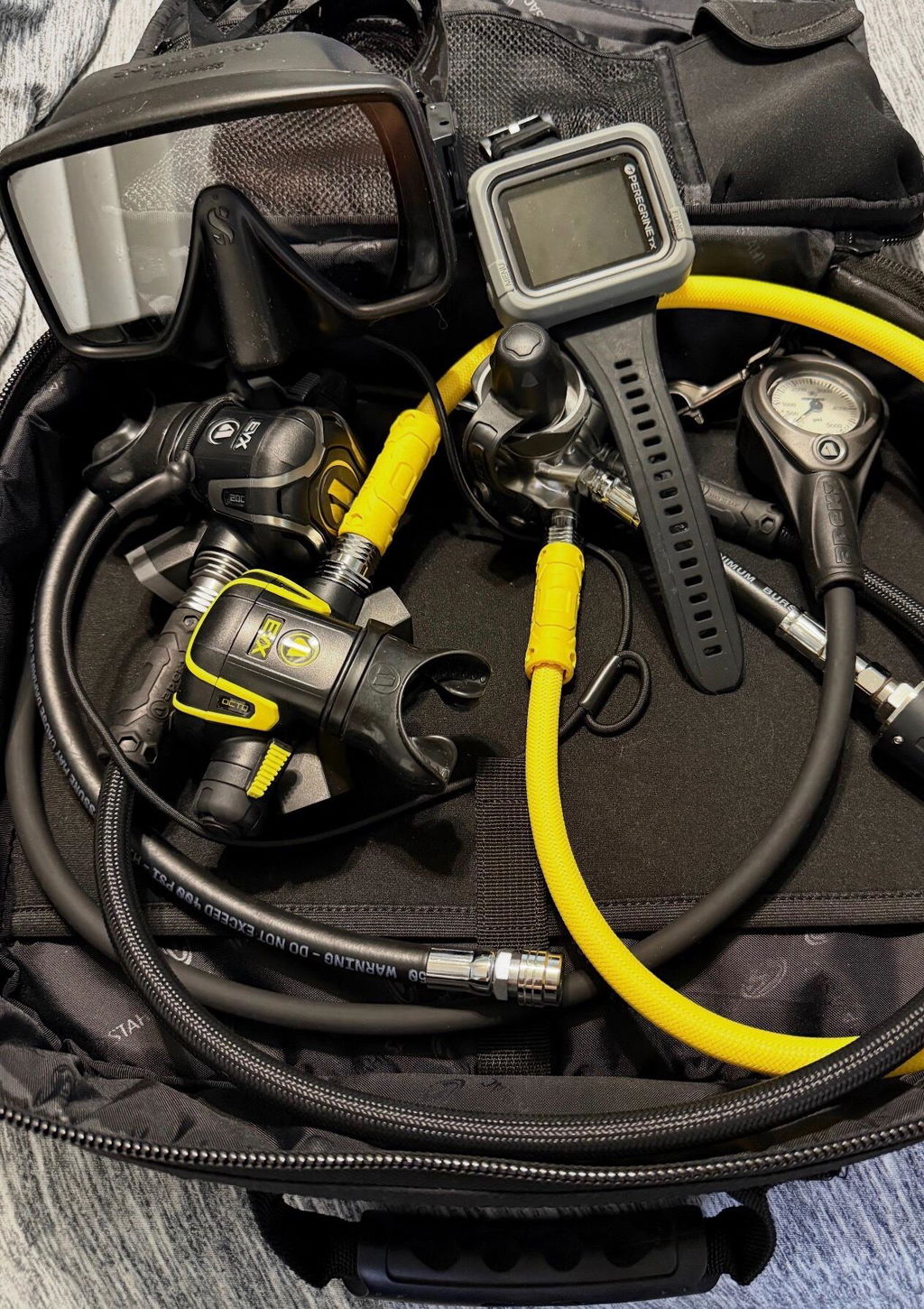
- Compact and lightweight second stage improves comfort and helps reduce jaw fatigue on long-duration dives.
- Large heat exchanger to improve cold water performance and freezing resistance. High-performance pneumatically balanced lever-operated poppet valve.
- Large, overmolded self-flushing and controllable purge button.
- Ergonomic Venturi lever is easy to use and locate. Flexible nylon braided hose has better cold water performance than a traditional rubber hose.
- Standard metallic hose connection for interchangeability. Comfo-bite mouthpiece has a unique bridge that fits across the upper palate and does not require bite pressure to stay in place.
- Reusable mouthpiece clip makes it simple to change mouthpieces in the field.
- Durable and flexible rubber exhaust tee provides excellent bubble diversion.
- UV inhibitors to help prevent discoloration of the white materials.
⚠️ WARNING: This product contains chemicals known to the State of California to cause cancer, birth defects, or other reproductive harm. For more information, visit www.P65Warnings.ca.gov.
Frequently Asked Questions
How often does a scuba regulator need servicing?
Follow the interval in your regulator's manual, since manufacturers commonly specify an annual inspection or a set number of dives and many warranties depend on it. A regulator is life-support equipment, so service belongs with a factory-trained technician rather than being attempted at home. Have it looked at sooner than scheduled if you notice increased breathing effort, free-flow, bubbles, or water in the second stage.
How do I rinse and care for a regulator after diving?
Make sure the dust cap is dry and firmly seated over the first-stage inlet before the regulator goes anywhere near water, because water inside the first stage is the leading cause of internal corrosion. Rinse in fresh water without pressing the purge button, since purging while depressurized can draw water back into the second stage. Shake out the water and hang it to dry with the hoses in wide, gentle loops rather than tight bends.
Can I fly with a scuba regulator?
Regulators travel well and are usually best carried in hand luggage where they will not be crushed or lost. A regulator holds no gas of its own, so there is nothing inherently problematic about it on an aircraft, though the airline and security screeners always have the final say. Pack it dry with the dust cap in place, in a padded regulator bag or wrapped in soft gear.
Can I use my regulator with nitrox?
Many modern regulators are supplied as suitable for nitrox mixes up to 40 percent oxygen, which is the widely used recreational industry standard, while anything above that requires dedicated oxygen-clean equipment and procedures. Confirm what your specific regulator's manual states, and follow your nitrox training and your fill station's requirements. Never assume a regulator is oxygen-service clean simply because it looks clean or is new.
What is the difference between DIN and yoke regulators?
A yoke (A-clamp) fitting clamps over the tank valve and is the most common connection across much of the recreational world, while a DIN fitting screws into the valve and is standard in much of Europe and in technical diving. DIN captures the o-ring inside the threads, which many divers consider more secure, but yoke is often what rental cylinders provide. Adapters exist in both directions, so check what is used where you dive before deciding.
What is the octopus regulator for?
The octopus is your backup second stage, carried so you can share air with a buddy who is out of gas, or breathe from it yourself if your primary fails or free-flows. It is normally on a longer, brightly colored hose so it is easy to find and hand over under stress. Secure it in the triangle between your chin and the bottom of your rib cage so it is instantly accessible and not dragging through sand or coral.
How should I store a regulator between dive trips?
Store it fully dry, out of sunlight, with the dust cap in place and the hoses in wide loops rather than tightly coiled. Avoid hanging it by the second stages for long periods, which stresses the hose fittings; laying it flat in a padded bag or hanging it by the first stage is kinder. If it has sat unused for a long stretch, have it checked before your next trip rather than assuming it is ready to dive.