


Zeagle Recon
In stock — ships from Irvine, CA
This item is currently on backorder. Order now to reserve yours, and we will ship it as soon as it is back in stock.
Zeagle Recon - L (Large) is backordered and will ship as soon as it is back in stock.
Pickup currently unavailable at 23D
| US (MEN'S) | EU (UNISEX) | |
|---|---|---|
| MD | 6 – 8.5 | 39 – 41 |
| LG | 9 – 11 | 42 – 43 |
| XL | 11.5 – 13 | 44 – 46 |


-
DiveCatalog.com Quick Dry Multi Accessory Dive Gear Hanger for Boots, Gloves, Hood
$22.95$2.30
-
DiveCatalog Comfo-Bite Silicone Mouthpiece for Scuba Diving Regulators Black
$19.95$2.00
-
DiveCatalog Essentials - BCD and Regulator Hanger for Scuba Diving
$19.95$2.00
-
DiveCatalog Scuba Essentials - Wetsuit Hanger for Scuba Diving, Snorkeling, and Surfing
$19.95$2.00
-
DiveCatalog Hose Clamp for Scuba Diving - Scuba Essentials
$17.95$1.80


-
DiveCatalog Neoprene Mask Strap Cover
$17.00$1.70
-
DiveCatalog.com Basic Black Silicone Snorkel
$14.95$1.50
-
DiveCatalog Silicone Mouthpiece Replacement w/ installation - Scuba Essentials
$14.95$1.50
-
DiveCatalog.com Diving Slate Palm Size (5"x6") with Pencil
$13.95$1.40
-
DiveCatalog.com Regulator Necklace
$11.95$1.20
-
DiveCatalog.com Water Activated LED Signal Light - Green
$11.95$1.20
-
DiveCatalog x Stream2Sea Mask Defog, Flip Cap Bottle, 2 oz
$9.95$1.00
-
DiveCatalog x Stream2Sea Mask Defog Spray, 2 oz
$9.95$1.00
-
DiveCatalog Fin Strap and Scuba Dive Accessory Holder Scuba Accessory Essentials
$9.95$1.00
-
DiveCatalog.com Dry Box with Lanyard
$9.95$1.00
-
DiveCatalog Female Quick Release Clip with Bungee cord for Scuba Accessory Essentials
$8.99$0.90
-
DiveCatalog.com Fin Holder
$7.95$0.80
-
DiveCatalog.com Scuba Mouthpiece Cover
$7.95$0.80
-
Multi-Purpose Clip with Male and Female Quick Release Clip and Bungee Cord Scuba Accessory Essentials by DiveCatalog
$5.95$0.60
-
DiveCatalog Scuba Essentials - PVC Tank Valve Protector for Scuba Diving Tanks
$5.95$0.60
-
Whistle with Lanyard in Orange by DiveCatalog
$5.00$0.50
-
DiveCatalog.com Stainless Steel 2 Inch Webbing Keeper with Serrated Teeth Weights
$1.95$0.20
-
DiveCatalog.com Weight Keeper Stopper - Black
$1.45$0.15


Payment & Security
Payment methods
Your payment information is processed securely. We do not store credit card details nor have access to your credit card information.
Save with Open Box or Used Purchase
 Sale price $167.95 Regular price $209.95Unit price

Save with a package
Ready-made packages that include this item
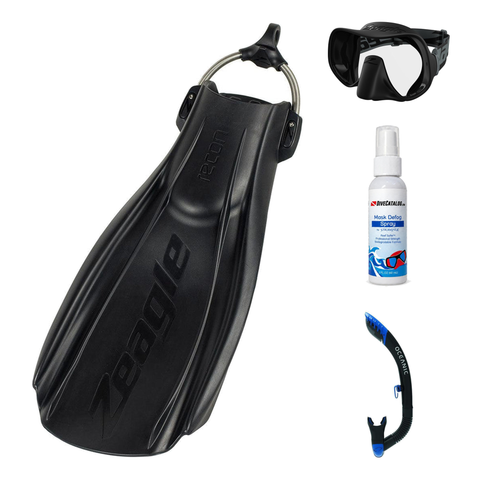 Save $9.95 (3% off)
Product Information
The Zeagle Recon Fin provides stable, responsive propulsion for scuba and diving gear, featuring an uncomplicated design and aquadynamic technology. Constructed from premium natural rubber for durability in challenging saltwater environments, it supports smooth kicks and reliable performance across diverse dive conditions.
Engineered for consistent performance across kick styles, the Recon fin combines a thoughtful blade angle with durable construction to enhance thrust and control. Its design emphasizes efficiency and practicality, helping divers maintain momentum and stability during technical and recreational dives.
- Constructed from premium natural rubber for max durability; Recon fins are compression-molded for precise stiffness, varying rigidity and suppleness across the entire fin
- 25 degree angle between blade and foot pocket tried and tested to optimize thrust
- Two thick side rails provide snapback and flex where it’s needed
- Integrated foot pocket rails efficient energy transfer from foot to fin for responsiveness
- Built from compression molded rubber for rigidity and suppleness where it’s needed
- Negatively buoyant
- Advanced performance features integrated with an uncomplicated design for optimal thrust and response
- Maximum thrust in flutter, and stability in alternative kick strokes with the latest aerodynamic technology
- Tough and durable natural rubber defies the elements
- Adjustable, quick fastening stainless steel buckle system. Generous foot pockets fit all sizes of wetsuit and drysuit boots
Constructed from premium natural rubber for max durability, Recon Fins are compression-molded for precise stiffness, varying rigidity and suppleness for optimal performance across the entire fin.
⚠️ WARNING: This product contains chemicals known to the State of California to cause cancer, birth defects, or other reproductive harm. For more information, visit www.P65Warnings.ca.gov.
Frequently Asked Questions
What is the difference between open-heel and full-foot fins?
Open-heel fins have an adjustable heel strap and are worn with dive boots, which protect your feet on shore entries and add warmth. Full-foot fins slip on like a shoe against bare skin or a thin sock, and are typically lighter and easier to pack. Most scuba divers choose open-heel fins with boots, while full-foot fins suit warm water, snorkeling, and pool use.
How should scuba fins fit?
Open-heel fins should be sized around the boots you will actually wear, snug with the strap set so your heel stays seated and your foot does not slide forward in the pocket. Full-foot fins should fit like a firm shoe, with no heel lift, no pinched toes, and no gap that lets water pump in and out. Too loose causes heel blisters and lost fins in current, and too tight causes foot cramps.
Should I buy dive boots before fins?
Choose your boots first and size open-heel fins around them, because sole thickness changes the foot-pocket size you need. A thin warm-water boot and a thick cold-water boot with a rugged sole can easily be a fin size apart. If you already own fins, bring them along when you buy boots so you can check the combination.
Are spring straps worth it?
Spring straps replace the adjustable rubber strap with a stainless spring that stretches on and off, so there is nothing to buckle with cold or gloved hands and no rubber strap to perish and snap mid-dive. They hold constant tension, which many divers find more comfortable and consistent. They are sized rather than adjustable, so match the length to your foot pocket and the boots you dive.
What are the best fins for travel?
For travel, length and weight matter most, so shorter blades and travel-specific open-heel or full-foot models pack more easily and save baggage allowance. Some fins have removable blades or compact foot pockets designed for luggage. Pack fins along the outside walls of your bag, where they also act as protection for softer gear.
What is the difference between paddle and split fins?
Paddle fins use a solid blade that transfers power directly, which many divers prefer for precision, control in current, and non-flutter kicks such as the frog kick. Split fins have a slit down the blade that lets water pass through, which generally makes flutter kicking easier on the legs but gives up some control and works less well with other kick styles. Neither is inherently better, so let your kick style, leg strength, and conditions decide, and try both if you get the chance.
How do I care for dive fins?
Rinse them in fresh water after each dive day, paying attention to buckles, springs, and strap channels where salt collects, and dry them out of direct sunlight. Store them flat or hanging from the foot pocket rather than standing on the blade tips, which can take a permanent bend. Check straps, buckles, and any screws before every trip, since a failed buckle is the most common fin problem.
