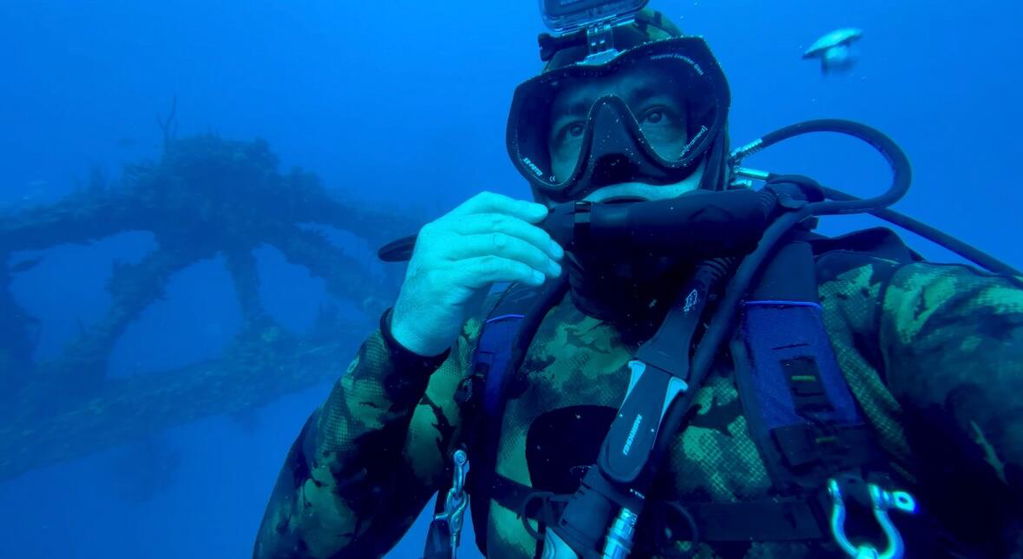
There's a particular moment on the first morning of a liveaboard trip that converts divers for life. It's around 6:30 a.m., the boat has moved overnight to a site you've only read about, and the only decision in front of you is whether to have coffee before or after the dive. No packing the car. No hauling tanks down a dock. Your gear is already assembled on a bench with your name on it, and the reef is directly beneath the hull.
That's the appeal, and it's why liveaboard diving is how most divers eventually reach the remote sites — Raja Ampat, the Similans, the Galápagos, Tubbataha — that day boats simply cannot get to. But a week at sea is a different kind of trip, and the divers who enjoy it most are the ones who understood the rhythm before they boarded. Here's what a first liveaboard trip actually looks like, what operators expect of you, and what belongs in the bag.
What a Liveaboard Actually Is
A liveaboard is a dive boat you sleep on. Trips typically run five to ten nights, and the vessel repositions between dive sites — usually overnight, while you sleep — so you wake up somewhere new. Cabins range from shared bunks on budget boats to en-suite staterooms on luxury vessels, and nearly everything is included: tanks, weights, meals, and the dives themselves.
The practical advantage is time in the water. A land-based trip gives you maybe two dives a day around a boat schedule and a commute. On a liveaboard, the boat is the dive site, which means more dives, less travel, and access to reefs that are hours offshore from the nearest resort.
A Day on Board
The Dive Schedule
Most liveaboards run three to four dives a day, and many offer a fifth as a night dive. A typical day looks like this: an early dive before breakfast, a mid-morning dive, an afternoon dive, and a dusk or night dive. Between them you eat, nap, review photos, and listen to a briefing for the next site.
It sounds relentless, and by day three it can be. Nobody is required to do every dive, and skipping one to sleep or read on the sun deck is completely normal. Divers who try to hit every single dive of a seven-night trip often find themselves exhausted and cold by midweek.
Between Dives
Surface intervals are longer than you'd expect and largely unstructured. Boats are set up for it: shaded deck space, a camera table with charging stations, and a galley that seems to be producing food continuously. This is also when the crew fills your tank, which stays in the same numbered slot on the dive deck all week.
Night Dives
Night diving on a liveaboard is easy in a way it never is from shore — you're already moored at the site, the crew has the deck lit, and there's a hot shower ten steps from where you climb out. If you've never done one, a liveaboard is the ideal place to start.
Do You Need to Be an Experienced Diver?
Certification and Logged Dives
Requirements vary by operator and itinerary, so check before you book. Many liveaboards ask for an Advanced Open Water certification or equivalent, and more demanding destinations — strong-current channels, deeper walls, remote itineraries with limited evacuation options — commonly set a minimum number of logged dives on top of that. Nitrox certification is often recommended and sometimes required.
Bring your certification card and your logbook. Operators do check, and a current dive accident insurance policy is a requirement on many boats rather than a suggestion.
Nitrox Is Worth It
If you're diving four times a day for a week, enriched air nitrox is one of the highest-value certifications you can hold. Breathing a mix with a higher oxygen fraction and less nitrogen extends your no-decompression limits at typical recreational depths, which matters enormously when you're doing repetitive dives day after day. Most liveaboards offer nitrox fills, either included or for a modest surcharge.
Your computer needs to support it. Any modern recreational dive computer does, but check that you know how to set the oxygen percentage before you're standing on a dive deck at 6 a.m.
Liveaboard vs. Land-Based Diving
Neither is better; they suit different trips.
A liveaboard makes sense when the diving is the point, the sites are remote, and you want volume. It's also the only way to reach certain destinations at all. The trade-offs are real: you're on a boat with the same fifteen or twenty people for a week, there's no walking away for an afternoon, and if you're prone to motion sickness, an overnight crossing is a genuine consideration.
Land-based diving suits travelers with non-diving partners, anyone who wants to see the country they've flown to, and divers who prefer two relaxed dives a day to five. If you're unsure, a shorter three- or four-night liveaboard is a low-risk way to find out which camp you're in.
What to Pack for a Liveaboard
Space on a boat is finite, and your cabin is smaller than your hotel room would be. The goal is a compact kit of gear you trust — because there is no dive shop offshore, and a failed piece of equipment on day two means a week of borrowed rentals.
A Travel BCD
Standard jacket BCDs are heavy and bulky, and on a liveaboard both count twice: once at the airline check-in counter, and again in a cabin with a single small locker.

The Hollis LTS Light Travel System is a weight-integrated back-inflate BCD built specifically for travel — it packs down small and keeps the clean, streamlined profile that back-inflate designs are known for in current. If you'd rather compare options, the BCD collection lets you sort by style and fit.
Your Own Dive Computer
This is the single most important thing to bring. Four or five dives a day across a week is exactly the profile where your nitrogen loading matters, and a computer you know how to read — one that has been tracking your profile since dive one — is not something to borrow from a boat's spares locker.

The Oceanic Geo Air with transmitter is a popular liveaboard choice: a watch-sized wrist unit with a large, legible display, nitrox capability, and wireless air integration so your remaining gas and no-stop time sit on the same screen. That last part matters more than it sounds when you're doing five dives a day and want to manage your gas consumption honestly. Browse the full wrist dive computer range if you want to compare displays and features.
Surface Signaling Gear
Many liveaboard itineraries involve drift or blue-water diving where you surface away from the boat. A surface marker buoy deployed at your safety stop is how the tender finds you, and a growing number of operators simply won't let you in the water without one.
A Zeagle Signal Tube paired with an Akona aluminum spool is a compact, reliable setup that takes up almost no room in a bag. Practice deploying it in a pool or on a shallow dive before the trip — the safety stop on day one is not the time to learn.
A Dive Light
You need one for night dives, and a second small backup is standard practice. Even on day dives, a light restores the reds and oranges that water absorbs within the first 20 or 30 feet, which is why guides carry them on every dive.

The Sherwood ST1000 is a six-inch, 1,000-lumen torch that handles night dives and swim-throughs without taking up meaningful bag space, and the BigBlue 1300 Lumen Narrow Beam is a long-standing favorite if you want a brighter narrow beam. Clip a water-activated LED signal light to your tank valve or BCD so your buddy can find you in the dark — for around twelve dollars it's the cheapest insurance on the boat. More options are in the dive lights collection.
Exposure Protection for Repetitive Diving
Divers consistently underestimate this. Water that feels pleasant on dive one feels cold on dive four, because you never fully rewarm between them. Most divers who bring a shorty to a tropical liveaboard wish by midweek that they'd packed a full suit.
For warm-water itineraries, a 3mm full suit is the sensible default — the Akona 3mm Men's Front Zip Full Wetsuit and the Scubapro Sport Steamer 3mm Women's Full both cover this well. Pack a hooded vest or a thin thermal top if the itinerary includes thermoclines or deeper profiles. Compare thicknesses in the wetsuits collection.
A Save-a-Dive Kit
Nothing is more frustrating than sitting out a dive at a world-class site because of a torn mask strap. Pack o-rings, a spare mask strap, a fin strap, zip ties, and a spare mouthpiece — a silicone replacement mouthpiece weighs nothing and has saved more dives than any other item on this list. The regulator accessories collection covers most of what belongs in the kit.
Bags That Work on a Boat
Soft luggage is strongly preferred over hard cases. Crew need to stow your bag for the week, and a collapsible roller can be folded flat under a bunk while a rigid suitcase cannot.

The Scubapro Sport Bag 105 carries a full kit and collapses once you've unpacked. Bring a small mesh bag too, for hauling wet gear between the dive deck and the rinse tanks. See the roller bags and mesh backpacks collections for the full range.
Space, Storage, and Boat Etiquette
A few habits make you the diver the crew likes having aboard.
- Unpack immediately and stow the bag. Deck and cabin space is shared, and loose luggage is genuinely in the way.
- Leave your gear assembled. Your BCD and regulator stay on your numbered station all week. Breaking it down every night creates work for everyone.
- Rinse tanks are for cameras first. Most boats have a dedicated camera rinse tank — don't put fins or masks in it.
- Be on time for briefings. The schedule is tight, and a late diver delays the whole group.
- Bring cash for crew tips. Tipping is customary on most liveaboards and often can't be done by card. Ask the operator what's typical for their region.
One more: pack fewer clothes than you think. You will live in a swimsuit and a rash guard, and every boat has a laundry situation of some kind.
Seasickness, Sleep, and Staying Comfortable
Even divers who are fine on day boats can struggle with an overnight crossing in open water. If you're at all susceptible, start motion sickness medication before you board rather than after you feel unwell — most are far more effective preventively — and talk to a doctor or pharmacist about which option suits diving, since some cause drowsiness.
Beyond that: a lower-deck cabin near the centerline moves least, earplugs and an eye mask help enormously on a boat that runs engines overnight, and hydration matters more than usual. Repetitive diving, sun, and salt air are dehydrating, and dehydration is a recognized risk factor for decompression sickness.
Flying Home After the Last Dive
Well-run liveaboards build this into the itinerary, but confirm it when you book. Divers Alert Network recommends a minimum preflight surface interval of 18 hours after multiple days of repetitive diving — which is exactly what a liveaboard is — and substantially longer after any dive requiring decompression stops.
In practice, this means the last dive usually happens on the morning of the second-to-last day, with the final afternoon spent on the surface. Don't try to negotiate an extra dive out of a crew that's protecting your surface interval, and check that your flight home leaves enough margin. For more on getting your gear there and back, see our guide to flying with scuba gear.
Frequently Asked Questions
How many dives do you get on a liveaboard?
Most boats offer three to four dives per day, with some scheduling a fifth as a night dive. Over a seven-night trip that can mean 20 to 25 dives, though you're never obligated to do all of them.
Do I need Advanced Open Water for a liveaboard?
Many operators require it, and remote or current-heavy itineraries often add a minimum logged-dive count. Requirements vary widely, so confirm directly with the operator before booking.
Is nitrox worth it on a liveaboard?
For most divers, yes. Enriched air extends no-decompression limits at recreational depths, which is most valuable precisely when you're doing repetitive dives across several consecutive days.
What gear do liveaboards provide?
Tanks and weights are standard everywhere. Many boats also rent BCDs, regulators, wetsuits, and computers, but sizes and availability are limited offshore — bring your own if you can.
Do I need dive insurance for a liveaboard?
Most operators require proof of dive accident insurance, and it's sensible regardless given how far you are from a chamber. Check whether your policy covers your itinerary's depth range and remoteness.
How long before flying should I stop diving?
DAN recommends at least 18 hours after multi-day repetitive diving. Reputable liveaboards schedule the final dive with that buffer built in.
Getting Your Kit Ready
A liveaboard rewards preparation more than almost any other kind of dive trip, because everything you forgot stays forgotten for a week. Sort out a computer you know, a BCD that packs small, exposure protection rated for the fourth dive rather than the first, and a save-a-dive kit you'll probably never open.
Browse dive computers, travel BCDs, and dive travel luggage at DiveCatalog.com to build a kit that works as hard as your itinerary does.