


Tusa RS-609U Compact Diaphragm Regulator
In stock — ships from Irvine, CA
This item is currently on backorder. Order now to reserve yours, and we will ship it as soon as it is back in stock.
Tusa RS-609U Compact Diaphragm Regulator - Black / YOKE is backordered and will ship as soon as it is back in stock.
Pickup currently unavailable at In Store


-
DiveCatalog Moldable Mouthpiece w/ installation for Regulators
$34.95$3.50
1 -
DiveCatalog.com Upside Down Drysuit Hanger w/ Regulator and Accessory Hooks
$29.95$3.00
1 -
DiveCatalog.com Universal Dive Gear Hanger with Accessory Arms fits Wetsuits, Drysuits, BCDs, Backpacks
$29.95$3.00
1 -
DiveCatalog.com Small Retractor
$24.95$2.50
1 -
DiveCatalog.com Heavy Duty Wetsuit and Drysuit Hanger with Extra Wide Shoulder Saver
$22.95$2.30
1


-
DiveCatalog.com Quick Dry Multi Accessory Dive Gear Hanger for Boots, Gloves, Hood
$22.95$2.30
1 -
DiveCatalog Scuba Essentials - Wetsuit Hanger for Scuba Diving, Snorkeling, and Surfing
$19.95$2.00
1 -
DiveCatalog Essentials - BCD and Regulator Hanger for Scuba Diving
$19.95$2.00
1 -
DiveCatalog.com Underwater Pointer Tool
$18.95$1.90
1 -
DiveCatalog Anti-Fatigue Soft Bite Regulator and Octo Mouthpiece
$17.95$1.80
1 -
DiveCatalog.com Basic Black Silicone Snorkel
$14.95$1.50
1 -
DiveCatalog.com Regulator Necklace
$11.95$1.20
1 -
DiveCatalog.com Water Activated LED Signal Light - Green
$11.95$1.20
1 -
DiveCatalog.com Dry Box with Lanyard
$9.95$1.00
1 -
DiveCatalog x Stream2Sea Mask Defog, Flip Cap Bottle, 2 oz
$9.95$1.00
1 -
DiveCatalog x Stream2Sea Mask Defog Spray, 2 oz
$9.95$1.00
1 -
DiveCatalog.com Fin Holder
$7.95$0.80
1 -
Nocturnal Lights Buoyancy / Protective Sleeve for SLX 800XI
$24.99$2.50
1 -
Nocturnal Lights Buoyancy & Protective Sleeve for the SLX Underwater LED Lights
$19.99$2.00
1 -
Nocturnal Lights Large Hand Mount with 1.75-2 Light Slot HM.LG
$19.99$2.00
1 -
Nocturnal Lights Medium Hand Mount with 1.385-1.625 Light Slot HM.MED
$19.99$2.00
1 -
Nocturnal Lights Small Universal Hand Mount with Two 1-1.25 Slots HM.SM
$19.99$2.00
1 -
Nocturnal Lights 2 YS Flex Arm Extra Short FLEXARM.YS2
$15.99$1.60
1 -
Nocturnal Lights 7 Ultra Slim Underwater Camera Tray TRAY.SLIM5
$3.99$0.40
1


Payment & Security
Payment methods
Your payment information is processed securely. We do not store credit card details nor have access to your credit card information.
Save with a package
Ready-made packages that include this item



Product Information
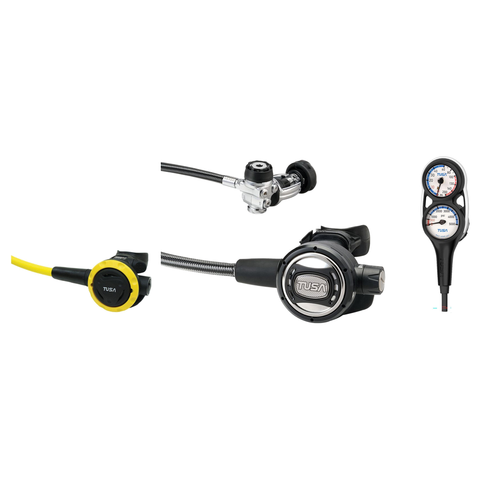
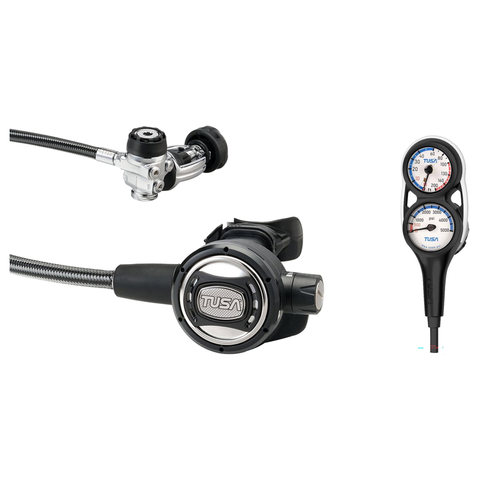
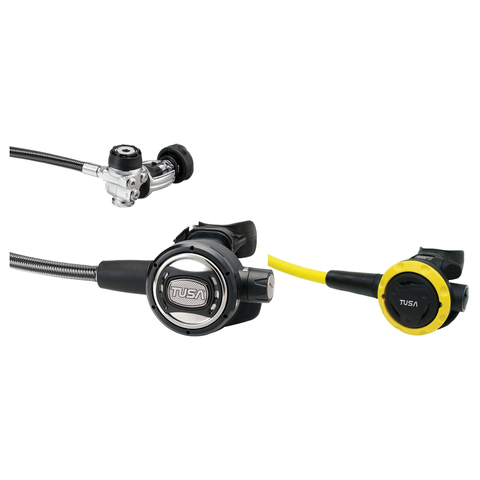
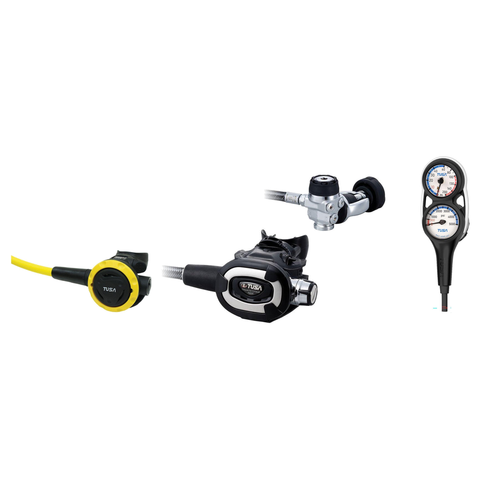
The TUSA RS-609U Compact Diaphragm Regulator is a first and second stage scuba regulator set built around the ultra-compact, balanced diaphragm R-600 first stage, with 2 HP and 2 LP ports and a second stage featuring a mirror-polished stainless steel face attached to a MIFLEX hose.
Who it is for
This set suits divers who want a compact diaphragm-style regulator with the option to adapt it for colder water or higher-pressure cylinders. The Ortho-Conscious Mouthpiece is designed to reduce jaw fatigue, the deflector mechanism is intended to reduce inhalation resistance, and the enlarged purge button and Click Spring Adjustment control give the diver direct control over breathing resistance and purge operation at the second stage.
Key details
- Balanced diaphragm first stage, model R-600, ultra-compact design
- 2 HP and 2 LP ports on the first stage
- Advanced Flow System uses a curved housing structure for air delivery
- Second stage face is mirror-polished stainless steel, attached to a MIFLEX hose
- White color option uses a white MIFLEX hose
- Eligible for the TUSA CARE Free Parts for Life Program in the USA
Compatibility and sizing
The RS-609U is offered in Black and White, each available in YOKE or DIN connection. An EK-600 cold water kit is available for dives below 50°F/10°C, and a DIN-R600 conversion kit is available for cylinders rated to 300 bar/4350 psi.
DiveCatalog.com is an authorized TUSA dealer and a dive shop in Irvine, California, serving divers since 2003. Call or chat with our team at 888-701-4017 if you have questions about color, connection type, or the cold water and DIN conversion kits.
- Balanced diaphragm first stage: Ultra-compact R-600 first stage design.
- Port configuration: 2 HP and 2 LP ports on the first stage.
- Advanced Flow System: Curved housing structure designed for smoother air delivery.
- Ortho-Conscious Mouthpiece: Mouthpiece shape designed to reduce jaw fatigue.
- Deflector mechanism: Designed to reduce inhalation resistance.
- Enlarged purge button: Sized for improved operability.
- Click Spring Adjustment: Control for adjusting breathing resistance.
- Mirror-polished second stage: Stainless steel face attached to a MIFLEX hose.
- Cold water ready: EK-600 cold water kit available for use below 50°F/10°C.
- DIN conversion option: DIN-R600 conversion kit available for 300 bar/4350 psi cylinders.
- Color options: Available in Black (BK) and White (W), the white version uses a white MIFLEX hose.
- TUSA CARE eligible: Qualifies for the TUSA CARE Free Parts for Life Program in the USA.
| Model | RS-609U (RS609) |
| First Stage Model | R-600 |
| First Stage Type | Balanced diaphragm, ultra-compact |
| First Stage Ports | 2 HP and 2 LP ports |
| Second Stage Face Material | Mirror-polished stainless steel |
| Hose | MIFLEX hose (white hose on White color option) |
| Connection Type | YOKE or DIN |
| Color Options | Black (BK), White (W) |
| Cold Water Kit | EK-600, for use below 50°F/10°C |
| DIN Conversion Kit | DIN-R600, rated 300 bar/4350 psi |
| Parts Program | TUSA CARE Free Parts for Life Program (USA only) |
⚠️ WARNING: This product contains chemicals known to the State of California to cause cancer, birth defects, or other reproductive harm. For more information, visit www.P65Warnings.ca.gov.
Frequently Asked Questions
How often does a scuba regulator need servicing?
Follow the interval in your regulator's manual, since manufacturers commonly specify an annual inspection or a set number of dives and many warranties depend on it. A regulator is life-support equipment, so service belongs with a factory-trained technician rather than being attempted at home. Have it looked at sooner than scheduled if you notice increased breathing effort, free-flow, bubbles, or water in the second stage.
How do I rinse and care for a regulator after diving?
Make sure the dust cap is dry and firmly seated over the first-stage inlet before the regulator goes anywhere near water, because water inside the first stage is the leading cause of internal corrosion. Rinse in fresh water without pressing the purge button, since purging while depressurized can draw water back into the second stage. Shake out the water and hang it to dry with the hoses in wide, gentle loops rather than tight bends.
Can I fly with a scuba regulator?
Regulators travel well and are usually best carried in hand luggage where they will not be crushed or lost. A regulator holds no gas of its own, so there is nothing inherently problematic about it on an aircraft, though the airline and security screeners always have the final say. Pack it dry with the dust cap in place, in a padded regulator bag or wrapped in soft gear.
Can I use my regulator with nitrox?
Many modern regulators are supplied as suitable for nitrox mixes up to 40 percent oxygen, which is the widely used recreational industry standard, while anything above that requires dedicated oxygen-clean equipment and procedures. Confirm what your specific regulator's manual states, and follow your nitrox training and your fill station's requirements. Never assume a regulator is oxygen-service clean simply because it looks clean or is new.
What is the difference between DIN and yoke regulators?
A yoke (A-clamp) fitting clamps over the tank valve and is the most common connection across much of the recreational world, while a DIN fitting screws into the valve and is standard in much of Europe and in technical diving. DIN captures the o-ring inside the threads, which many divers consider more secure, but yoke is often what rental cylinders provide. Adapters exist in both directions, so check what is used where you dive before deciding.
What is the octopus regulator for?
The octopus is your backup second stage, carried so you can share air with a buddy who is out of gas, or breathe from it yourself if your primary fails or free-flows. It is normally on a longer, brightly colored hose so it is easy to find and hand over under stress. Secure it in the triangle between your chin and the bottom of your rib cage so it is instantly accessible and not dragging through sand or coral.
How should I store a regulator between dive trips?
Store it fully dry, out of sunlight, with the dust cap in place and the hoses in wide loops rather than tightly coiled. Avoid hanging it by the second stages for long periods, which stresses the hose fittings; laying it flat in a padded bag or hanging it by the first stage is kinder. If it has sat unused for a long stretch, have it checked before your next trip rather than assuming it is ready to dive.
How many HP and LP ports does the TUSA RS-609U first stage have?
The R-600 first stage on the TUSA RS-609U has 2 HP (high pressure) and 2 LP (low pressure) ports. This port layout lets you connect a pressure gauge or transmitter to an HP port and accessories such as a second stage, octopus, or inflator hose to the LP ports.
Can the TUSA RS-609U be used for cold water diving?
Yes, TUSA offers the EK-600 cold water kit for the RS-609U, intended for use in water below 50°F/10°C. Check with DiveCatalog.com if you plan to dive in cold conditions so the kit can be fitted correctly.
Does the TUSA RS-609U work with DIN tanks?
The RS-609U is offered in both YOKE and DIN connection options. A DIN-R600 conversion kit is also available separately, rated for cylinders up to 300 bar/4350 psi, for divers who need to adapt the connection type.
What does the TUSA CARE program cover on the RS-609U?
The RS-609U is eligible for the TUSA CARE Free Parts for Life Program, available in the USA. Program specifics and registration requirements should be confirmed with TUSA or DiveCatalog.com at the time of purchase.
