


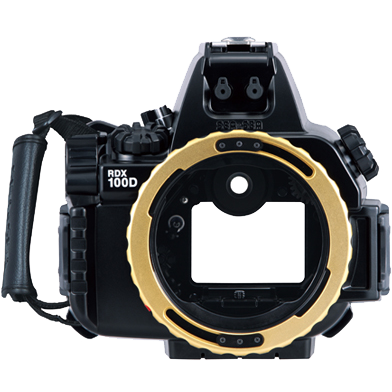
Sea & Sea RDX-100D Camera Housing
In stock — ships from Irvine, CA
This item is currently on backorder. Order now to reserve yours, and we will ship it as soon as it is back in stock.
Sea & Sea RDX-100D Camera Housing is backordered and will ship as soon as it is back in stock.
Pickup available at In Store
Usually ready in 2 hours

-
DiveCatalog.com Silicone Frameless Dive Mask
$59.95$6.00
1 -
DiveCatalog.com Retro Oval Dive Mask Without Nose Pocket Compensator
$44.95$4.50
1 -
DiveCatalog.com Classic Oval Dive Mask Silicone
$44.95$4.50
1 -
DiveCatalog.com Metal Coil Lanyard with Snap Clips
$39.95$4.00
1 -
DiveCatalog.com Junior Rubber Oval Dive Mask (15% smaller)
$34.95$3.50
1


-
DiveCatalog.com Compact Dive Knife
$34.95$3.50
1 -
DiveCatalog.com Auto Lock Retractor 90cm - Black
$34.95$3.50
1 -
DiveCatalog.com Dive Retractor
$34.95$3.50
1 -
DiveCatalog Dive Essentials - Auto-Rebound Style Retractor
$39.95$4.00
1 -
DiveCatalog Quick Release Coil Lanyard with Buckle Scuba Essentials
$29.95$3.00
1 -
DiveCatalog.com Air Gun - Blue
$27.95$2.80
1 -
DiveCatalog.com Folding Dive Knife
$32.95$3.30
1 -
DiveCatalog.com Diving Double Layer Slate Palm Size (5x7.25") with Pencil
$26.95$2.70
1 -
DiveCatalog.com Line Cutter
$24.95$2.50
1 -
DiveCatalog.com Semi-Dry Snorkel
$23.95$2.40
1 -
DiveCatalog.com Nylon Weight Belt
$22.95$2.30
1 -
DiveCatalog.com Finger Reel with Bolt Snap
$26.95$2.70
1 -
Nocturnal Lights Adjustable Goodman Handle with 1 / 4 Mounting Points HM.GM
$47.99$4.80
1 -
Nocturnal Lights Triple Ball Joint Clamp standard 1 balls BJCLAMP.TRIPLE
$27.99$2.80
1 -
Nocturnal Lights Ball Joint Clamp fits all standard 1 balls BJCLAMP.DOUBLE
$23.99$2.40
1 -
Nocturnal Lights T-base Connector for Ikelite quick release handles TBASE.IKEQR
$23.99$2.40
1 -
Nocturnal Lights YS Arm Adapter for M700 Lights ADP.M7YS
$19.99$2.00
1 -
Nocturnal Lights Ball Joint Adapter for Underwater Ball Joint Arm Strobe and Lighting Systems
$19.99$2.00
1 -
Nocturnal Lights 45 Degree Ball Joint Adapter with T-base Slot BJADAPTER.TBASE45
$18.99$1.90
1 -
Nocturnal Lights 90 Degree Ball Joint Adapter with T-base Slot BJADAPTER.TBASE90
$15.99$1.60
1


Payment & Security
Payment methods
Your payment information is processed securely. We do not store credit card details nor have access to your credit card information.
Product Information
The Sea & Sea RDX-100D is a polycarbonate underwater camera housing built specifically for the Canon EOS Rebel SL1/100D (Canon EOS Kiss X7), rated to a depth of 60m/200ft and weighing approximately 1,770g (62oz) housing only.
Who it is for
This housing suits divers and underwater photographers who already shoot with the Canon EOS Rebel SL1/100D and want a dedicated housing rather than a universal option. The redesigned gear-driven focus and zoom controls, dual fiber-optic strobe ports, and support for interchangeable viewfinders make it a fit for shooters who want precise manual control over focus, zoom, and external strobe lighting rather than a simple point-and-shoot setup.
Key details
- Construction: Polycarbonate
- Depth rating: 60m / 200ft
- Dimensions (WxHxD): 200x190x140mm / 7.9x7.5x5.5 inches
- Weight: Approx. 1,770g / 62oz, housing only
- Redesigned focus/zoom gear mechanism similar to Sea & Sea's MDX series for accurate, quick zooming and focusing
- Two fiber-optic cable sockets for connecting external strobes to the camera's built-in flash
- Large buckle back-cover structure with a lock function, designed to open and close more easily than metal locking latches
Compatibility and sizing
The RDX-100D is built for the Canon EOS Rebel SL1/100D (Canon EOS Kiss X7) only. It mounts various ports, including NX ports, via the optional RDX Port Base L or RDX Port Base S. It accepts the VF180 1.2x prism viewfinder in place of the standard 0.5x optical viewfinder, and the Optical YS Converter/C1 can be built in to convert the camera's TTL signal to a light signal for TTL or manual strobe photography through Fiber-Optic Cable II. A tripod socket on the bottom accepts an SA8, Sea Arm 7 Compact, or similar arm set for mounting up to two external strobes, and the optional Grip-Stay L II adds a firmer two-handed grip.
What's in the box
- Housing body cap
- Camera quick shoe
- Hand strap
DiveCatalog.com is an authorized Sea & Sea dealer and a dive shop in Irvine, California, open since 2003. Call or chat with our team at 888-701-4017 if you have questions about fit, ports, or strobe compatibility before you buy.
- Redesigned focus/zoom control: Gear mechanism similar to MDX series housings enables accurate, quick zooming and focusing.
- Optical YS Converter/C1 compatible: Can be built into the housing to convert the camera's TTL signal to a light signal for TTL and manual strobe photography via Fiber-Optic Cable II.
- Dual fiber-optic cable sockets: Connect external strobes to the camera's built-in flash for full-featured strobe photography.
- Interchangeable viewfinders: Standard 0.5x optical viewfinder with optional compatibility for the VF180 1.2x prism viewfinder for stricter composition and focusing.
- Interchangeable port system: Various ports, including NX ports, mount via the optional RDX Port Base L or RDX Port Base S.
- Dual-action shutter lever: Operable by pushing from the top or pulling from the front, with a smooth halfway press for autofocus.
- Large locking buckle: Back cover buckle structure with a lock function, easier to open and close than metal locking latches.
- Strobe arm mounting: Tripod socket at the bottom accepts an SA8, Sea Arm 7 Compact, or similar arm set for up to two external strobes.
- Optional two-handed grip: Grip-Stay L II accessory allows a firm two-handed hold of the housing.
- Depth rated to 60m/200ft: polycarbonate construction with a manufacturer-rated depth of 60m / 200ft.
| Brand | Sea & Sea |
| Model | RDX-100D |
| MPN | SS-06168 |
| Camera compatibility | Canon EOS Rebel SL1/100D (Canon EOS Kiss X7) |
| Construction | Polycarbonate |
| Depth rating | 60m / 200ft |
| Dimensions (WxHxD) | 200x190x140mm / 7.9x7.5x5.5 inches |
| Weight | Approx. 1,770g / 62oz (Housing only) |
| Viewfinder | 0.5x optical viewfinder standard; VF180 1.2x prism viewfinder optional |
| Strobe connection | Two fiber-optic cable sockets |
| TTL support | Optical YS Converter/C1 compatible via Fiber-Optic Cable II |
| Port system | RDX Port Base L or RDX Port Base S; supports NX ports |
| Strobe arm mounting | Tripod socket compatible with SA8, Sea Arm 7 Compact, or similar arm sets |
| Optional grip | Grip-Stay L II |
- Housing body cap
- Camera quick shoe
- Hand strap
⚠️ WARNING: This product contains chemicals known to the State of California to cause cancer, birth defects, or other reproductive harm. For more information, visit www.P65Warnings.ca.gov.
Frequently Asked Questions
How do I check an underwater housing's seal before a dive?
Before every dive, open the housing somewhere clean and dry, inspect and wipe the main o-ring and its groove, and close it with nothing trapped in the seal, because a single hair or grain of sand is enough to flood it. Confirm every latch is fully closed and that any vacuum or leak alarm reads correctly. Where you can, soak the sealed housing in a rinse tank or hang at the surface before descending, so a leak shows up before depth.
How do I care for housing o-rings?
Remove the main o-ring regularly with a plastic tool rather than anything metal, which can nick the groove, and clean both the o-ring and the groove with a lint-free cloth. Apply a thin film of the silicone grease the manufacturer specifies, since grease helps the o-ring seat and slide rather than sealing by itself, and a thick coat only collects grit. Replace o-rings on the schedule in the manual, or sooner if they look flattened, cut, or dry.
What do moisture alarms and desiccant packs do?
A moisture alarm is a sensor inside the housing that beeps or flashes when it detects water, giving you a chance to abort the dive before the camera is ruined. Desiccant packs absorb humidity in the air sealed inside the housing, which prevents the port fogging as you descend into cooler water. Neither replaces a proper seal check, since they provide early warning and fog control rather than leak prevention.
How deep can I take an underwater camera housing?
Only as deep as its rated depth, which the manufacturer sets and publishes in the specifications, and it should never be exceeded even briefly. Depth ratings assume a housing in good condition with intact seals, so worn o-rings or a damaged port reduce the real margin. If your diving might take you deeper, choose a housing rated comfortably beyond your planned maximum depth.
Can I use a phone housing for scuba diving?
Only if the housing is specifically rated for the depth you plan to dive, because many phone cases are splash- or snorkel-rated rather than scuba-rated. Touchscreens generally do not respond underwater, so a diving phone housing needs mechanical buttons or another control method. A phone's own water-resistance rating is not a substitute for a housing, and any housing still needs seal checks and o-ring care.
How do I rinse a camera housing after diving?
Soak the closed, sealed housing in fresh water and work every button and dial while it is submerged so salt does not dry inside the control shafts. Let it dry completely, especially around latches and seams, before you open it, since opening a wet housing drips water straight onto the camera. Avoid opening a housing on a wet, moving boat deck whenever you have the option to wait.
What should I do if my housing floods?
Get the housing out of the water and open it somewhere dry, then immediately remove the camera's battery and memory card, because leaving a battery in a wet camera does more damage than the water itself. Do not power the camera on to check whether it still works. Dry everything gently away from direct heat, get salt-water-exposed equipment to a repair technician promptly, and inspect the housing to find which seal failed before you dive it again.
Which camera does the Sea & Sea RDX-100D fit?
The RDX-100D is built specifically for the Canon EOS Rebel SL1/100D, also sold as the Canon EOS Kiss X7. It is not a universal housing, so it will not fit other Canon Rebel models or other brands. Confirm your exact camera model before ordering, as this housing is built specifically for the Canon EOS Rebel SL1/100D (EOS Kiss X7).
Can I add strobes and a viewfinder to the RDX-100D later?
Yes. The housing has two fiber-optic cable sockets for connecting external strobes to the camera's built-in flash, and a tripod socket on the bottom accepts an SA8, Sea Arm 7 Compact, or similar arm set for mounting up to two strobes. You can also add the VF180 1.2x prism viewfinder in place of the standard 0.5x optical viewfinder.
Does the RDX-100D support TTL strobe exposure?
It can, if you build in the optional Optical YS Converter/C1, which converts the camera's TTL signal to a light signal. Paired with a Fiber-Optic Cable II, this enables both TTL and manual strobe photography through the housing's fiber-optic sockets.
What ports does the RDX-100D use for different lenses?
The RDX-100D mounts interchangeable ports, including NX ports, through either the RDX Port Base L or the RDX Port Base S, which accommodate different lens types. The correct port base depends on which lens you plan to shoot with, so match your lens choice to the compatible port base before diving.
