


Garmin Descent X50i, Premium Dive Computer
In stock — ships from Irvine, CA
This item is currently on backorder. Order now to reserve yours, and we will ship it as soon as it is back in stock.
Garmin Descent X50i, Premium Dive Computer is backordered and will ship as soon as it is back in stock.
Pickup available at In Store
Usually ready in 2 hours
Warranty
Warranty
Click logo for additional details


-
DiveCatalog.com Silicone Frameless Dive Mask
$59.95$6.00
-
Nocturnal Lights Adjustable Goodman Handle with 1 / 4 Mounting Points HM.GM
$47.99$4.80
-
DiveCatalog.com Retro Oval Dive Mask Without Nose Pocket Compensator
$44.95$4.50
-
DiveCatalog.com Classic Oval Dive Mask Silicone
$44.95$4.50
-
DiveCatalog.com Metal Coil Lanyard with Snap Clips
$39.95$4.00


-
DiveCatalog.com Junior Rubber Oval Dive Mask (15% smaller)
$34.95$3.50
-
DiveCatalog.com Auto Lock Retractor 90cm - Black
$34.95$3.50
-
DiveCatalog.com Dive Retractor
$34.95$3.50
-
DiveCatalog Moldable Mouthpiece w/ installation for Regulators
$34.95$3.50
-
DiveCatalog Dive Essentials - Auto-Rebound Style Retractor
$39.95$4.00
-
DiveCatalog.com Upside Down Drysuit Hanger w/ Regulator and Accessory Hooks
$29.95$3.00
-
DiveCatalog.com Universal Dive Gear Hanger with Accessory Arms fits Wetsuits, Drysuits, BCDs, Backpacks
$29.95$3.00
-
DiveCatalog Quick Release Coil Lanyard with Buckle Scuba Essentials
$29.95$3.00
-
Nocturnal Lights Triple Ball Joint Clamp standard 1 balls BJCLAMP.TRIPLE
$27.99$2.80
-
DiveCatalog.com Air Gun - Blue
$27.95$2.80
-
DiveCatalog.com Folding Dive Knife
$32.95$3.30
-
DiveCatalog.com Diving Double Layer Slate Palm Size (5x7.25") with Pencil
$26.95$2.70
-
Nocturnal Lights Buoyancy / Protective Sleeve for SLX 800XI
$24.99$2.50
-
DiveCatalog.com Line Cutter
$24.95$2.50
-
DiveCatalog.com Small Retractor
$24.95$2.50
-
Nocturnal Lights T-base Connector for Ikelite quick release handles TBASE.IKEQR
$23.99$2.40
-
Nocturnal Lights Ball Joint Clamp fits all standard 1 balls BJCLAMP.DOUBLE
$23.99$2.40
-
DiveCatalog.com Semi-Dry Snorkel
$23.95$2.40
-
DiveCatalog.com Heavy Duty Wetsuit and Drysuit Hanger with Extra Wide Shoulder Saver
$22.95$2.30
-
DiveCatalog.com Nylon Weight Belt
$22.95$2.30
-
DiveCatalog.com Finger Reel with Bolt Snap
$26.95$2.70


Payment & Security
Payment methods
Your payment information is processed securely. We do not store credit card details nor have access to your credit card information.
Save with a package
Ready-made packages that include this item
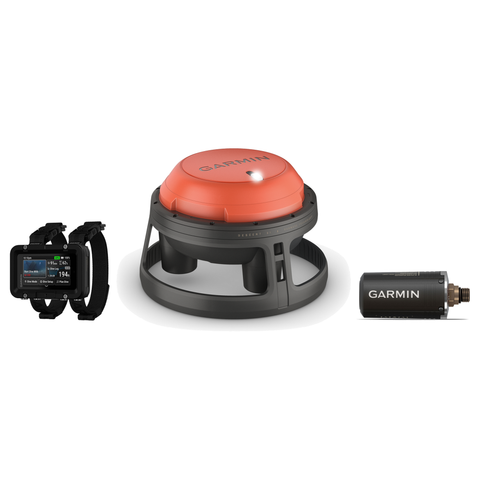
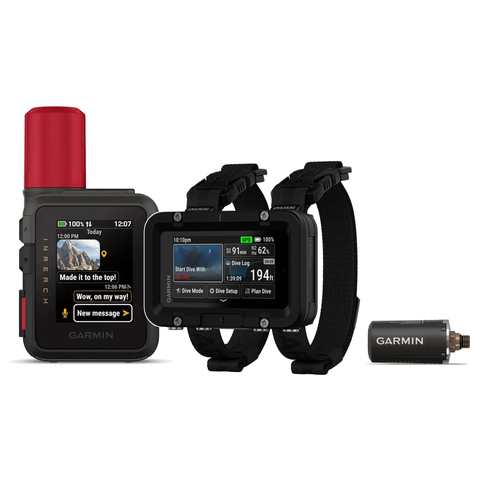
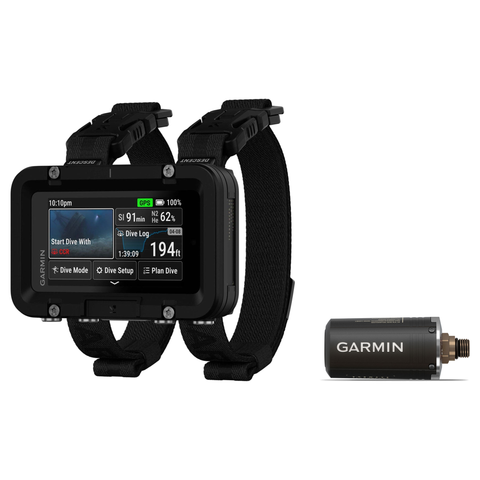
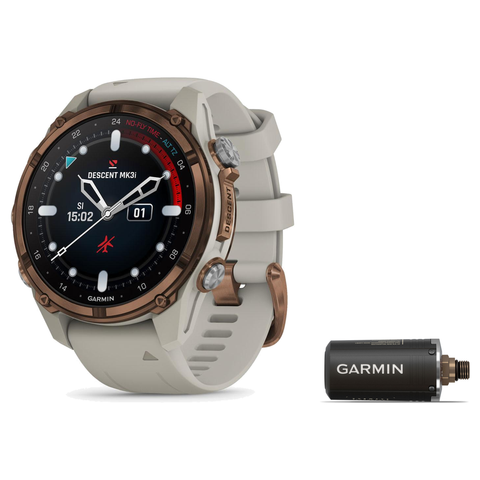
Product Information
The Garmin Descent X50i is a large-format dive computer built around a 3-inch color touchscreen, a 20 ATM water rating and the Bühlmann ZHL-16C decompression model, made for recreational and technical divers who want a big, glanceable instrument instead of a watch-sized display. The touchscreen operates on the surface only; leakproof metal buttons control the computer underwater.
Who it is for
It suits divers who read their computer at arm's length over a wetsuit or drysuit sleeve and who dive across a wide range of profiles. Single-gas, multi-gas, gauge and closed circuit rebreather modes cover air, nitrox and trimix up to 100% O2, with one bottom gas and up to 11 deco or backup gases. Air integration and diver monitoring come from paired Descent T2 transceivers, so it also fits dive leaders, instructors and buddy teams who want tank pressure, depth and distance for up to 8 divers.
Key details
- 3-inch color touchscreen, 640 x 360 pixels, behind a sapphire lens
- 20 ATM water rating, Dive (EN 13319), 200 meter maximum operating depth
- Depth sensor accurate from 0 m to 200 m (0 ft. to 656 ft.), 0.1 m resolution to 99.9 m
- Built-in rechargeable lithium-ion battery: up to 13 hours at high brightness, 16 hours at medium, 20 hours in Night Dive mode
- Integrated backup dive light and DiveView maps preloaded with over 4,000 dive sites worldwide
- SubWave sonar messaging to other divers up to 30 meters with line of sight
Compatibility and sizing
The X50i ships on dual elastic bands with locking buckles and accepts QuickFit 20 mm bands. It pairs with Descent T2 transceivers, the Descent buoy accessory, Bluetooth smartphones, the Garmin Dive app, the Garmin Share app and Garmin Express, and syncs over Wi-Fi. See garmin.com/ble for smartphone compatibility.
What's in the box
- Descent X50i dive computer with nylon straps
- Carrying case
- Charging/data cable
- Band removal tool
- Documentation
DiveCatalog.com is an authorized Garmin dealer and a dive shop in Irvine, California since 2003. Call or chat with us if you have questions about band sizing, T2 pairing or which dive modes fit your training.
- 3-inch color touchscreen Large, 640 x 360 pixel color display protected by a sapphire lens; the touchscreen functions on the surface only and buttons are used underwater.
- 20 ATM dive rating Rated to withstand pressure equivalent to 200 meters, designed to comply with EN 13319, with leakproof metal buttons.
- Air integration via Descent T2 Pair a Descent T2 transceiver (sold separately) for tank pressure, gas time remaining and consumption rate, with support for up to 8 transmitters.
- Diver monitoring for up to 8 divers See tank pressure, depth and distance for up to 8 divers carrying a Descent T2, up to 10 meters away.
- SubWave diver-to-diver messaging Send preset messages to other divers up to 30 meters away with line of sight.
- DiveView color maps Bathymetric depth contours preloaded for over 4,000 dive sites worldwide, plus a 3D dive compass and surface GPS with advanced satellite connectivity.
- Integrated backup dive light A built-in light on your wrist as a backup to your primary torch.
- Multiple dive modes Single-gas, multi-gas, gauge and closed circuit rebreather modes for air, nitrox and trimix up to 100% O2, with 1 bottom gas and up to 11 deco or backup gases.
- Bühlmann ZHL-16C algorithm Decompression calculations with gradient factors and customizable conservatism, plus ascent/descent rate indication and projected ascent data.
- Up to 20 hours of dive battery Built-in rechargeable lithium-ion battery rated up to 13 hours at high brightness, 16 hours at medium and 20 hours in Night Dive mode.
- Dive log and Garmin Dive app In-dive depth chart, dive history, gear tracking and notes, with post-dive review and sharing through the Garmin Dive app.
- Dual elastic dive bands Two elastic bands with adjustment locking buckles, and QuickFit 20 mm band compatibility.
| Display | 3.0" diagonal color touchscreen (functions on surface only) |
| Display resolution | 640 x 360 pixels RGB |
| Water rating | 20 ATM / Dive (EN 13319) |
| Dive activity maximum operating depth | 200 meters |
| Depth sensor | Accurate 0 m to 200 m (0 ft. to 656 ft.), EN 13319; resolution 0.1 m to 99.9 m, 1 m at 100 m; 1 ft. imperial |
| Decompression model | Bühlmann ZHL-16C with gradient factors |
| Battery type | Rechargeable, built-in lithium-ion battery |
| Battery life (dive mode) | Up to 13 hours high brightness, up to 16 hours medium brightness, up to 20 hours Night Dive |
| Charging method | Garmin proprietary clip charger |
| Buttons | Leakproof metal buttons |
| Lens material | Sapphire crystal |
| Bezel material | Fiber-reinforced polymer |
| Case material | Fiber-reinforced polymer |
| Strap material | Elastic nylon with adjustment locking buckles (dual bands) |
| QuickFit watch band compatible | Yes (20 mm) |
| Physical size | 62.4 x 98.3 x 24.5 mm; nylon band: 38 cm |
| Weight | No bands: 253 g; nylon band (band and buckle): 280 g |
| Memory/history | 32 GB |
| Connectivity | Bluetooth, ANT, Wi-Fi, SubWave |
| Air integration | Yes, via SubWave with a Descent T2; up to 8 transmitters supported |
| Gas mixes | Air, nitrox and trimix, up to 100% O2; 1 bottom gas and up to 11 deco and/or backup gases |
| Dive modes | Single-gas, multi-gas, gauge, closed circuit rebreather (CCR) |
| Sensors | GPS, GLONASS, Galileo, compass, gyroscope, accelerometer, thermometer, ambient light, depth |
| Preloaded dive sites | Over 4,000 dive sites worldwide (DiveView maps) |
| Operating and storage temperature range | From -20º to 45ºC (from -4º to 113ºF); underwater from 0° to 40°C (32° to 104°F) |
- Descent X50i dive computer with nylon straps
- Carrying case
- Charging/data cable
- Band removal tool
- Documentation
⚠️ WARNING: This product contains chemicals known to the State of California to cause cancer, birth defects, or other reproductive harm. For more information, visit www.P65Warnings.ca.gov.
Frequently Asked Questions
Garmin Descent X50i vs Mk3i: which dive computer should I choose?
They're built for different divers. The X50i is Garmin's large-format dedicated dive computer: a 3-inch color touchscreen with sapphire lens, DiveView maps with bathymetric contours, an integrated backup dive light, and a 200-meter rating — a big, glanceable instrument worn over a wetsuit. The Mk3i is the dive computer you wear as your everyday watch: same 200-meter rating and T2 air integration, but in a 43mm or 51mm smartwatch with health tracking, music, and Garmin Pay. Choose the X50i for maximum in-dive readability, the Mk3i if you want one device on your wrist all day.
Is the Descent X50i also an everyday smartwatch?
No — the X50i is designed as a dedicated dive computer, not a daily smartwatch. It covers diving, DiveView maps, compass, weather, and phone notifications, but it does not include Garmin's health and fitness tracking, sports apps, music, or Garmin Pay. If you want full smartwatch features plus a true dive computer in one device, that is the Descent Mk3i's job.
What is the difference between the Descent X50i and the Descent X30?
The X30 is the entry point to Garmin's large-format line: a 2.4-inch button-operated color display, 10 ATM rating, up to 30 hours of dive battery, and full multi-gas support. The X50i steps up to a 3-inch touchscreen with sapphire lens, a 200-meter rating, T2 air integration with monitoring for up to 8 divers, SubWave diver-to-diver messaging, DiveView bathymetric maps, and an integrated backup dive light. One honest note: the X30's simpler display actually gives it longer battery life per charge — what you're paying for in the X50i is the screen, the air integration, and the mapping.
Does the Descent X50i work with the T2 transceiver?
Yes. Pair a Descent T2 to your tank and the X50i shows tank pressure, air time remaining, and consumption rate. It can monitor up to 8 divers using T2 transceivers within about 10 meters — pressure, depth, and distance for each — and exchange preset diver-to-diver messages up to 30 meters through Garmin's SubWave sonar network.
How long does the Descent X50i battery last?
In dive mode, Garmin rates the X50i at up to 13 hours at high brightness, up to 16 hours at medium brightness, and up to 20 hours in Night Dive mode per charge — comfortably a full liveaboard day of repetitive diving between charges.
Why do I need my own dive computer?
A dive computer tracks the actual depth and time profile you have dived and the tissue loading that follows from it, which is personal to you. A rented computer has no record of your recent diving, and swapping models each trip means relearning the display and menus when you should be focused on the dive. Owning one you know well is a genuine safety and comfort improvement.
Can two divers share one dive computer?
No. A computer only tracks the profile of the diver actually wearing it, and even buddies who stay together do not follow identical depth and time profiles. Every diver needs their own computer, and passing one between divers or between dives is unsafe.
What does conservatism mean on a dive computer?
Conservatism settings make the computer's calculations more cautious, shortening allowed bottom times and adding margin beyond the base algorithm. Divers commonly add conservatism for factors such as cold, hard work, fatigue, or repetitive multi-day diving. How and when to adjust it is covered by your training and your computer's manual, so set it before you get in the water and follow what your computer tells you during the dive.
What kind of battery does a dive computer use?
Broadly there are two types: user-replaceable batteries, often a coin cell that you or a shop swap along with resealing an o-ring, and sealed rechargeable batteries that charge from a cable or dock. Neither is universally better, as replaceable cells are convenient on remote trips while rechargeables avoid ever opening the case. Follow the manual exactly for any battery change, because an improperly seated o-ring or case is the usual cause of a flooded computer.
Do I need to do anything special for altitude diving or flying after diving?
Yes, both change the picture, and both are governed by your training agency's guidance and your computer's instructions rather than any casual rule of thumb. Many computers have an altitude setting that must be configured before diving at elevation, and most display a no-fly or surface-interval countdown after a dive. Follow your computer and your training, and ask a dive professional or a dive-medicine specialist if you are unsure.
How do I care for a dive computer?
Rinse it in fresh water after every dive day, paying attention to the buttons and around any sensor openings where salt crystals form, and let it dry fully before storing. Keep it out of prolonged direct sun and extreme heat, and avoid pressing buttons while sand is on the case. Inspect the strap or bungee often, because a failed strap loses far more computers than a failed computer does.
What is the difference between wrist, console, and air-integrated dive computers?
A wrist computer is worn like a watch and read by raising your arm, while a console computer sits at the end of a hose with your other gauges. Air integration means the computer also displays cylinder pressure, either through a hose or from a wireless transmitter on the first stage, and often estimates remaining gas time. All of them run a decompression algorithm, so the real difference is where you read the information and how much of it you get.
How deep is the Garmin Descent X50i rated to?
The Descent X50i carries a 200-meter rating, the same as Garmin's flagship Descent Mk3i watch. That covers recreational, technical, and deep diving with a wide margin. It is a step up from the Descent X30, which is rated to 10 ATM.
Does the Garmin Descent X50i have maps?
Yes. The X50i includes DiveView maps with bathymetric contours, so you can see underwater topography rather than just a coastline. It also carries a compass, weather, and phone notifications. Mapping is one of the main things you are paying for over the button-operated Descent X30, which does not have it.
Does the Garmin Descent X50i have a dive light?
Yes, the X50i has an integrated backup dive light built into the unit. It is intended as a backup rather than a replacement for a proper primary torch, but it means you always have a light on your wrist. Paired with the X50i's Night Dive display mode, it makes the computer noticeably more useful after dark.
How big is the Garmin Descent X50i screen, and is it a touchscreen?
The X50i has a 3-inch color touchscreen protected by a sapphire lens. That is the largest display in Garmin's dive lineup and the reason the X50i exists: it is a big, glanceable instrument meant to be read at arm's length over a wetsuit, not a watch you wear to dinner. The Descent X30 uses a smaller 2.4-inch display operated by buttons instead.
Is the Garmin Descent X50i good for night diving?
Yes. The X50i has a dedicated Night Dive mode that dims the big display, and Garmin rates the battery at up to 20 hours per charge in that mode compared with up to 13 hours at high brightness. It also has an integrated backup dive light, so you have a light source on your wrist if your primary torch fails.
Garmin Descent X50i vs Suunto Nautic: which large-screen dive computer should I get?
Both are dedicated big-screen dive computers rated to 200 meters with a built-in light, so the decision comes down to air integration and battery. The X50i gives you Garmin's T2 transceiver support with monitoring of up to 8 divers, SubWave diver-to-diver messaging, DiveView bathymetric maps, and up to 13 to 20 hours of dive battery per charge. The Nautic has a larger 3.26-inch AMOLED, Buhlmann 16 GF with adjustable gradient factors, Suunto Tank POD support for up to five cylinders including sidemount, and a much longer battery at up to 120 hours of dive time. Choose the X50i for the Garmin dive ecosystem and buddy monitoring, the Nautic for battery life and gradient-factor control.
Garmin Descent X50i vs Descent G2: what is the difference?
They are different shapes of dive computer. The G2 is watch-sized, with a 1.2-inch AMOLED touchscreen, a 100-meter rating, no air integration, and full Garmin smartwatch features including Garmin Pay and health tracking, so it doubles as your daily watch. The X50i is a large-format instrument with a 3-inch touchscreen, a 200-meter rating, T2 air integration, DiveView maps, and a backup dive light, but it deliberately leaves out the fitness and smartwatch side. Buy the G2 if you want one device on your wrist all day, the X50i if you want maximum readability and tank pressure underwater.
Does the Garmin Descent X50i touchscreen work underwater?
No. The 3-inch color touchscreen functions on the surface only; underwater you operate the X50i with its leakproof metal buttons. In practice you use the touchscreen for setup, map browsing and log review topside, then switch to button control for the dive itself.
What comes with the Garmin Descent X50i?
The box includes the Descent X50i dive computer on nylon straps, a carrying case, a charging and data cable, a band removal tool and documentation. The Descent T2 transceiver needed for air integration and diver monitoring is a separate accessory and is not included. The X50i accepts QuickFit 20 mm bands if you want a different strap.
Does the Descent X50i support trimix and rebreather diving?
Yes. The X50i has single-gas, multi-gas, gauge and closed circuit rebreather modes, and handles air, nitrox and trimix up to 100% O2 with one bottom gas plus up to 11 deco or backup gases. It uses the Buhlmann ZHL-16C model with gradient factors, customizable conservatism, PO2 up to 2.0 and a customizable deco PO2 setting.
How is the Garmin Descent X50i battery charged and is it replaceable?
The X50i uses a built-in rechargeable lithium-ion battery, charged with the included cable through Garmin's proprietary clip charger, so there is no user-replaceable coin cell to swap. Charge it between 0 to 45 C (32 to 113 F). Garmin rates dive-mode runtime at up to 13 hours on high brightness, 16 hours on medium and 20 hours in Night Dive mode.
Review summary
Reviewers agree this one is easy to set up and easy to use, with setup described as quick and the controls simple to navigate. Build quality comes up as well made and solid, and one diver notes a clear display you can program to your own needs. Good to know: it is more computer than many divers will ever use, and one reviewer would like heart rate integration. It suits divers who want a capable, easy to operate computer they can set up themselves and grow into.
What reviewers like
