



Shop By Categories
View All


 Sold out
Bare
Bare X-Mission Evolution Technical St Becreational Womens Drysuit
Regular priceFrom $3,709.95Unit price- Sold out
-
- Sold out
-
- Sold out
-
- Sold out
Bare
Bare X-Mission Evolution Technical or Recreational Mens Drysuit
Regular priceFrom $3,709.95Unit price -
- Sold out
-
- Sold out
-
 Sold out


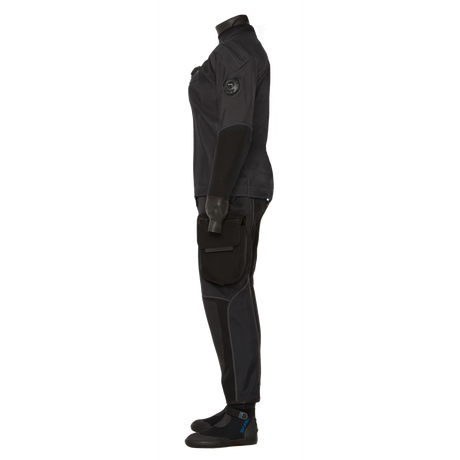


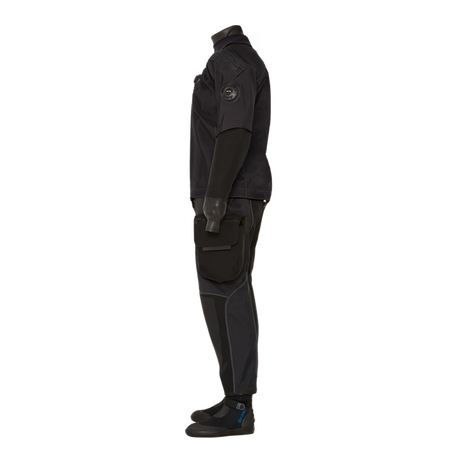


Bare Drysuits — Cold Water Conquered
Bare Sports has been building wetsuits and drysuits from British Columbia since the early 1970s, and cold water is the environment that has sharpened their craft most. Everything about the Bare drysuit range reflects decades of real-world feedback from divers who push into genuinely cold conditions — the Pacific Northwest, the Great Lakes, the North Atlantic, ice diving in Scandinavia. The result is a lineup that spans from accessible recreational entry points to expedition-grade suits built in partnership with professional cave diving teams.
Bare's drysuit philosophy centers on three pillars: Fit, Craftsmanship, and Innovation. Fit means anatomically designed patterns that move with the body rather than against it — BAREfit construction with articulated arms and legs, telescoping torso systems on technical models, and a Made-to-Measure program for divers who want a hand-cut suit specific to their body dimensions. Craftsmanship means in-house construction with 2-needle felled seam construction that is low profile and abrasion resistant, and No-Stitch Technology on select models where seams are double-glued and heat-taped inside and out rather than stitched — eliminating the primary water ingress point of conventional drysuit construction. Innovation means materials choices that are genuinely different from the industry standard.
At DiveCatalog.com, we carry the full current Bare drysuit range — trilaminate models from the recreational Trilam Pro Dry through the technical X-Mission Evolution, neoprene drysuits, and the complete drysuit accessories ecosystem. DiveCatalog.com is an authorized Bare Sports dealer.
Understanding Bare's Drysuit Materials
Bare Trilaminate — Exclusive Butyl Technology
Bare's trilaminate drysuits use their proprietary butyl trilaminate material — butyl rubber (a synthetic elastomer) sealed between outer layers of highly resilient polyester or nylon. Butyl rubber has inherently low permeability to gases and water vapor, making it more resistant to water ingress than standard rubber alternatives. The result is a material that is durable against wear and abrasion, lighter and more flexible than neoprene, and highly packable for travel. Two needle felled seam construction — where seam edges are folded and stitched twice for a flat, clean profile — keeps the exterior streamlined and reduces snag and abrasion points.
No-Stitch Technology
On Bare's highest-end models, traditional stitched seams are replaced entirely. Seams are double-glued and heat-taped inside and out — a construction method that eliminates the needle holes that allow water seepage in stitched construction. No-Stitch Technology produces a watertight seam that also results in a cleaner aesthetic and a slimmer profile than traditional stitched seams.
Neoprene Drysuits
Bare's neoprene drysuits use compressed density neoprene (CD) — a high-density neoprene that provides inherent thermal insulation without an undergarment, compresses less at depth than standard neoprene, and remains more flexible across a range of temperatures. Neoprene drysuits suit divers who prefer the insulating properties and familiar feel of neoprene, particularly in moderately cold conditions.
The Bare Drysuit Range
Trilam Tech Dry — The Workhorse Trilaminate
The Trilam Tech Dry is Bare's established front-entry trilaminate drysuit, proven across a wide range of cold-water diving conditions. Built with Bare's exclusive butyl trilaminate material, it offers superior flexibility and lightweight characteristics. The front-entry dry zipper allows solo donning and doffing without a buddy. Low-profile SiTech or Apeks valves sit flush against the body for streamlined positioning. In 2014, Ahmed Gabr wore the Trilam Tech Dry when he set the world record for the deepest scuba dive — over 1,000 feet in the Red Sea. Available in men's and women's configurations.
Trilam Pro Dry — Accessible Trilaminate Entry
The Trilam Pro Dry uses the same proprietary butyl trilaminate construction as the Trilam Tech Dry in a back-entry configuration, making it the more accessible price point in the trilaminate lineup. The rear zipper minimizes restriction and the suit uses Bare's anatomical patterning for a clean, streamlined silhouette. A practical choice for recreational cold-water divers making their first trilaminate drysuit purchase.
X-Mission Evolution — Technical Cave Diver Specification
The X-Mission Evolution is Bare's most advanced drysuit, developed in direct partnership with the Cavebase Exploration Team — working technical cave divers who identified specific pain points with available drysuits and worked with Bare's design team to solve them. The X-Mission uses Nylon Micro RipStop Trilaminate — an extremely flexible, lightweight material with high abrasion resistance for divers who crawl through passages, exit onto rocky shorelines, and need a suit that survives serious expedition use. A telescoping torso system provides adjustable fit across different body proportions. Expandable Tech/DATA pockets with 5 bungee cords (3 regular, 2 thick) accommodate slates, reels, and accessories. Field-replaceable silicone wrist seals (on upgraded configurations) allow seal changes without returning the suit to a manufacturer. The most packable and travel-ready suit in the Bare lineup. Available in Black and Red.
Neoprene Drysuits
Bare's CD4 Pro Dry and related neoprene drysuit models use high-performance compressed density neoprene that provides thermal insulation without requiring as heavy an undergarment as trilaminate suits. Better suited to divers who dive in moderately cold conditions and prefer the familiar feel of neoprene, or who want the option to dive with minimal undergarments in shoulder-season temperatures.
Completing Your Bare Drysuit System
A drysuit is a system — the suit itself, the undergarment beneath it, and the accessories that complete the thermal picture. Bare offers a comprehensive range of drysuit accessories:
Undergarments: The Bare Thinsulate mid-layer uses compressed Thinsulate that offers insulation without bulk, maintaining insulating value at depth. Available in base layer and mid-layer configurations for different temperature ranges and layering strategies.
Dry Hoods: Bare Ultrawarmth Dry Hoods use high-loft OMNIRED Infrared Technology in the inner fabric, designed to mate specifically with the Bare drysuit collar for an effective thermal seal. Flushing-resistant construction maintains warmth even with active diving.
Boots: Force 1 Boots with a heavy-duty molded sole, reinforced toe and heel cap, and quick-lock lacing system are the essential companion boot for Bare drysuits with soft boots installed.
Dry Gloves: Bare Dry Glove Systems clip to existing latex wrist seals with quick-clamp attachment and include thermal warmers for enhanced insulation in very cold conditions.
Who Are Bare Drysuits For?
| Diver Type | Recommended Drysuit | Key Reason |
|---|---|---|
| Recreational cold-water divers | Trilam Pro Dry or CD4 neoprene | Accessible trilaminate entry; proven butyl construction; full cold-water protection |
| Advanced recreational / dive professionals | Trilam Tech Dry | Front entry; proven in world-record dives; full Bare anatomical fit |
| Technical / cave divers | X-Mission Evolution | Cave diver-specification; RipStop trilaminate; telescoping torso; field-replaceable seals |
| Travel divers in cold regions | X-Mission Evolution | Highly packable; lightest trilaminate; rugged against expedition use |
| Divers wanting the warmest fit | Neoprene CD4 | Built-in thermal insulation; familiar neoprene feel; less undergarment required |
| Divers wanting a custom fit | Any model via Made-to-Measure | Hand-cut to your specific measurements through authorized dealers |
Why Buy Bare Drysuits from DiveCatalog.com?
- Authorized Bare Sports dealer — full manufacturer warranty on all drysuits
- Expert drysuit advice — our staff can help you choose the right model, undergarment, and accessories
- Full drysuit accessories available — undergarments, hoods, boots, and dry gloves to complete your system
- Made-to-Measure program — contact us to discuss custom-fit drysuit options
- Fast shipping — in-stock drysuits ship within one business day
- Financing available — spread the cost of a premium drysuit system
- Rewards program — earn points on every purchase
Frequently Asked Questions — Bare Drysuits
What is Bare's trilaminate material made of?
Bare's exclusive trilaminate uses butyl rubber sandwiched between outer layers of polyester or nylon. Butyl rubber has low gas and moisture permeability — it's inherently more water-resistant than standard rubber. The result is a lightweight, flexible fabric that is more durable against wear than neoprene and highly packable.
What is No-Stitch Technology?
No-Stitch Technology replaces conventional stitched seams with double-gluing and heat-taping on both the inside and outside of every seam. This eliminates the needle holes that allow water seepage in stitched construction. Used on select Bare premium models, it produces a watertight, low-profile seam and a cleaner exterior finish.
What is the Made-to-Measure program?
Bare's Made-to-Measure program allows divers to have a drysuit hand-cut to their specific body measurements — not just adjusted to a stock size. Authorized Bare retailers are trained and equipped to take the measurements and work with Bare's in-house designers to produce the suit. Contact us to discuss Made-to-Measure options and lead times.
What is the difference between the Trilam Tech Dry and Trilam Pro Dry?
Both use Bare's proprietary butyl trilaminate material. The Trilam Tech Dry uses front-entry zip construction for solo donning. The Trilam Pro Dry uses rear-entry zip construction at a lower price point. The Tech Dry has a more technical feature set; the Pro Dry is the more accessible recreational option.
Who was the X-Mission Evolution designed for?
It was co-designed directly with the Cavebase Exploration Team — active cave divers who provided specific feedback on what available drysuits were failing to do. Features like the RipStop Trilaminate material (for rock-crawling durability), the telescoping torso, expandable cargo pockets, and field-replaceable seals all came from that collaboration.
Do I need training to dive in a drysuit?
Yes. Drysuit diving requires specific skills for buoyancy control, emergency procedures, and seal maintenance that differ meaningfully from wetsuit diving. We strongly recommend completing a recognized drysuit diving specialty course before your first dives in a drysuit.
What undergarment does Bare recommend for their drysuits?
Bare's Thinsulate mid-layer provides insulation without bulk and maintains its insulating properties at depth — important because neoprene compresses at depth but Thinsulate does not. The right undergarment weight depends on water temperature. Contact us and we can advise based on your typical diving conditions.
Cold water doesn't have to limit your diving season. Browse the full Bare drysuit collection above and reach out if you'd like help choosing the right suit, undergarment, and accessories for your conditions.
