Scubapro Definition Steamer 3mm Womens Full Scuba Diving Wetsuit
In stock — ships from Irvine, CA
This item is currently on backorder. Order now to reserve yours, and we will ship it as soon as it is back in stock.
Scubapro Definition Steamer 3mm Womens Full Scuba Diving Wetsuit - XS (X-Small) is backordered and will ship as soon as it is back in stock.
Pickup currently unavailable at 23D


-
DiveCatalog.com Quick Dry Multi Accessory Dive Gear Hanger for Boots, Gloves, Hood
$22.95$2.30
-
DiveCatalog Comfo-Bite Silicone Mouthpiece for Scuba Diving Regulators Black
$19.95$2.00
-
DiveCatalog Essentials - BCD and Regulator Hanger for Scuba Diving
$19.95$2.00
-
DiveCatalog Scuba Essentials - Wetsuit Hanger for Scuba Diving, Snorkeling, and Surfing
$19.95$2.00
-
DiveCatalog Hose Clamp for Scuba Diving - Scuba Essentials
$17.95$1.80


-
DiveCatalog Neoprene Mask Strap Cover
$17.00$1.70
-
DiveCatalog.com Basic Black Silicone Snorkel
$14.95$1.50
-
DiveCatalog Silicone Mouthpiece Replacement w/ installation - Scuba Essentials
$14.95$1.50
-
DiveCatalog.com Diving Slate Palm Size (5"x6") with Pencil
$13.95$1.40
-
DiveCatalog.com Regulator Necklace
$11.95$1.20
-
DiveCatalog.com Water Activated LED Signal Light - Green
$11.95$1.20
-
DiveCatalog Fin Strap and Scuba Dive Accessory Holder Scuba Accessory Essentials
$9.95$1.00
-
DiveCatalog.com Dry Box with Lanyard
$9.95$1.00
-
DiveCatalog Female Quick Release Clip with Bungee cord for Scuba Accessory Essentials
$8.99$0.90
-
DiveCatalog.com Fin Holder
$7.95$0.80
-
DiveCatalog.com Scuba Mouthpiece Cover
$7.95$0.80
-
Multi-Purpose Clip with Male and Female Quick Release Clip and Bungee Cord Scuba Accessory Essentials by DiveCatalog
$5.95$0.60
-
DiveCatalog Scuba Essentials - PVC Tank Valve Protector for Scuba Diving Tanks
$5.95$0.60
-
Whistle with Lanyard in Orange by DiveCatalog
$5.00$0.50
-
DiveCatalog.com Stainless Steel 2 Inch Webbing Keeper with Serrated Teeth Weights
$1.95$0.20
-
DiveCatalog.com Weight Keeper Stopper - Black
$1.45$0.15


Payment & Security
Payment methods
Your payment information is processed securely. We do not store credit card details nor have access to your credit card information.
Save with Open Box or Used Purchase

Used Scubapro Definition Steamer 3mm Women's
Sale price $232.95 Regular price $340.00Unit price
Used Scubapro Definition Steamer 3mm Women's
Sale price $287.20 Regular price $340.00Unit price


Save with a package
Ready-made packages that include this item
Product Information
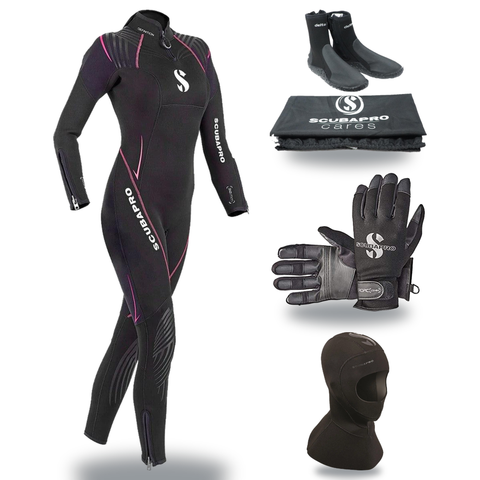
The Scubapro Definition Steamer 3mm Women's Full Wetsuit is designed for warm-water scuba diving, offering warmth, comfort, and freedom of movement. SCUBAPRO's Body Map System uses a 3D cut, targeted tailoring, and material inserts to ensure a precise fit with added stretch where it's needed. Proven N2S construction provides warmth and long-lasting comfort during extended underwater dives, while an infrared fleece lining adds thermal protection.
Constructed with X-Foam neoprene and a 3mm thickness, the suit features glued/blind-stitched seams for durability. A diagonal rear YKK zipper with a brass slider allows easy donning and doffing, while single zippered seals on the ankles and wrists help minimize water entry. The neoprene seal material, solvent-free adhesive, and lightweight construction contribute to practical diving gear performance.
- Body Map System: 3D cut with targeted tailoring and material inserts for a precise fit and added stretch
- N2S construction: warmth and comfort during extended dives
- Infrared fleece lining: augmented thermal protection
- Diagonal rear YKK zipper with brass slider for easy donning/doffing
- Single zippered seals on ankles and wrists to reduce water entry
- Materials: X-Foam neoprene; 3mm thickness; neoprene seal material
- Stitching: Glued/Blind-stitched seams for durability
- Eco-friendly adhesive: Solvent-free glue to minimize environmental impact
- Weight: Approximately 2.6 lb
- Size/fit: Women's adult sizing
| Marketing Product Type - Steamers | Steamers |
| Thickness - Steamers | 3mm |
| Stitching | Glued/Blind-Stitched |
| Materials - Steamers | X-Foam Neoprene |
| Seal Material | Neoprene |
| Product Weight | 2.6 lb |
| Activity | Travel, Recreational |
⚠️ WARNING: This product contains chemicals known to the State of California to cause cancer, birth defects, or other reproductive harm. For more information, visit www.P65Warnings.ca.gov.
Frequently Asked Questions
What water temperature is each ScubaPro Definition wetsuit thickness for?
ScubaPro's official CE ratings: the Definition 3mm Steamer is a Class D suit rated for water above 72°F (22°C); the 5mm Steamer is a Class B suit rated for 50–64.5°F (10–18°C). The 2.5mm Shorty is the tropical option for the warmest water. In-between temperatures come down to your cold tolerance — adding a hooded vest under a 3mm is a popular way to bridge the gap.
What makes the Definition line different from cheaper wetsuits?
The Definition suits use ScubaPro's X-Foam — a petroleum-free, limestone-based neoprene — with an infrared interior lining on the torso (3mm and 5mm), glued and blind-stitched seams, solvent-free adhesives, a Body Map System 3D cut, and a diagonal rear YKK zipper. The 5mm adds an Ultraspan chest panel, double-zippered wrist and ankle seals, and a spine pad for cold-water comfort.
What size ScubaPro Definition wetsuit should I order?
Use ScubaPro's official size chart, which maps chest, waist, hip, height, and weight per size — men's sizes run XS through 3XL, with Short and Tall variants on the 5mm for divers between standard proportions, and there is a full women's Definition line as well. Measure yourself wearing whatever you will wear under the suit. Wetsuits should fit snug with no gaps at the lower back or armpits; if you are between sizes, send us your measurements and we will pick the right one.
How should a wetsuit fit?
A wetsuit should feel snug everywhere, with no loose pockets at the lower back, armpits, or behind the knees where water can collect and flush. It will feel tighter than normal clothing on land, which is expected, because the suit works by holding a thin layer of water that your body warms. If you cannot take a full breath or the neck chokes you it is too small, and if you can pinch loose folds of neoprene it is too big.
What do you wear under a wetsuit?
Most divers wear a swimsuit, a rash guard, or a thin dive-specific base layer under a wetsuit. A slick base layer makes a tight suit much easier to pull on and cuts down chafing at the neck, shoulders, and underarms. Avoid thick cotton clothing, which soaks up water, bunches, and makes you colder rather than warmer.
How do you put on a tight wetsuit?
Work upward in small sections, pulling a little neoprene at a time rather than yanking on one spot, and get the suit fully seated at the ankles and knees before working on the hips and shoulders. A plastic bag over each foot and hand, or wetting the suit first, helps it slide into place. Grip with flat palms rather than fingertips, since fingernails are the most common cause of torn neoprene.
Does a thicker wetsuit mean a warmer wetsuit?
As a general rule, thicker neoprene insulates more, so a higher millimeter rating is warmer in the same conditions. Warmth also depends heavily on fit, suit style, seam construction, whether you add a hood, boots, and gloves, how long the dive is, and your own cold tolerance, so two divers in identical suits can feel very differently. Use thickness as a starting point and refine it against your local conditions and personal experience.
How do I care for and store a wetsuit?
Rinse it inside and out in fresh water after every dive day, and use a wetsuit-specific wash occasionally to control odor. Dry it inside-out first and then flip it, always out of direct sunlight, because UV and heat break down neoprene faster than anything else. Store it hanging on a wide-shouldered hanger or laid flat rather than folded, so you do not set permanent creases.
How long does a wetsuit last?
Lifespan depends far more on use and care than on age, so a suit dived hard in sun and chlorine may soften within a couple of seasons while a well-rinsed occasional-use suit can last many years. Signs a suit is finished include compressed neoprene that no longer feels buoyant or warm, splitting seams, and looseness in areas that used to be snug. Repairing small cuts and seam separations early adds meaningfully to a suit's life.
What is the difference between a full suit, a shorty, and wetsuit separates?
A full suit covers arms and legs, a shorty stops at the upper arms and thighs, and separates such as tops, bottoms, and hooded vests layer to add warmth where you want it. Layering a vest or top under a full suit adds core warmth and can extend the range of a suit you already own. Choose based on how much coverage you want, both for warmth and for protection against stings and abrasion.