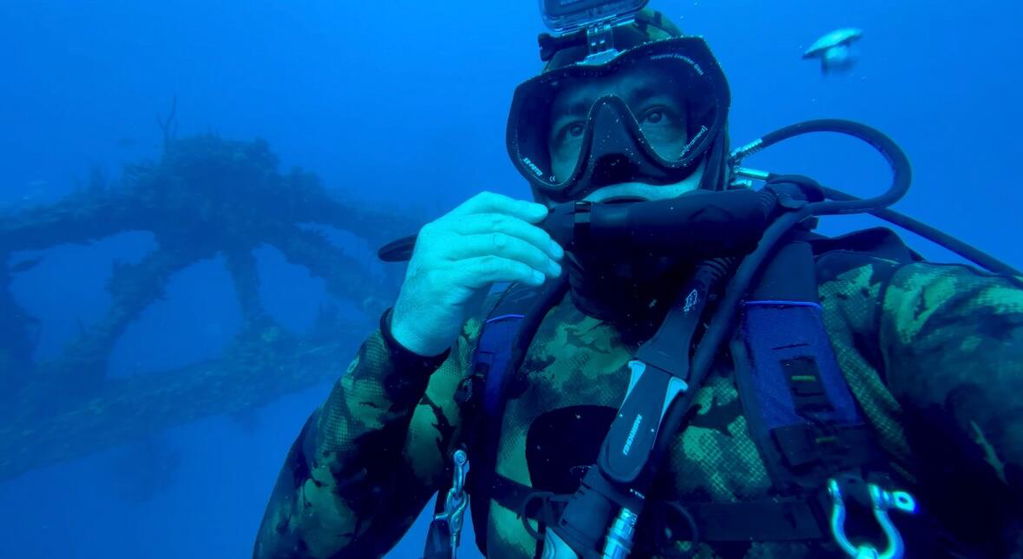
Ask any depth-focused freediver or spearo what stops them from going deeper, and most will not say their lungs or their legs. They will say their ears. Equalization is the single most common ceiling on depth progression, and the good news is that it is a learnable skill, not a gift. If you are still pinching your nose and blowing hard the way scuba divers do, you are using a technique that will quietly fail you somewhere past 10 meters. The fix is the Frenzel maneuver, and once it clicks, your dives get deeper, quieter, and far more relaxed.
This guide breaks down how equalization actually works, why Frenzel beats Valsalva for freediving, and how to train it on dry land before you ever hit the water.
Why equalization is the real barrier to depth
As you descend, water pressure increases by roughly one atmosphere for every 10 meters (33 feet). That pressure squeezes every air space in your body, and the air space that complains first is your middle ear. To keep it comfortable, you have to push a small amount of air through your Eustachian tubes to balance the pressure on both sides of your eardrum. Miss that window and you feel pressure, then pain, and if you keep descending you risk ear barotrauma.
The core rule never changes: equalize early and often, before you feel discomfort. By the time you feel pressure building, you are already behind, and at depth the increasing squeeze makes it progressively harder to catch up. The deeper you go, the more frequently you equalize, often every meter or less in the first part of the dive.
Valsalva vs. Frenzel: know the difference
Most divers learn equalization on scuba, where the Valsalva maneuver is taught because it is simple and it works at shallow recreational depths. For freediving, it becomes a liability. Understanding why comes down to where the air pressure originates.
How Valsalva works (and why it fails at depth)
Valsalva uses your lungs as the pressure source. You pinch your nose, close your mouth, and contract your chest and abdominal muscles to drive air up from the lungs and into the Eustachian tubes. The problem is twofold for a breath-hold diver. First, it creates whole-body tension and a small spike in heart rate with every attempt, which burns oxygen you cannot spare. Second, it depends on lung pressure, and as you descend your lungs compress and shrink. Past roughly 25 to 30 meters there may simply not be enough lung volume left to force air through, so the technique stops working exactly when you need it most.
How Frenzel works
Frenzel does not use your lungs at all. Instead, it uses the small volume of air already in your mouth and throat as the pressure source. You close the glottis (the same valve you use to hold your breath), pinch your nose, and use your tongue and soft palate as a piston to compress that trapped air and push it into the Eustachian tubes. Because only your tongue and throat muscles are working, your chest stays passive, your body stays relaxed, and your heart rate stays low. It is far more efficient, and because it is independent of lung volume, it keeps working when Valsalva has long given up.
How to perform the Frenzel maneuver, step by step
Frenzel can feel awkward at first because it isolates muscles you rarely think about. Work through these steps slowly, on dry land, before taking them underwater.
Start by pinching your nose closed. Take a normal breath, then make a "T" or "K" sound and freeze your tongue in that position to get a feel for pressing the back of your tongue upward. Next, close your glottis so no air moves to or from your lungs, the same sensation as the brief pause when you hold your breath. With your nose still pinched and glottis closed, use the back of your tongue to push the trapped air upward toward the back of your throat and nose. If you are doing it correctly, you will feel gentle pressure build in your ears and hear them click or pop as they equalize. Crucially, your chest and stomach should stay completely still; if they move, you have slipped back into Valsalva.
A simple self-check: hold a hand flat on your chest while you practice. If it stays motionless while your ears pop, you are running a clean Frenzel.
Common Frenzel mistakes and how to fix them
The most frequent error is leaving the glottis open, which lets air escape down toward the lungs instead of up toward the ears, so no pressure ever builds. If nothing is happening, focus on locking that valve shut first. The second common issue is recruiting the chest, which means you are blending Valsalva back in; the chest-hand check above will catch this. Many divers also wait too long and only try to equalize when they already feel pressure, which makes it much harder; commit to equalizing continuously from the surface down. Finally, a head-down, vertical descent changes the geometry and makes Eustachian tubes harder to open, so most divers find equalization easier in the first meters when they pre-equalize at the surface and stay ahead of the squeeze.
Dryland drills to build your Frenzel
You do not need water to train equalization, and the best progress usually happens on the couch. Practice isolating each component: closing and opening the glottis on command, moving the soft palate, and using the tongue as a piston. A short daily session of pinching your nose and gently equalizing, without forcing, builds the neuromuscular control that makes the movement automatic underwater. Keep every rep gentle. Equalization should never be forceful, and aggressive blowing risks ear injury. If you can reliably pop both ears while sitting still with a hand on your chest, you are ready to take it shallow and build from there.
Gear that makes equalization easier
Technique comes first, but your equipment either helps or fights you. The biggest equipment factor for equalization is your mask. Every mask traps an air space against your face, and that space also has to be equalized on the way down by exhaling a little air through your nose. A high-volume scuba mask wastes precious air on this; a low-volume freediving mask sits close to your face and needs far less air to clear, leaving more for your ears and lungs.

The Oceanic Enzo Dual Lens Low Volume Mask is a popular choice for exactly this reason: its very low internal volume and lightweight frame minimize the air you spend clearing the mask while keeping a wide field of view. If you are still diving in a bulky scuba mask, switching to a dedicated low-volume design is one of the cheapest upgrades you can make to your depth game. You can compare other options in the freediving and spearfishing collection.
The second piece of gear worth its weight is a freediving-specific computer. Equalization training is about repeatable, controlled depth, and a dedicated apnea computer lets you set depth and time alarms so you can focus on technique instead of guessing. The Mares Smart Apnea Dive Computer tracks depth, dive time, and surface intervals with apnea-specific alarms, which makes it easy to structure progressive depth sessions and stay disciplined about surface recovery.

Beyond Frenzel: a word on mouthfill
Frenzel will carry most recreational freedivers and spearos to around 25 to 30 meters, which covers the vast majority of hunting and depth goals. Past that point, even Frenzel runs out of mouth air because the lungs are too compressed to refill the mouth from below. That is where the advanced mouthfill technique comes in: you take a charge of air into your mouth at a set depth and meter it out on the rest of the descent. Mouthfill is powerful but genuinely advanced, and it is best learned under the eye of a certified instructor rather than from an article. Master a clean, relaxed Frenzel first; it is the foundation everything else is built on.
Safety first: never train equalization alone
No depth goal is worth your life, and equalization training is still breath-hold diving. Always dive with a trained buddy using the one-up, one-down system, where one diver descends while the other watches from the surface and stays with them for at least the first 30 seconds after they surface. Shallow water blackout is the leading cause of freediving fatalities, and it strikes without warning, most often at or near the surface. Never hyperventilate before a dive in an attempt to extend your breath-hold, since it suppresses the urge to breathe without adding meaningful oxygen and dramatically raises blackout risk. And never, ever push past an ear that will not equalize. A failed equalization is your body telling you to turn the dive, not to force it.
Get the technique right, respect the safety rules, and your ears stop being the thing that ends your dive. Train your Frenzel patiently, dive it relaxed, and the depth will follow.