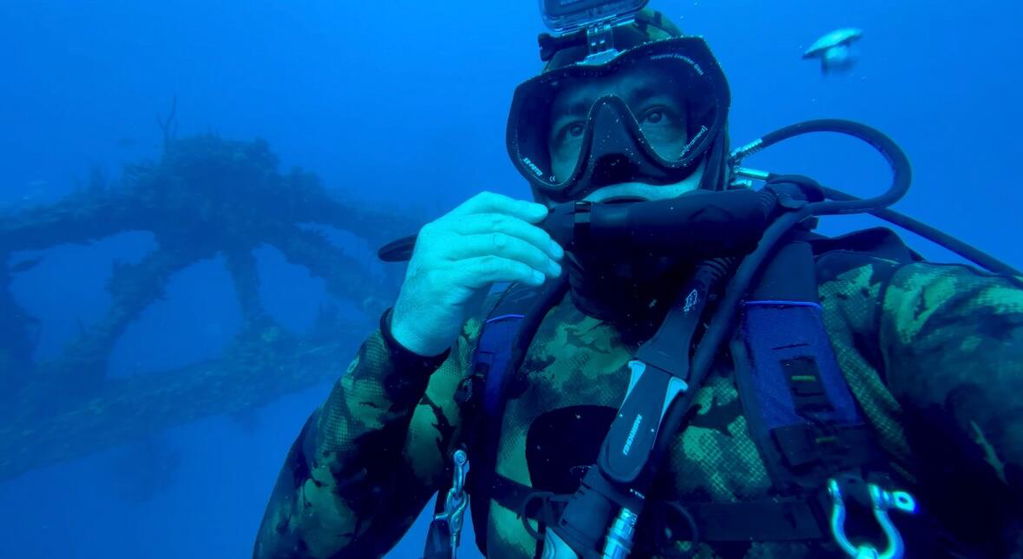
Your mask is the single piece of gear that decides whether a dive feels effortless or like a slow leak of patience. A regulator that breathes a little stiff is a minor annoyance; a mask that floods every few minutes or fogs the moment you descend can end a dive early. The good news is that choosing a well-fitting scuba mask is not complicated once you understand what actually matters. As an instructor, fit is the first thing I check on every student, and it is the thing I wish more divers tested before they bought.
This guide walks through how a mask should fit, the lens and skirt options worth understanding, a few special cases like glasses and facial hair, and how to keep any mask fog-free dive after dive.
Why fit matters more than features
Marketing tends to focus on lens shape, coatings, and color. Those things are real, but they are secondary. A mask seals against your skin using a soft silicone skirt, and that seal is what keeps water out. If the skirt does not match the contours of your face, no coating or premium lens will save you from a slow flood. Two divers can love and hate the exact same mask, and both can be right, because their faces are different. Fit is personal, which is why testing comes before brand loyalty.
How a scuba mask should fit
You can check fit in seconds, even in a shop or at home before your first ocean dive.
The suction test
Hold the mask against your face without looping the strap over your head. Keep the strap out of the way. Gently inhale through your nose and stop. A well-fitting mask will stay in place on its own suction for a moment, with no strap, and you should not feel air whistling in at the edges. Pay attention to the top of the skirt where it crosses the bridge of your nose and the bottom where it meets your upper lip. If the mask falls away or you feel air leaking, that shape is not right for your face. If you wear the mask with a snorkel, repeat the test with the mouthpiece in, since a snorkel can tug the skirt and break the seal.
A common beginner mistake is overtightening the strap to compensate for a poor fit. The strap only holds the mask in position; it does not create the seal. Cranking it down distorts the skirt and usually causes more leaks, not fewer, along with a headache by your safety stop.
The skirt: silicone, color, and coverage
Modern mask skirts are made of silicone, which stays soft and holds its shape far longer than older rubber. Skirts come in clear and black. Clear or translucent skirts let in more ambient light and feel more open, which many new divers prefer. Black or opaque skirts block side light and reduce internal glare and reflections, which is why underwater photographers and many experienced divers favor them. Neither is safer; it is a preference.
Some masks also use a double-feathered skirt edge, which adds a second sealing lip for a more forgiving seal across a range of face shapes. If you have struggled to find a mask that seals, look for that feature.
Lens configurations explained
Once a mask fits, the lens layout is the next real decision. All quality dive masks use tempered glass, which resists scratching and is engineered to break into small pieces rather than shards if it ever fails. Plastic lenses belong on inexpensive snorkel toys, not on a mask you will trust at depth.

Single-lens masks
A single-lens mask uses one continuous piece of glass with no frame across the bridge of the nose. The payoff is an open, uninterrupted view. Single-lens designs like the Tusa Freedom Elite are a popular all-around choice for recreational divers who want maximum field of view. The trade-off is that a single-lens mask cannot accept bonded prescription lenses.
Dual-lens masks
Dual-lens masks split the glass into two windows with a bridge between them. This lets the lenses sit closer to your eyes, which usually means a lower internal volume, and it opens the door to prescription lens options on many models. A low-profile dual-lens mask like the Tusa Freedom Ceos is a strong pick for divers who want a compact mask or who may need corrective lenses down the road.
Frameless and low-volume masks

Frameless masks bond the lens directly to the skirt with no rigid outer frame. They tend to be very low volume, fold flat for a pocket or a BCD pocket as a backup, and sit close to the face. Frameless designs such as the Tusa Zensee Pro are favored by divers who want a minimal profile and an easy-clearing mask, and many add lens treatments like anti-reflective and UV coatings.
Low volume versus high volume
Internal volume is the amount of air space between the lens and your face. Low-volume masks are easier to clear because there is less water to push out, and they are easier to equalize on the way down. They also sit closer to your eyes for a wider view. Higher-volume masks can feel more open and bright but take a bigger breath to clear. For most recreational divers, and especially anyone still building comfort with mask clearing, a lower-volume mask makes the skill easier. It is one reason freedivers and spearos choose the lowest-volume masks they can find, and recreational divers benefit from the same logic.
Special cases worth planning for
If you wear glasses or contacts
You have three practical paths. Soft contact lenses work for many divers, with the small caveat that you keep your eyes closed during mask clearing and removal so a lens is not washed out. Many dual-lens masks accept bonded corrective lenses, which is the most durable long-term solution. Some masks also come in stock diopter versions for common prescriptions. If corrective vision matters to you, choose a mask that supports it before you fall in love with a single-lens model that does not.
If you have a mustache or beard
Facial hair breaks the seal between the silicone skirt and your upper lip, and no mask fully solves this. A dab of unscented silicone grease or even dive-friendly lip balm along the mustache line helps the skirt seal against the hair. Trimming the top of the mustache line is the more reliable fix. This is normal, not a sign you bought the wrong mask.
If you have a smaller or narrower face
Standard masks often leak on smaller faces because the skirt is simply too wide. Look for masks built on a smaller frame or marketed for narrow faces, such as the Tusa Ino, and run the suction test to confirm the skirt lands cleanly on the bridge of your nose and under your eyes.
Keeping your mask fog-free
Fog forms when warm, humid air inside the mask condenses on the cooler glass. Two habits eliminate almost all of it: prepping a brand-new mask once, and defogging before every single dive.
Prepping a brand-new mask
New masks ship with a thin film of manufacturing residue on the inside of the lens, and that film is what makes a new mask fog no matter how much defog you use. On tempered glass lenses, the classic fix is a non-gel white toothpaste: rub a small amount over the inside of the glass with a fingertip, work the edges, rinse, dry, and repeat several times. Some divers prefer a dedicated mask-prep cleaner, and a lightly passed flame from a lighter is another well-known method for glass lenses. Only use toothpaste or flame on glass. Never apply either to masks with plastic or coated lenses, or to the silicone skirt, because you can scratch or melt them.
Defogging before each dive
Prepping once does not mean you are done. Before you get in the water, apply a defog to the dry inside of the lens, then rinse with a quick swish of water just before you descend. A drop of commercial dive defog works well, and a diluted baby-shampoo mix is a gentle, reef-conscious alternative that many divers keep in a small bottle. The old standby of saliva also works in a pinch. Whatever you use, treat the lens while it is dry, not wet, for the best result.
Care and storage
A mask that is looked after will outlast several sets of fins. Rinse it in fresh water after every dive, especially after salt water, and let it dry out of direct sunlight. Store it in a protective case rather than loose in a gear bag where the lens can be scratched and the skirt can be crushed into a warped shape. Keep it away from prolonged heat and UV, which degrade silicone over time. A neoprene strap cover such as the DiveCatalog neoprene mask strap also keeps a rubber strap from pulling your hair and makes the mask more comfortable to don and doff. Browse more dive mask accessories if you want to dial in comfort.
A few masks worth a look
If you want a starting point, these are solid, in-stock choices for recreational divers. The Tusa Freedom Elite is a wide-view single-lens all-rounder. The Tusa Freedom Ceos is a low-profile dual-lens that keeps prescription options open. The frameless Tusa Zensee Pro suits divers who want the lowest profile and added lens coatings. Whatever you choose, run the suction test first. You can compare the full range in the dive masks collection.
The bottom line
Fit comes first, lens layout second, and everything else after that. Test a mask on your own face, favor a lower-volume design if mask clearing still feels awkward, prep a new lens once, and defog before every dive. Do those four things and your mask will disappear from your attention, which is exactly what good gear should do, leaving you free to enjoy the water.