Getting into underwater photography doesn't require a professional setup or years of experience. Most divers start with a single question: which camera should I bring on my next dive? The answer depends on what you want to photograph, how much control you want over your images, and how much you're willing to spend.
This guide covers the three main approaches to underwater camera systems, explains what each is suited for, and helps you decide which direction makes sense before you commit to a purchase.
The Three Main Underwater Camera Options
Action Cameras
Action cameras like the GoPro Hero series are waterproof out of the box and rated for depths of around 33 feet (10 meters) without a separate housing. They're compact, lightweight, and particularly good for video. Their wide-angle lenses capture sweeping reef scenes well, and modern models record in 4K or higher resolution.
That said, action cameras have real limitations for still photography. They don't focus on subjects precisely in low light, the fixed wide-angle field of view limits versatility, and photos tend to look flat or color-shifted without added lighting. They're best suited for divers who primarily want to document their dives on video rather than produce high-quality stills.
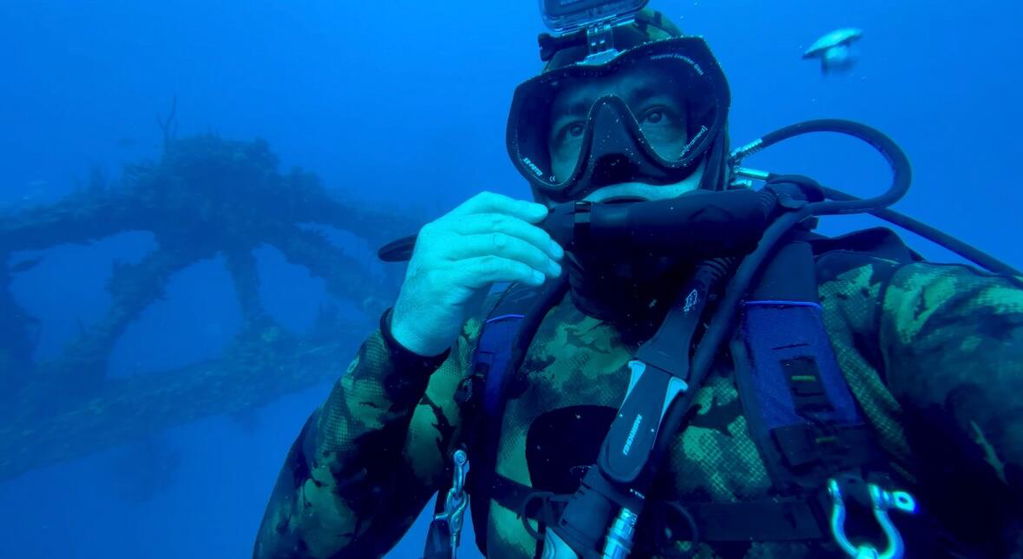
If you're using an action camera, a simple mounting accessory can make a significant difference in usability. The Hollis M3 GoPro Mount Scuba Mask Accessory ($19.95) attaches your camera directly to your mask strap for hands-free capture while you manage your buoyancy and navigate the dive.
Purpose-Built Underwater Cameras
For divers who want better photo quality without the complexity of a housing system, purpose-built underwater cameras are worth a serious look. These cameras are designed entirely for underwater use—the body is permanently sealed, pressure-rated to significant depths, and requires no O-ring maintenance or pre-dive leak checks.
The SeaLife Micro 3.0 is the leading option in this category. It's rated to 200 feet (60 meters), shoots 16-megapixel stills and 4K video, connects wirelessly to a smartphone for image transfer and remote settings control, and uses the SeaLife Flex-Connect accessory system so you can add trays, grips, and lights as your photography develops.

The SeaLife Micro 3.0 ($599) is a practical choice for recreational divers who want simple, always-ready gear. There's no housing to assemble, no O-ring to inspect, and nothing to forget before entering the water. The tradeoff compared to a housing system is less flexibility with interchangeable lenses and a less sophisticated autofocus system—but for most beginners and intermediate divers, those limitations rarely matter in practice.
Compact Cameras with Underwater Housings
The third option pairs a compact, mirrorless, or DSLR camera with a dedicated underwater housing. Manufacturers like Fantasea and Ikelite build housings for specific camera models, providing physical access to most camera functions through sealed buttons and dials on the exterior of the housing.
This approach offers more photographic control and flexibility than the other two options. You can access manual settings precisely, and many systems support interchangeable lens ports for wide-angle or macro configurations. The downside is the added complexity: O-ring inspection before every dive, more setup time, and a larger, heavier rig to manage while diving.
Housing systems are generally better suited to divers who already have some photography experience and want more control over their output, rather than someone picking up an underwater camera for the first time.
Why Lighting Matters More Than the Camera
Water absorbs light rapidly as you descend. Red wavelengths largely disappear by about 15 feet. Orange and yellow follow by 30 to 40 feet. Without artificial light, your images will have a blue-green cast and flat, muted colors—regardless of camera quality.
Adding a dedicated photo or video light is widely considered the single most impactful upgrade you can make to your underwater photography. Even a modest light at close range restores colors that post-processing alone can't recover, especially for subjects below 20 feet.

The SeaLife Sea Dragon 3000F Auto ($499) is a popular light for divers using the Micro 3.0 or similar compact systems. It outputs 3,000 lumens across a 120-degree wide beam and includes an Auto mode that reduces brightness when triggered by a camera flash, preventing overexposed subjects at close range. Its 96 CRI rating means colors render accurately and naturally under the light.
For divers who want camera and lighting sorted together in a single purchase, SeaLife offers complete bundle sets. The Micro 3.0 Pro 3000 Color Boost Set ($999) includes the camera, a Sea Dragon 3000F light, tray, and grip. The Micro 3.0 Pro Dual Beam Set ($1,049) adds a second light for more even, shadow-free illumination on both sides of the subject—a noticeable improvement for textured subjects like coral and marine life.
Add-On Lenses for the SeaLife Micro 3.0
Two lens accessories significantly expand what you can photograph with the Micro 3.0 series:
Wide Angle Dome Lens
The SeaLife Micro Wide Angle Dome Lens ($399) increases the camera's field of view by nearly 50 percent. This makes it much easier to photograph larger subjects—reef walls, schools of fish, wrecks, or fellow divers—when you can't back up far enough to fit the full scene in frame. It attaches directly to the front of the camera and can be removed and reattached underwater, which means you can swap between wide and standard coverage mid-dive.

10x Close-Up Lens
The SeaLife 10x Close-Up Lens ($59) reduces the minimum focus distance to about 6 inches (15 cm), making it practical to photograph small marine life—nudibranchs, shrimp, flatworms, juvenile fish—that the camera cannot normally focus on at close range. At under $60, it's one of the most cost-effective upgrades available for the Micro series and a good choice for divers diving in species-rich environments.
Choosing the Right Setup for Your Needs
Starting out on a limited budget: The SeaLife Micro 3.0 Camera ($599) is a practical, low-maintenance starting point. No housing required, and it's rated far deeper than most recreational dives. Add the 10x Close-Up Lens ($59) if macro subjects interest you.
Want lighting included from the start: The Micro 3.0 Pro 3000 Color Boost Set ($999) is a complete camera-and-light package. It eliminates the need to research and purchase lighting separately, and everything is designed to work together.
Most complete setup: The Micro 3.0 Pro Duo 5000 Set ($1,399) provides two lights for balanced, even illumination from both sides—a meaningful step up from single-light setups when photographing subjects with texture or depth. Paired with the Wide Angle Dome Lens, you get coverage from close-up marine life to wide reef scenes in a single compact system.
Habits That Will Improve Your Results
- Get close. Water reduces contrast and clarity with distance. Most experienced underwater photographers aim to stay within 2–3 feet of their subject whenever conditions allow.
- Focus on buoyancy first. Sharp images require a stable hover. If buoyancy control needs work, that will show up in your photos before any gear limitation does.
- Review between dives. Lighting angle, white balance settings, and subject distance all affect results. Reviewing your shots on the surface lets you adjust your approach before the next dive rather than after the trip.
- Start wide, move closer. Wide-angle shots capture context and environment. Getting close to your subject and shooting wide typically produces stronger images than attempting telephoto distances through water.
Underwater photography improves quickly with consistent practice and the right starting gear. If you have questions about which camera or lighting system fits your diving style and budget, the team at DiveCatalog.com is happy to help you work through the options.