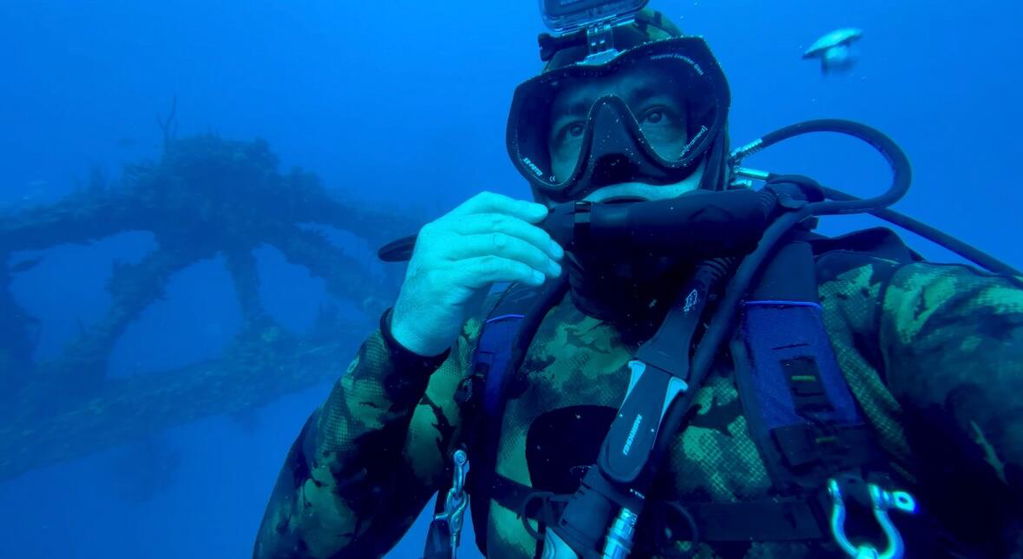
California's coastline supports some of the most biodiverse underwater environments on Earth. The giant kelp forests that stretch from Monterey Bay down through the Channel Islands form a layered, light-filtering ecosystem that functions much like a terrestrial forest—with a canopy, midwater column, and seafloor—and attracts a correspondingly rich community of marine life.
Whether you're planning your first cold-water dive or trying to understand what you're seeing underwater, this guide covers what lives in California's kelp forests, where to find them, and what to know before you jump in.
What Makes California Kelp Forests Unique
Giant kelp (Macrocystis pyrifera) is the species that defines California's offshore ecosystems. It's one of the fastest-growing organisms on Earth—under ideal conditions, it can grow up to two feet per day—and it forms underwater canopies that can reach 150 feet from the seafloor to the surface.
Giant kelp thrives in temperate water between roughly 50°F and 65°F (10°C–18°C). California's coastline, cooled year-round by the California Current, sits squarely in that range. The kelp anchors to rocky substrate using a holdfast (not true roots—kelp absorbs nutrients directly from the water), and small gas-filled bulbs called pneumatocysts keep each frond buoyant and oriented toward sunlight.
The result is a three-dimensional habitat: a canopy at or near the surface, open midwater columns between kelp stipes, and a rocky, invertebrate-rich seafloor below. Each zone supports its own community of species.
Marine Life You'll Encounter
Fish
Garibaldi (Hypsypops rubicundus) is California's state marine fish and one of the most reliably spotted species at any kelp dive site. Brilliantly orange and highly territorial, they're fully protected in California waters and cannot be taken or disturbed. Juveniles display electric-blue spots that fade with age.
Calico bass (kelp bass) are among the most abundant fish in Southern California kelp forests, typically hanging in the midwater column near kelp stipes. Sheephead—with their distinctive red-and-black coloring—are found from shallow reefs down to 100+ feet. They're sequential hermaphrodites: females can transition to male, which is why you'll see the same species in dramatically different color patterns.
Other common species include señoritas and blacksmith (wrasse species that often school in open water), California moray eels tucked into rocky crevices at the seafloor, and leopard sharks resting on sandy patches near the kelp. Leopard sharks are harmless to divers and are a highlight of diving in La Jolla and Catalina.
Marine Mammals
California sea lions are the most interactive marine mammals divers encounter in kelp forests. Particularly at Catalina Island and the Channel Islands, they'll approach divers, circle, and occasionally grab fins or equipment out of curiosity. Harbor seals are present at many sites (common at La Jolla Cove) but are shyer and less likely to approach.
On rare occasions, Pacific white-sided dolphins pass through kelp forest areas, and lucky divers at Channel Islands have encountered giant sea bass—an endangered species that can reach seven feet in length. Giant sea bass were nearly fished to extinction and are now making a slow comeback; if you see one, give it space.
Invertebrates
Purple and red sea urchins graze on kelp holdfasts at the seafloor. In a healthy ecosystem, their populations are kept in check by sea otters and (historically) sunflower sea stars. California spiny lobster hide in crevices throughout the kelp zone and are legal to take by hand or hoop net during the open season. Giant Pacific octopus and smaller two-spot octopus are also present, though they're most often spotted after dark.
Nudibranchs are a highlight for macro-focused divers—California's kelp reefs host dozens of species, from the vivid Spanish shawl (Flabellina iodinea) to the translucent Hermissenda (Phidiana crassicornis).
Best Kelp Forest Dive Sites in California
Casino Point Dive Park (Catalina Island) is one of Southern California's most accessible and intact kelp forest sites. Shore diving from the Avalon waterfront, divers reach the kelp forest within a few kicks. Visibility frequently exceeds 30–40 feet, and the site is an official marine protected area.
La Jolla Cove (San Diego) offers shore-accessible kelp forest diving with garibaldi, leopard sharks, sea lions, and a variety of invertebrates. The site is protected as part of the La Jolla Ecological Reserve.
Channel Islands National Park—particularly Anacapa, Santa Cruz, and San Miguel islands—provides some of the richest kelp diving in the state. Access is via day-boat or live-aboard charters from Ventura, Santa Barbara, and Oxnard.
Monterey Bay has arguably California's most celebrated kelp diving. The Breakwater (Monterey Harbor) and McAbee Beach are popular shore entry points with consistent kelp canopy and abundant marine life. Water temperatures here run colder than Southern California—plan for a 7mm wetsuit or drysuit most of the year.
What to Expect Underwater
Currents. Surface currents can push kelp canopies significantly. When ascending through the canopy, always look up before surfacing, and part the kelp gently with your hands to avoid getting tangled. If you find yourself wrapped in kelp, stay calm, move slowly, and unwind rather than thrash.
Buoyancy. Good buoyancy control matters in kelp forests. Brushing or landing on kelp stipes can break them—and a broken stipe doesn't regenerate. Stay neutrally buoyant and minimize contact with the kelp itself.
Visibility. California kelp diving visibility is highly variable. After storm events or plankton blooms it can drop to a few feet; on a calm, clear water day at the same site you might see 40+ feet. Check with local dive shops or online dive logs for current conditions before heading out.
Light. Even during daylight hours, a dense kelp canopy filters a significant amount of light. At 40–60 feet under a thick canopy, the environment can feel quite dim. Many experienced kelp divers carry a torch even on day dives to illuminate crevices, bring out the true colors of invertebrates, and spot nocturnal species hiding in the rocks.
Gear for California Kelp Diving
Wetsuit Thickness
California's nearshore water temperatures range from approximately 55°F to 65°F (13°C–18°C) depending on depth, location, and season—Monterey running colder, San Diego somewhat warmer. A 7mm full wetsuit is the standard choice for most divers in these conditions and will keep you comfortable for 60–70 minute dives without crossing over into drysuit territory.

Bare 7mm Elate Neoprene Women's Full Wetsuit – $419.95 | Men's 7mm Reactive Full Wetsuit – $544.95
The Bare 7mm Elate Women's Full Wetsuit and the Bare 7mm Reactive Men's Full Wetsuit are both strong options for California conditions. The Reactive uses Omnired infrared fabric for added warmth retention, while the Elate prioritizes a close, flexible fit designed for sustained underwater activity.
Dive Light
A primary torch is worth packing for kelp forest dives, even during the day. Under a thick canopy at depth, a good light does more than provide illumination—it reveals the actual colors of the reef. Without a light, nudibranchs and anemones that are vivid red or orange appear brown or gray at depth. Moray eels, octopus, and lobster tucked in crevices are also much easier to spot with a direct light source.

Apeks Luna Primary Torch – $839.00
The Apeks Luna Primary Torch is a professional-grade rechargeable dive light designed and built in Britain. It delivers reliable output at depth and is rated for technical dive use, making it a solid long-term investment for divers who spend significant time in California's cold-water environments.
Kelp Forest Conservation
California's kelp forests have declined substantially over the past decade. A convergence of factors—sea star wasting disease (which devastated sunflower sea star populations), extended marine heat waves, and the resulting unchecked growth of purple sea urchin populations—has produced widespread "urchin barrens" along the Northern California coast and in some parts of the south. These are rocky areas scraped bare of kelp, where urchins persist in a low-nutrition state waiting for kelp to return.
Restoration efforts are underway. Organizations like the Reef Check Foundation, the Coastal Roots Farm, and research groups at UC Santa Barbara's Marine Science Institute are running urchin culling programs and kelp restoration trials. Some Northern California dive operators offer urchin culling dive trips that allow divers to contribute directly.
When diving in marine protected areas—which includes most of the best kelp sites in California—follow all regulations: no collecting of organisms, no anchoring on reef or kelp, and minimal contact with the substrate. Reporting unusual die-offs or signs of disease to the California Department of Fish and Wildlife helps researchers track ecosystem health.
Planning Your Kelp Forest Dive
Before heading out, check current conditions with a local dive shop or an online dive log community. Water temperature, visibility, surge, and canopy density can change significantly from week to week and season to season. Most kelp dive sites are best in late summer through fall, when water conditions are calmer, visibility is higher, and water temperatures are at their warmest.
For first-time kelp forest divers, going with an experienced local guide or booking a charter dive trip is a practical choice. Kelp forests aren't dangerous, but learning navigation and canopy management techniques from someone who dives these sites regularly will make the experience considerably more enjoyable—and will help you know what you're looking at when you see it.