Getting started in scuba diving is exciting, but understanding scuba diving equipment can feel overwhelming at first. With so many pieces of gear involved, new divers often wonder what each item does and which equipment they actually need to get started.
Scuba gear works together as a complete system designed to keep divers comfortable, safe, and efficient underwater. From masks that allow you to see clearly, to regulators that deliver breathable air, each piece of equipment plays an important role in the diving experience.
At DiveCatalog.com, we help divers of all levels understand and choose scuba equipment that fits their needs, experience level, and diving style. Whether you're preparing for your open water certification, learning about different types of gear, or beginning to build your personal dive kit, understanding how each piece of equipment works is the first step toward becoming a confident diver.
Most beginners start by learning about personal gear—mask, fins, snorkel, and sometimes boots—before moving on to essential equipment like regulators, BCDs, dive computers, and exposure protection.
Ready to start building your dive kit? Shop trusted scuba equipment at DiveCatalog.com.
Essential Scuba Diving Equipment Every Beginner Should Know
Before diving deeper into individual piece of gear, it helps to understand the core equipment used in scuba diving. Most beginner divers will become familiar with the following essentials:
- Personal Gear: Mask, snorkel, and fins
- Regulator
- Buoyancy Control Device (BCD)
- Dive Computer
- Exposure Protection
Each piece plays an important role in comfort, safety, and overall dive performance. Let’s take a closer look at how they work and what beginners should consider when choosing their gear.
Personal Gear: Mask, Fins, Snorkel, and Boots
Often referred to as personal gear, these items include the mask, fins, snorkel, and sometimes boots—the same core equipment used in snorkeling and the first gear many divers become familiar with. These items directly affect comfort, understanding how they fit and function helps divers choose gear that allows them to relax and enjoy their time underwater.
Masks: Choosing the Right Dive Mask
A dive mask creates the air space your eyes need to focus underwater and allows you to equalize pressure as you descend. Your mask is arguably one of the most important pieces of scuba diving equipment, and choosing the right one can significantly impact your comfort and enjoyment underwater.
Think about the following when selecting your mask:
- Soft silicone skirts that create a comfortable, watertight seal
- Tempered glass lenses for durability and safety
- Adjustable buckles or straps for a secure and customizable fit
Pro Tip: The most important factor when selecting a mask is fit — not brand or price. Even the highest-quality mask will be frustrating if it doesn’t properly seal your face.
Fins: Your Underwater Engine
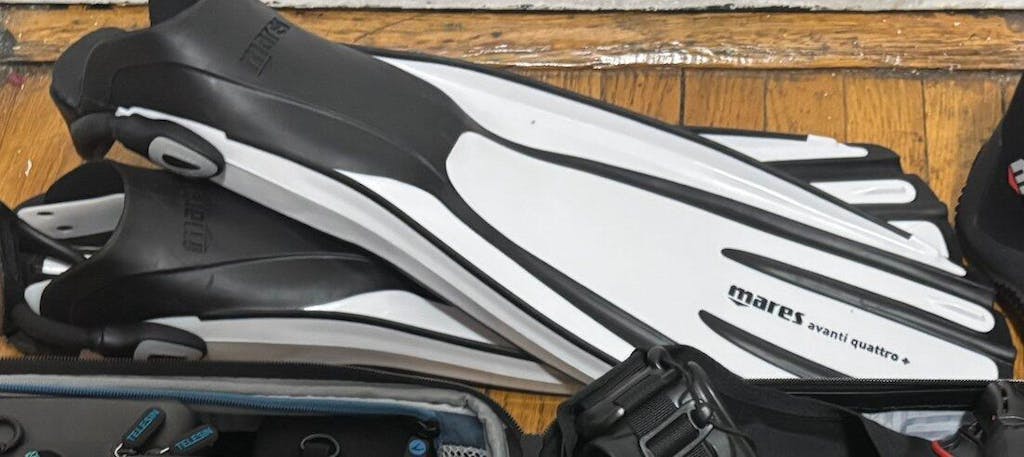
Fins allow divers to move efficiently through the water while conserving energy, improving propulsion, control, and overall comfort underwater. Beginners often underestimate how much fins impact their diving experience, but the right pair can reduce fatigue and improve mobility. Choosing the right fins depends on your diving environment, comfort preferences, and travel needs.
There are two common types:
- Open-Heel Fins: Worn with dive boots, adjustable heel straps, strong propulsion, ideal for shore diving and cooler water.
- Full-Foot Fins: Worn barefoot, lighter and more travel-friendly, commonly used in warm tropical destinations.
 
|
|
|
Pro Tip: Modular fins offer excellent versatility for many types of diving. They allow you to swap blades based on diving conditions or preferred kicking style, and their ability to break down into smaller components makes them convenient for storage and travel.
Boots
Dive boots, worn with open-heel fins, protect your feet, provide insulation, and prevent chafing from fin straps. They also make shore entries and rocky surfaces safer. Think of boots and fins as a set of puzzle pieces—when paired correctly, they ensure comfort, efficient propulsion, and a smoother, more enjoyable dive experience.
Snorkels
Styles of snorkels to consider:
- Classic J Snorkel are simple and durable, though they require manual clearing of water they do not have a purge valve or flexible tube.
- Semi-Dry Snorkel have a splash guard at the top and a purge valve, which makes clearing easier in choppy conditions
- Dry Snorkel features a top valve that completely seals when submerged, preventing water from entering the tube.
Understanding personal gear—mask, fins, snorkel, and boots—helps divers move efficiently and stay relaxed underwater, allowing them to focus on exploring rather than adjusting equipment.
Start building your personal gear kit today with trusted brands at DiveCatalog.com.
Regulators: Your Lifeline Underwater
Your scuba regulator delivers air from your tank at a breathable pressure, letting you relax and focus on the dive. Think of it as your lifeline underwater. Trusted brands like Scubapro and Atomic Aquatics are known for reliability, smooth performance, and durability.
A typical setup includes a first stage, primary second stage, alternate air source (octopus), and a pressure gauge (SPG) and/or a transmitter. Beginners should prioritize smooth breathing, reliability, and easy maintenance.
 |
|
Scubapro MK17 EVO2/S620 TI Regulator System For divers looking for smooth, reliable breathing in cold or silty water, the Scubapro MK17 EVO 2 / S620 Ti is a standout regulator setup. The sealed diaphragm first stage keeps water and debris out, making it a dependable choice for colder conditions. Paired with the lightweight S620 Ti second stage, it delivers effortless airflow and comfortable breathing throughout the dive. It’s rugged enough for cold-water diving, yet light enough to travel with, making it a versatile option for many types of diving. |
Buoyancy Control Devices (BCD)
A Buoyancy Control Device (BCD) helps divers manage their buoyancy by adding or releasing air as needed. Learning to use your BCD properly allows you to hover comfortably in the water, move with better control, and avoid unnecessary contact with the bottom. Good buoyancy control not only makes diving easier and more enjoyable, it also helps protect delicate marine environments.
Types of BCDs include:
- Jacket style (common for beginners)
- Back-inflate
- Backplate and wing systems
Dive Computers: Your Underwater Safety Tool
A dive computer keeps track of important information during your dive, including depth, bottom time, ascent rate, and nitrogen loading. By continuously calculating this data, it helps divers stay within safe limits and make informed decisions underwater. Having that information readily available allows you to focus more on the dive while maintaining safe dive profiles.
 |
|
Garmin Descent MK3i - Available in 43mm & 51mm |
Exposure Protection
Exposure protection keeps divers warm and protects skin from abrasions, marine life, and UV exposure. Even in relatively warm water, the body loses heat much faster underwater than it does on land, which is why proper exposure protection is essential for comfort and safety during a dive.
The type of exposure protection you choose depends primarily on water temperature, dive duration, and personal comfort.
Wetsuits
Wetsuits are the most common form of exposure protection used in recreational diving. Made from neoprene, wetsuits trap a thin layer of water between the suit and your body. This water warms from your body heat and helps insulate you throughout the dive.
Wetsuits come in different thicknesses depending on water temperature:
- 3mm wetsuits – warm tropical waters
- 5mm wetsuits – moderate water temperatures
- 7mm wetsuits – cooler water environments
Pro Tip: Layer gloves, hoods, or hooded vests to stay warm without a thicker wetsuit—Southern California divers often pair a 7mm suit with a hooded vest for longer dives.
Drysuits
Drysuits keep divers completely dry by sealing out water and relying on thermal undergarments for insulation. They require additional training, as buoyancy control differs from wetsuits, but allow divers to stay comfortable in cold or variable-temperature environments, making them ideal for technical dives and colder destinations.
Additional Exposure Protection Accessories
In addition to wetsuits and drysuits, divers often use smaller pieces of exposure protection to improve warmth and comfort.
Gloves
Dive gloves protect hands from cold, rough surfaces, and marine life, helping prevent cuts or scrapes—essential for shore entries, rocky environments, and cooler water dives.
Pro Tip: For dives such as lobster diving, boat cleaning, or handling rough gear, consider Kevlar dive gloves for extra cut resistance and durability while staying flexible underwater.
Hoods and Hooded Vests
Neoprene hoods help retain body heat by covering the head, where a significant amount of warmth is lost. They keep divers comfortable in cooler water and during longer dives.
Hooded vests add insulation to both the core and head while layering easily under a wetsuit, providing extra warmth and comfort in moderately cold conditions.
Skin Suits (Dive Skins or Rash Guards)
Skin suits are lightweight exposure protection for warm-water diving, shielding against sun, stings, and minor abrasions, either worn alone in tropical waters or layered under a wetsuit for added comfort.
Pro Tip: Wearing a skin suit under your wetsuit makes it much easier to put on and take off, saving time and reducing frustration before and after your dives.
Building Your First Dive Kit with Confidence
Scuba diving equipment may seem complex at first, but once you understand the essentials, building your own gear kit becomes much easier. Many divers begin with personal gear like a mask, fins, and snorkel, then gradually add core equipment such as regulators, BCDs, dive computers, and exposure protection as they gain experience.
Understanding how your gear works—and knowing the qualities that make it reliable—helps you feel more comfortable underwater and builds confidence with every dive. Trusted brands like Scubapro, Atomic Aquatics, Garmin, and Suunto are known for durability, performance, and long-term reliability, ensuring your equipment performs when it matters most.
At DiveCatalog.com, our mission is to help divers find gear they can trust. Whether preparing for your first open water dives, upgrading your setup, or planning your next adventure, having the right equipment makes every dive safer and more enjoyable.
Explore premium scuba equipment at DiveCatalog.com and start building your dive kit today.
The ocean is waiting.
FAQ: Beginner Scuba Gear Questions
Q: What scuba gear should beginners buy first?
A: Most divers start with personal gear: mask, fins, snorkel, and boots. These items affect comfort the most and are relatively affordable compared to full life-support equipment.
Q: Should beginners buy or rent scuba gear?
A: Renting gear is common during training, but owning personal equipment improves fit and familiarity. Many divers begin purchasing gear shortly after certification.
Q: Are premium brands worth it for beginner divers?
A: Yes. Many premium brands like Scubapro and Atomic Aquatics build equipment that lasts for many years. Investing early can save money over time.
Q: How much does a full scuba gear setup cost?
A: A basic starter kit (mask, fins, snorkel, boots) may cost $150–$400. A full equipment setup including regulator, BCD, and dive computer can range from $1,500–$5,000 depending on brand and features.
Q: How often should scuba gear be serviced?
A: Regulators and BCDs should typically be serviced once per year or every 100 dives, some regulators have a 2 year service interval. It is important to read the manufacturers owners manual for the exact recommended service interval.