




You May Need These
Description
Description
SERIOUS DIVE FEATURES IN A RUGGED STEEL CASING
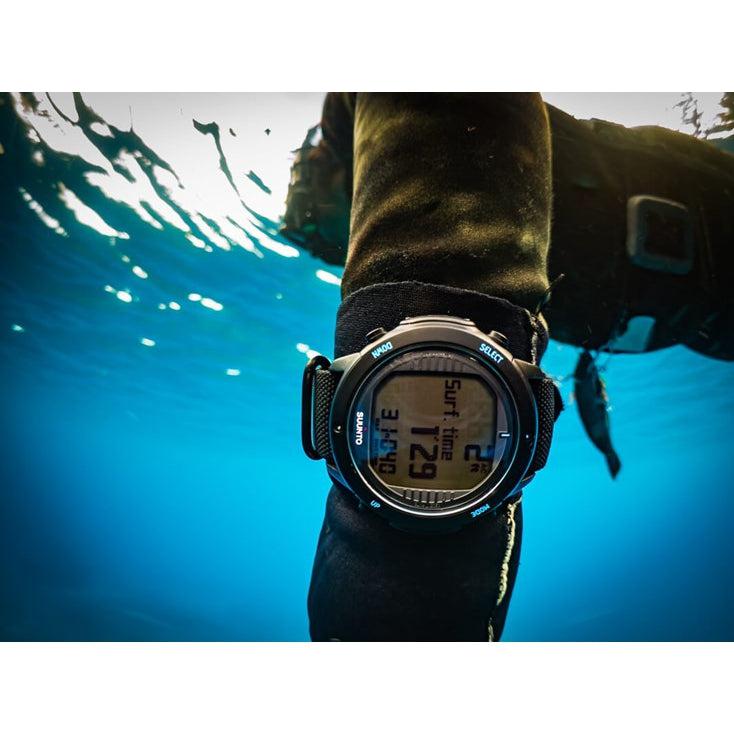
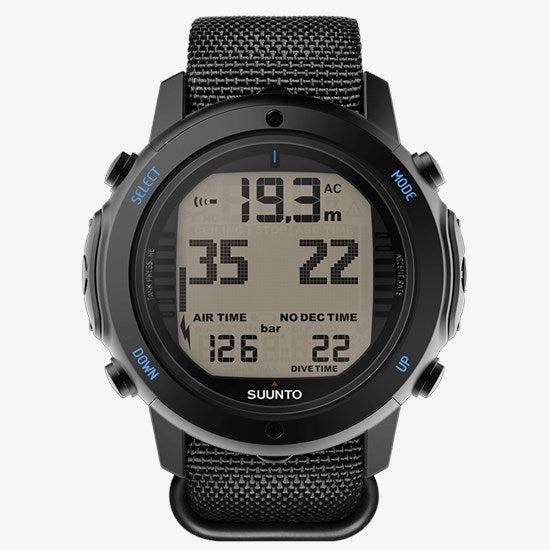
The new, refined Suunto D6i Novo Zulu is a watch-sized dive computer for those who take their diving seriously. Including a tilt-compensated digital compass and wireless air integration, Suunto D6i is in favor with professional divers. The extremely durable Zulu strap, originally designed for military use, can take heavy-duty wear and tear and is widely trusted by professional divers. Easy to adjust on wetsuit but also most comfortable around wrist when not diving.
Features
Features
Specifications
Specifications
| Measurements | 48.5 x 45.6 x 15.9 mm / 1.91 x 1.8 x 0.63 " |
|---|---|
| Weight | 137 g / 4.83 oz |
| Bezel material: | Stainless steel |
| Glass material: | Sapphire crystal |
| Case material: | Steel |
| Strap material: | Textile |
| What's in the box? | Suunto D6i Novo Black Zulu with black Zulu strap, D-series USB cable, safety leaflet, quick guide, dive legal leaflet with warranty information and Suunto logo sticker |
- Steel case and sapphire crystal glass with antireflective coating
- Full continuous decompression algorithm - Suunto RGBM
- Gas-switching between up to three gases
- Five modes: air, nitrox, gauge, free and off
- Innovative apnea timer, and a timer in air/nitrox modes
- Integrated tilt-compensated 3D digital compass
- Updateable firmware
- Optional wireless air integration – current cylinder pressure, remaining air time
- Built-in dive planner
- Detailed graphical logs and dive data on your PC/Mac using Suunto DM5 software
Payment & Security
Payment methods
Your payment information is processed securely. We do not store credit card details nor have access to your credit card information.
WARNING: This product contains chemicals known to the State of California to cause cancer, birth defects, or other reproductive harm. For more information, visit www.P65Warnings.ca.gov.
Frequently Asked Questions
Why do I need my own dive computer?
A dive computer tracks the actual depth and time profile you have dived and the tissue loading that follows from it, which is personal to you. A rented computer has no record of your recent diving, and swapping models each trip means relearning the display and menus when you should be focused on the dive. Owning one you know well is a genuine safety and comfort improvement.
Can two divers share one dive computer?
No. A computer only tracks the profile of the diver actually wearing it, and even buddies who stay together do not follow identical depth and time profiles. Every diver needs their own computer, and passing one between divers or between dives is unsafe.
What does conservatism mean on a dive computer?
Conservatism settings make the computer's calculations more cautious, shortening allowed bottom times and adding margin beyond the base algorithm. Divers commonly add conservatism for factors such as cold, hard work, fatigue, or repetitive multi-day diving. How and when to adjust it is covered by your training and your computer's manual, so set it before you get in the water and follow what your computer tells you during the dive.
What kind of battery does a dive computer use?
Broadly there are two types: user-replaceable batteries, often a coin cell that you or a shop swap along with resealing an o-ring, and sealed rechargeable batteries that charge from a cable or dock. Neither is universally better, as replaceable cells are convenient on remote trips while rechargeables avoid ever opening the case. Follow the manual exactly for any battery change, because an improperly seated o-ring or case is the usual cause of a flooded computer.
Do I need to do anything special for altitude diving or flying after diving?
Yes, both change the picture, and both are governed by your training agency's guidance and your computer's instructions rather than any casual rule of thumb. Many computers have an altitude setting that must be configured before diving at elevation, and most display a no-fly or surface-interval countdown after a dive. Follow your computer and your training, and ask a dive professional or a dive-medicine specialist if you are unsure.
How do I care for a dive computer?
Rinse it in fresh water after every dive day, paying attention to the buttons and around any sensor openings where salt crystals form, and let it dry fully before storing. Keep it out of prolonged direct sun and extreme heat, and avoid pressing buttons while sand is on the case. Inspect the strap or bungee often, because a failed strap loses far more computers than a failed computer does.
What is the difference between wrist, console, and air-integrated dive computers?
A wrist computer is worn like a watch and read by raising your arm, while a console computer sits at the end of a hose with your other gauges. Air integration means the computer also displays cylinder pressure, either through a hose or from a wireless transmitter on the first stage, and often estimates remaining gas time. All of them run a decompression algorithm, so the real difference is where you read the information and how much of it you get.
Suunto D6i Novo Dive Computer
SERIOUS DIVE FEATURES IN A RUGGED STEEL CASING
The new, refined Suunto D6i Novo Zulu is a watch-sized dive computer for those who take their diving seriously. Including a tilt-compensated digital compass and wireless air integration, Suunto D6i is in favor with professional divers. The extremely durable Zulu strap, originally designed for military use, can take heavy-duty wear and tear and is widely trusted by professional divers. Easy to adjust on wetsuit but also most comfortable around wrist when not diving.
Color