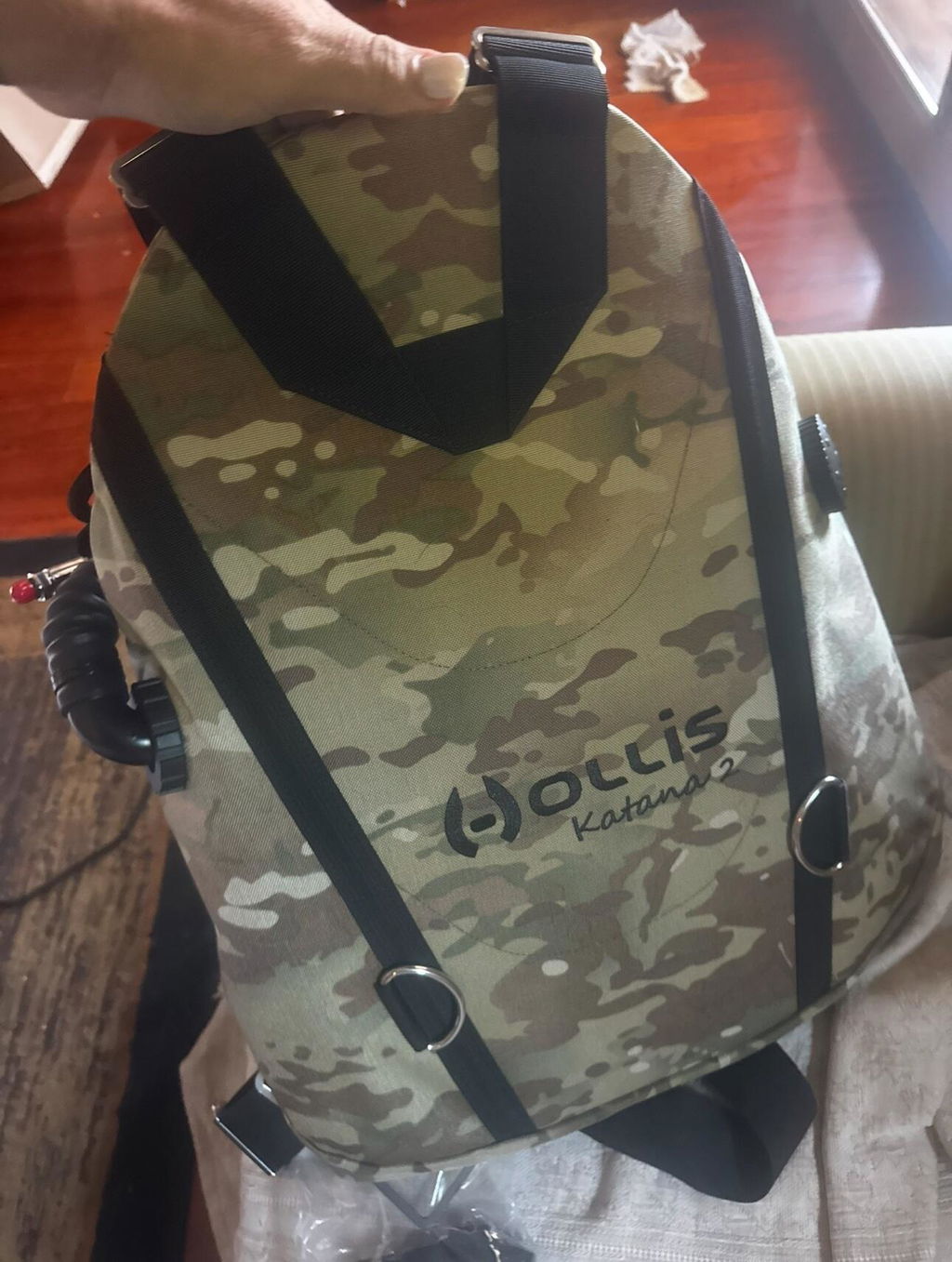
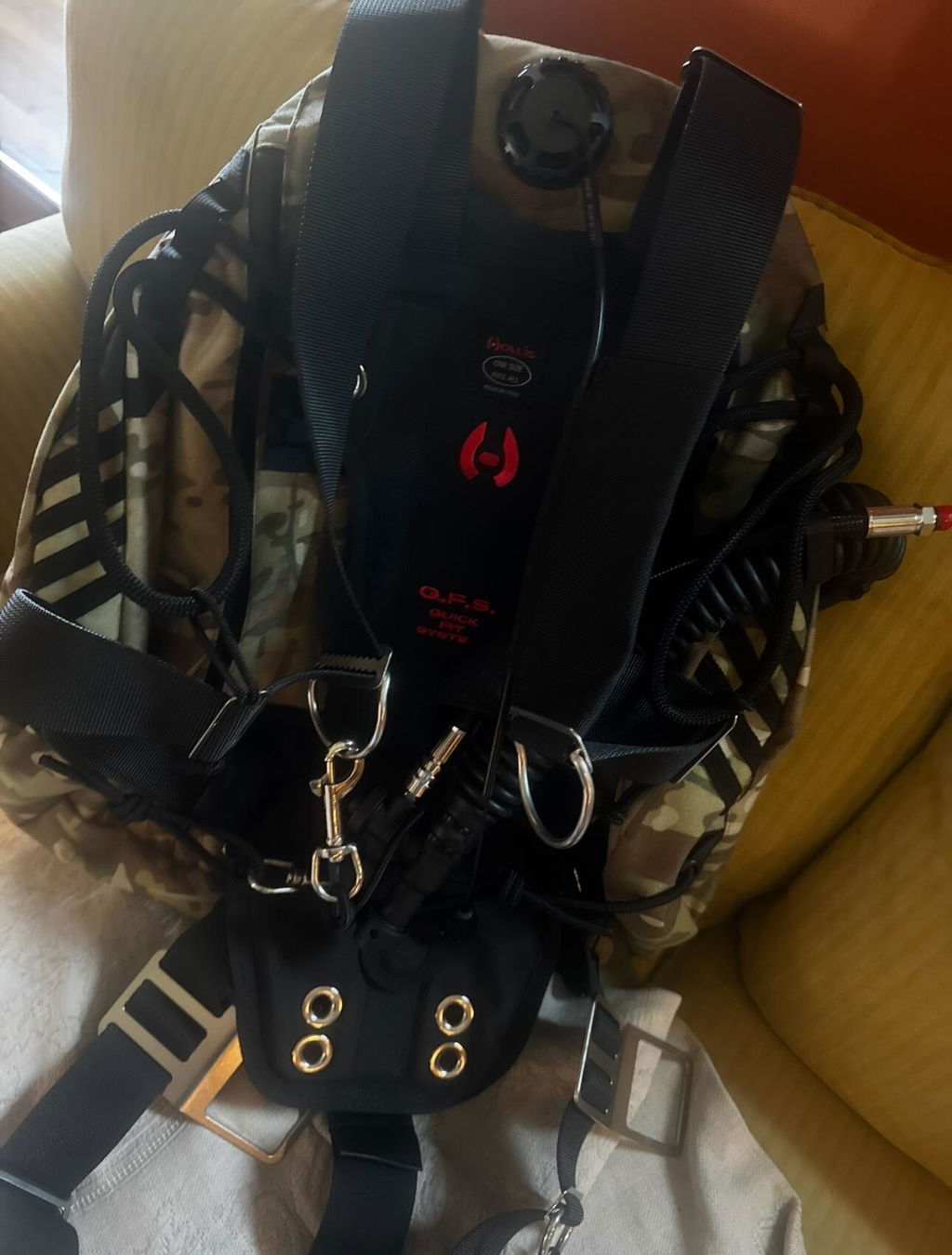
Hollis ST Travel System BCD Tech (ST 22 Wing)
In stock — ships from Irvine, CA
Hollis ST Travel System BCD Tech (ST 22 Wing) is backordered and will ship as soon as it is back in stock.
Pickup currently unavailable at 23D


You May Need These
Description
Description
The Hollis ST Travel System BCD Tech (ST 22 Wing) is a minimalist backplate-and-wing setup designed for divers who value streamlining their scuba gear without compromising performance. This approach reduces bulk and potential points of failure while preserving essential features for reliable performance in a variety of diving environments.
The ST travel system combines the ST22 wing (22 lbs lift / 10 kg) or the ST35 wing (35 lbs lift / 16 kg) with a backplate 2.0, delivering a simple, modular platform for scuba gear. A welded flange and one-piece retainer enable servicing without tools, and the outer shell uses HD Laminated 1680D Cordura with a 420 nylon internal bladder for durability and resistance to abrasion. An elbow offset avoids interference with tank valves and regulators and supports streamlined hose routing. A lower left pull relief valve and built-in cam band slots and tank cradle further stabilize the setup.
Backplates are available in stainless steel or aluminum for versatility in diving applications. The Stainless Backplate 2.0 uses AISI 304 stainless steel with a 4 mm thickness, a sandblasted finish, electropolished and passivated surfaces, laser-cut and CNC-bent construction, and a weight of about 6.5 lbs (3 kg). The Aluminum Backplate 2.0 uses EN AW 6061 aluminum with a 3 mm thickness, hard-anodized marine black finish, laser-cut and CNC-bent fabrication, and a weight of about 1.5 lbs (1 kg). The aluminum version is travel-friendly, while the stainless version offers added stability and rigidity.
The ST Travel System consolidates a range of popular components into a single, versatile platform for scuba diving gear. It supports a solo harness approach for total simplicity and offers compatibility with cam bands, tank cradle, and other common diving accessories, making it a flexible option for divers seeking a streamlined, dependable setup.
Features
Features
- Wing options: ST22 – 22 lbs lift / 10 kg, ST35 – 35 lbs lift / 16 kg
- Materials and durability: HD Laminated 1680D Cordura outer shell; 420 nylon internal bladder
- Design for streamlining: Elbow offset to avoid valve interference; streamlined hose routing
- Maintenance: Welded flange and one-piece retainer for servicing without tools
- Attachment and stability: Lower left pull relief valve; cam band slots & tank cradle built in
- Backplate options: Stainless Backplate 2.0 (AISI 304, 4 mm) and Aluminum Backplate 2.0 (EN AW 6061, 3 mm)
- Weight and travel: Stainless ~6.5 lbs / 3 kg; Aluminum ~1.5 lbs / 1 kg
- System integration: Delrin cam bands; versatile platform for customization
Specifications
Specifications
Wing Specs
Backplate 2.0
STAINLESS BACKPLATE 2.0:
ALUMINUM BACKPLATE 2.0:
Payment & Security
Payment methods
Your payment information is processed securely. We do not store credit card details nor have access to your credit card information.
WARNING: This product contains chemicals known to the State of California to cause cancer, birth defects, or other reproductive harm. For more information, visit www.P65Warnings.ca.gov.
Frequently Asked Questions
How should a scuba BCD fit?
A BCD should fit snugly enough that it does not ride up toward your ears when inflated, while still letting you breathe fully. Fasten the waist and cummerbund first, then adjust the shoulder straps so the tank sits close to your back and the shoulders cannot slide off. With the BCD fully inflated at the surface you should still be able to take a deep, comfortable breath; if it squeezes your chest, loosen it or move up a size.
How do I rinse and care for a BCD after diving?
Rinse the outside in fresh water and also flush the inside of the bladder, because salt water gets in through the inflator and dump valves. Fill the bladder roughly a third full of fresh water through the oral inflator, slosh it around, then drain it out through the inflator and each dump valve. Hang it to dry out of direct sunlight and store it partially inflated so the bladder walls do not stick together.
Should I use integrated weights or a weight belt?
Integrated weight pockets carry the lead in the BCD itself, which many divers find more comfortable and easier on the hips, while a weight belt keeps the weight independent of your BCD. Either way, you must be able to release your ditchable weight quickly with one hand, and your buddy should know how your system releases. Non-ditchable trim pockets are useful for balance but should never hold weight you might need to drop.
How do I pack a BCD for travel?
Make sure the BCD is completely dry inside and out before packing so it does not mildew in transit. Remove all weights, deflate it fully, and fold or roll it around softer items such as a wetsuit to cushion the inflator and valves. Avoid hard creases in the air cell, and unpack and air it out as soon as you arrive.
When does a BCD need to be serviced?
Follow the service interval in the manufacturer's manual, which is commonly an annual inspection alongside the rest of your life-support gear. Have the inflator, dump valves, and bladder checked any time the inflator sticks, free-flows, feels rough, or the BCD holds air poorly. Between services, confirm that it inflates and deflates properly as part of every pre-dive check.
What is the difference between a jacket-style and a back-inflate BCD?
A jacket-style BCD holds air in panels that wrap around your sides as well as your back, while a back-inflate BCD keeps the entire air cell behind you. Jacket styles tend to feel very stable and upright at the surface, and back-inflate styles keep the chest clear and are often preferred for horizontal trim underwater. Neither is objectively better, so treat it as a fit and preference decision and try both if you can.
Will my BCD fit any scuba tank?
Most recreational BCDs use an adjustable cam band sized for common single-cylinder diameters, so standard aluminum and steel tanks generally work. Re-check the band tension after the first wetting, because webbing can relax slightly and let the tank shift. If you dive doubles or unusual cylinder diameters, confirm compatibility with the manufacturer before assuming it will hold.